
Trying to lower your electric bill? Start with the bill itself—not a shopping list. A higher total can come from more kWh, a higher rate, extra billing days, or all three. This guide helps you separate those causes, choose one change that fits your home, and check whether it actually worked.
You’ll get 27 practical options, a one-change savings and payback calculator, and a 30-day plan for comparing results. Renters can stick to removable fixes; homeowners weighing insulation, heat pumps, or other larger projects can also use the energy efficient home improvement credits guide to check whether incentives change the numbers.
Estimate Savings & PaybackThis post contains affiliate links. If you buy through our links, we may earn a commission at no extra cost to you. As an Amazon Associate, I earn from qualifying purchases. Learn more.
Table of Contents
- Start Here: Check Why the Bill Changed
- 27 Ways to Lower Your Electric Bill
- Measure What Actually Changed
- One-Change Electricity Savings & Payback Calculator
- Frequently Asked Questions
- Your 30-Day Electric-Bill Plan
Start Here: Check Why the Bill Changed
A high bill can come from using more electricity, paying a higher rate, having a longer billing period, or all three. Before changing habits, check the bill for total kWh, billing days, your effective $/kWh, and any peak or off-peak pricing.
- Check the bill, not only the total. Separate usage from rate changes and fixed charges.
- Find the likely load. Use hourly data, seasonal patterns, and equipment run time to narrow the cause.
- Choose one reversible change. Start with a habit or removable fix so you can undo it if comfort or convenience suffers.
- Compare a similar period. Judge the result by kWh over comparable weather and billing days before buying the next upgrade.
Nationally, air conditioning, space heating, and water heating were the three largest residential electricity categories in the U.S. Energy Information Administration’s 2020 household survey, but the order changes with climate, fuel choice, and home type. The U.S. Energy Information Administration publishes the current overview and end-use shares.
Check the rate plan. If you have time-of-use pricing, shift flexible loads away from peak windows. On tiered plans, lowering late-cycle use may keep you out of a higher-priced tier.
If your kWh looks normal but the supply rate changed, readers in PA, NJ, MA, OH, RI, CT, DC, DE, ME, MD, or NH can compare eligible electricity-supply options with Arbor. Arbor is a switching service—not your utility—and requires linking the account. Skip it if your area is not listed or you do not want to connect the account.
Use this math: measured kWh reduction × your actual electricity rate = estimated dollar savings. If kWh fell but the bill did not, check the rate, fees, and billing days.
27 Ways to Lower Your Electric Bill
The tips are grouped by cost and commitment. Start with no-cost habits, add a low-cost fix only when it targets a real problem, and consider equipment replacement only after the simpler options.
No-Cost Habits: Tips 1–12
- Use thermostat setbacks: Schedule a 7–10°F change for about eight hours when you are asleep or away if it remains comfortable and your system supports it. Heat pumps need compatible controls that avoid unnecessary auxiliary heat.
- Use fans for people, not empty rooms: Run ceiling fans counterclockwise for a summer breeze and low/clockwise in winter when gentle air mixing helps; switch them off when the room is empty.
- Manage solar heat: Close shades on hot, sunny windows in summer and use helpful winter sun when it reduces heating demand.
- Wash full loads in cold water: Cold generally works well unless the fabric, oily soil, or a sanitation need calls for warmer water.
- Air-dry all or part of a load: Use a rack or line when practical, or shorten dryer time by finishing only what still needs it.
- Clean the dryer lint filter every load: Good airflow helps the dryer finish the job without unnecessary run time.
- Run full dishwasher loads: Use an eco cycle and a non-heated drying option when your machine provides one.
- Turn off lights in empty rooms: Focus first on fixtures that stay on for hours, not a light used for a few minutes.
- Use sleep settings: Let computers and monitors sleep during short idle periods and shut down peripherals you rarely use.
- Cut avoidable hot-water use: Shorten long showers and repair hot-water drips instead of reheating water that goes down the drain.
- Check the water-heater setting: DOE guidance uses 120°F for most residential applications, but equipment, dishwasher, scalding, and Legionella-control needs can change the right setup.
- Set refrigerator and freezer temperatures: Keep the refrigerator at 35–38°F and the freezer at 0°F, then verify with an appliance thermometer.
Targeted Low-Cost Fixes: Tips 13–23
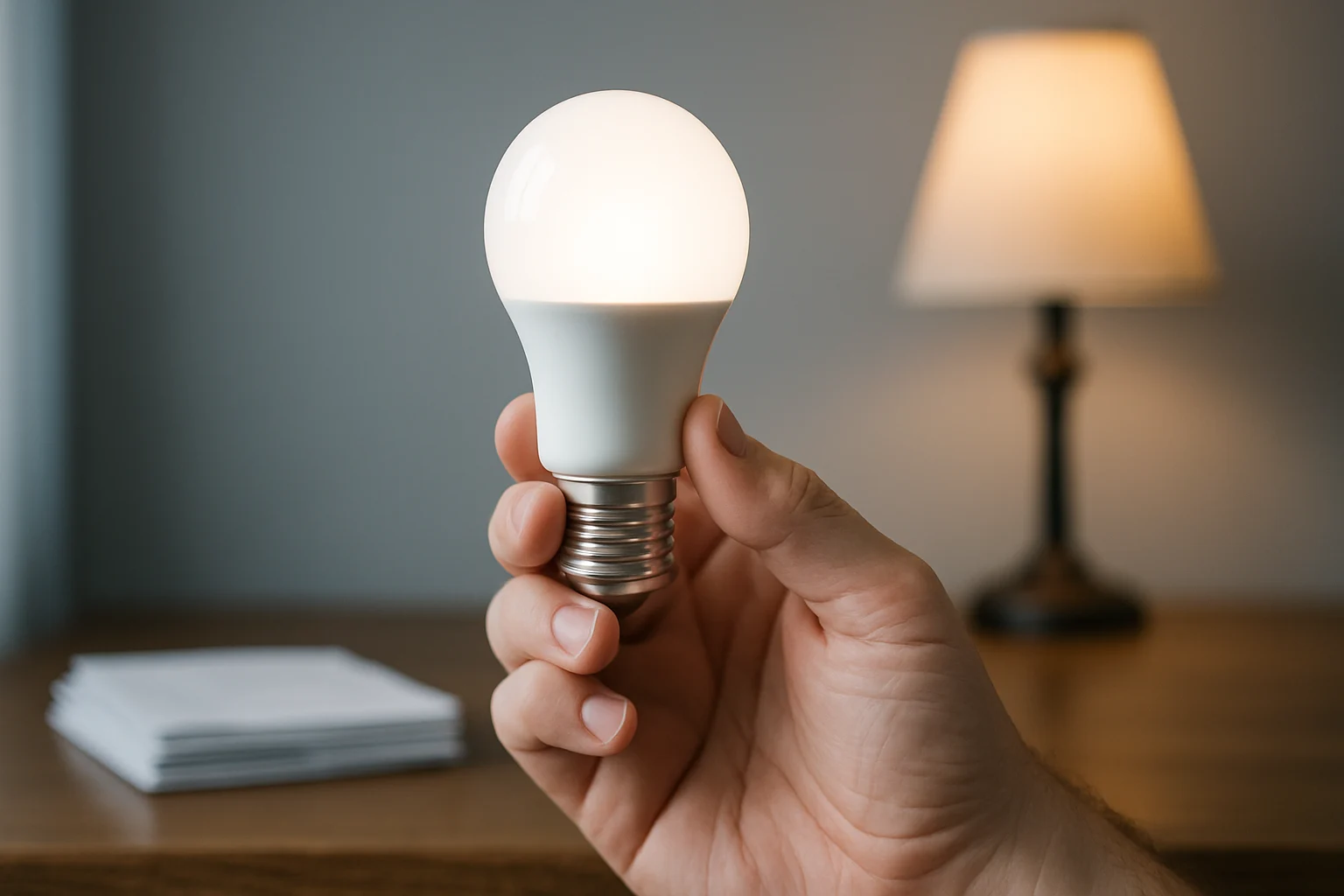
- Replace the most-used bulbs with LEDs: Start with kitchens, living rooms, work areas, and exterior lights that burn longest.
- Target real standby clusters with an advanced power strip: TV walls, game systems, and home offices are better targets than buying one for every outlet.
- Use a smart thermostat only when scheduling helps: Choose controls you will actually use; geofencing is optional.
- Choose a WaterSense showerhead: Labeled models use no more than 2.0 GPM and must also meet EPA performance criteria.
- Insulate accessible water-heater pipes: Start with the first 6 feet of accessible hot and cold pipes while maintaining required clearances.
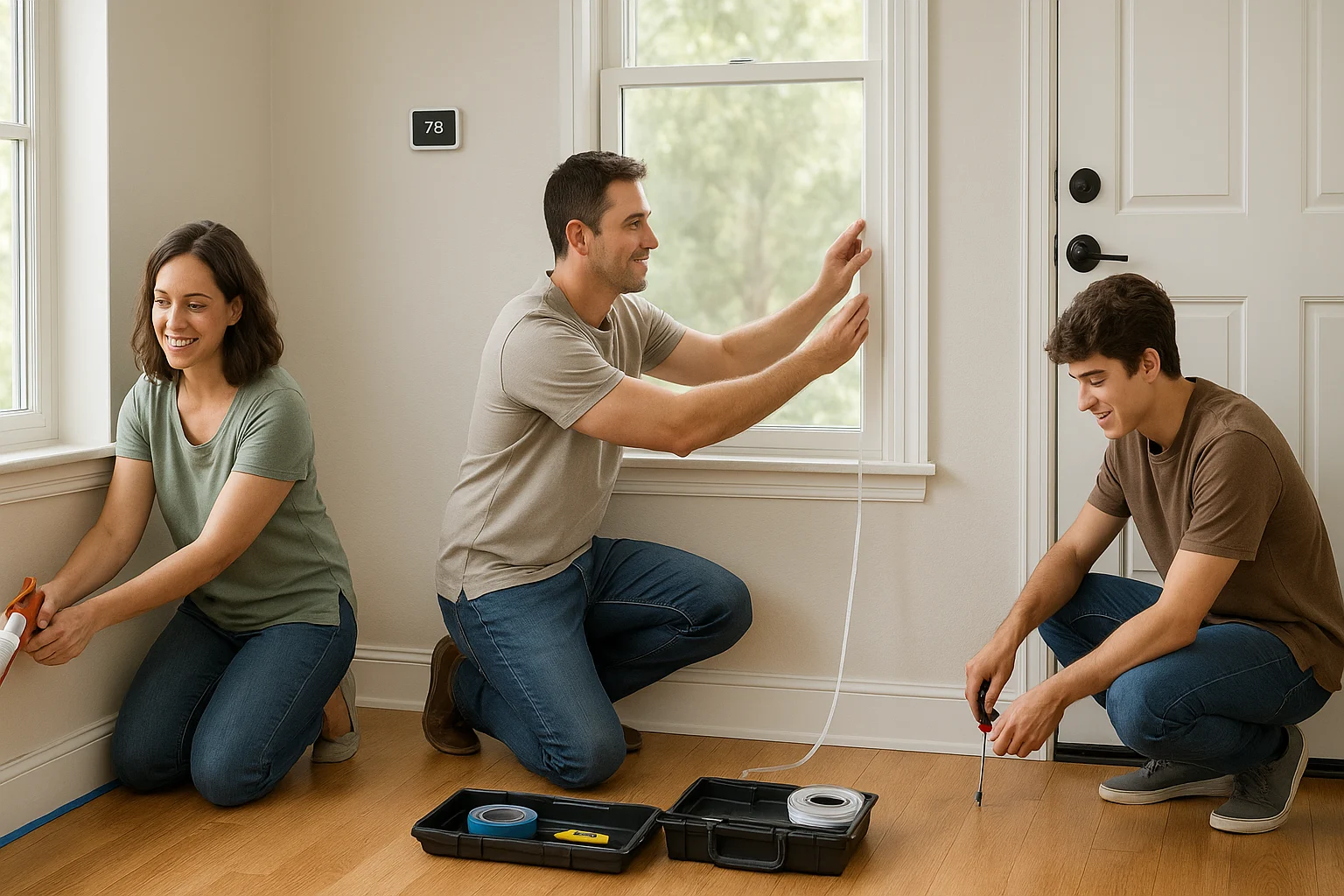
- Weatherstrip doors and windows: Confirm the draft first, then use a removable or durable fix that suits the gap. See the DIY window insulation guide for a fuller walkthrough.
- Add outlet and switch gaskets only where drafts are confirmed: Treat the leak, not every plate in the house.
- Seal plumbing and attic penetrations: Use the right caulk or foam for gaps around pipes and wires; the spray foam insulation guide covers larger openings and common mistakes.
- Install WaterSense bathroom aerators: Labeled faucets and accessories use no more than 1.5 GPM while meeting performance criteria.
- Clean refrigerator coils when the manual recommends it: Remove dust safely and keep vents clear instead of assuming every model has exposed coils.
- Use a drying rack when you can: Dryer balls may help separate items, but the useful test is whether the cycle actually ends sooner.
Bigger Upgrades: Tips 24–27
- Add attic insulation where it is genuinely thin: Seal major air leaks first, then work toward the R-value recommended for your climate. Use the attic insulation DIY guide to plan the job.
- Seal ducts and correct airflow problems: Leaks and poor delivery make conditioned air miss the rooms that need it. See the guide to duct sealing and system maintenance before assuming cleaning alone will solve the issue.
- Choose a heat pump water heater at replacement time: It can use much less electricity than electric resistance, but space, temperature, condensate, and noise requirements matter.
- Right-size a high-efficiency heat pump at replacement: Require a proper load calculation and compare climate performance, installation quality, and total cost.
Use a payback check, not a universal cutoff: Divide installed cost by expected annual savings, then weigh comfort, equipment age, maintenance, and available incentives. For HVAC and water heating, replacement timing and correct sizing often matter more than a neat three-year rule.
Whether you change a habit, add a small fix, or plan a replacement-time upgrade, the next step is the same: measure before you stack another change on top.
Measure What Actually Changed
Compare kWh before dollars. A lower bill is not proof of lower use when the rate, weather, occupancy, or billing period changed. Record bill dates, kWh, total cost, effective $/kWh, average outdoor temperature or degree days, and the date of each change.
Keep one change consistent for a comparable billing period, then compare it with the same month last year or another period with similar weather and occupancy. If the result is unclear, repeat the test before adding another variable.
Use the label first. If the device label lists watts, you do not need another tool. If the label is missing, the load cycles, or you want real running data, a plug-in meter can isolate one appliance or electronics cluster.
Need appliance-level data? HBN Plug-in Watt Meter.
It displays watts, kWh, volts, amps, and estimated running cost. Its nine display modes take a little cycling, so use it for plug-in appliances and electronics—not hardwired HVAC equipment. Skip it if your utility portal or an existing energy monitor already gives you the data you need.
LED example: Replacing a 60-watt bulb with a 9-watt LED used five hours a day reduces electricity use by about 7.7 kWh in a 30-day month. At $0.18 per kWh, that is about $1.38 per month or $16.50 per year. If the replacement costs $12, the simple electricity-only payback is about nine months.
Use your own wattage, hours, rate, and cost below rather than treating the example as a guarantee. For HVAC and water heating, compare similar billing periods instead of guessing from nameplate wattage.
One-Change Electricity Savings & Payback Calculator
Use this for one plug-in device or lighting change. Enter the current and planned wattage and daily use, then add the electricity rate from your bill. Add the one-time cost only when you want a simple payback estimate. The result updates automatically.
Simple payback divides the one-time cost by estimated annual electricity savings. It excludes rebates, financing, maintenance, product life, comfort, and other non-energy benefits. This tool does not model thermostat, whole-home HVAC, or water-heater savings.
Your estimate
Enter the five blank values to see your estimate
No estimate yet
Days per month is prefilled at 30. Adjust it for seasonal or occasional use.
Use the estimate to choose one change, then verify it against a comparable bill.
The calculator answers two narrow questions: how watts or hours change monthly electricity use and, when you enter a cost, how long electricity savings alone may take to recover it. Your whole bill can still move because the rate, weather, fixed charges, or billing period changed. The FAQ below covers those common cases.
Frequently Asked Questions
Your 30-Day Electric-Bill Plan
- Today: Write down your current kWh, effective rate, billing days, and any obvious change in weather, occupancy, or equipment use.
- This week: Choose one no-cost habit or targeted fix from the list above and keep it consistent. Do not add a second change yet.
- When the next bill arrives: Compare kWh before dollars. Keep the change if usage fell without sacrificing safety or comfort; reverse it if it did not help; move to a bigger upgrade only when the result supports it.
One measured change is more useful than ten untracked tips. That is the practical way to save on your electric bill without turning every idea into a shopping list.
This guide is educational and general in nature. Energy-cost estimates are illustrative and not guarantees of performance. For electrical, HVAC, or insulation work, consult a qualified, licensed professional and verify local codes and incentives.