

A full closet can still leave you feeling as though nothing works. The problem is often not a lack of clothes, but too many pieces that do not fit your routines, combine easily, or feel like you. A minimalist fashionista solves that by building a smaller wardrobe with stronger outfit potential—not by dressing in one color or chasing a perfect item count.
This guide will help you decide what deserves space, build repeatable outfit formulas, test whether a wardrobe gap is real, and shop only when the need survives that test. For the broader approach to buying less and getting more wear from what you own, explore our frugal fashion guide.
This post contains affiliate links. If you buy through our links, we may earn a commission at no extra cost to you. As an Amazon Associate, I earn from qualifying purchases. Learn more.
Table of Contents
- What Being a Minimalist Fashionista Really Means
- Build a Capsule Wardrobe Around Your Real Life
- Create More Outfits From Fewer Pieces
- Wardrobe Gap Checker
- Shop Only for Real Gaps
- Keep the Wardrobe Working Year-Round
- Minimalist Fashionista FAQs
- Start With One Laundry Cycle
What Being a Minimalist Fashionista Really Means
Being a minimalist fashionista means keeping personal style while cutting duplication, impulse buys, and clothes that do not suit everyday life. I like to treat a capsule as a working system, not a shopping list: every piece should do a clear job and connect easily with the rest of the wardrobe.
- It fits now: you can wear it comfortably without waiting for your body or lifestyle to change.
- It belongs in your week: it suits your actual work, weather, errands, social plans, and laundry routine.
- It makes several outfits: it works with more than one top, bottom, layer, or pair of shoes you already own.
- It is realistic to maintain: the cleaning, storage, and repair needs fit your time and budget.
That still leaves room for color, print, jewelry, and trend touches. Minimalism trims duplication, not personality.
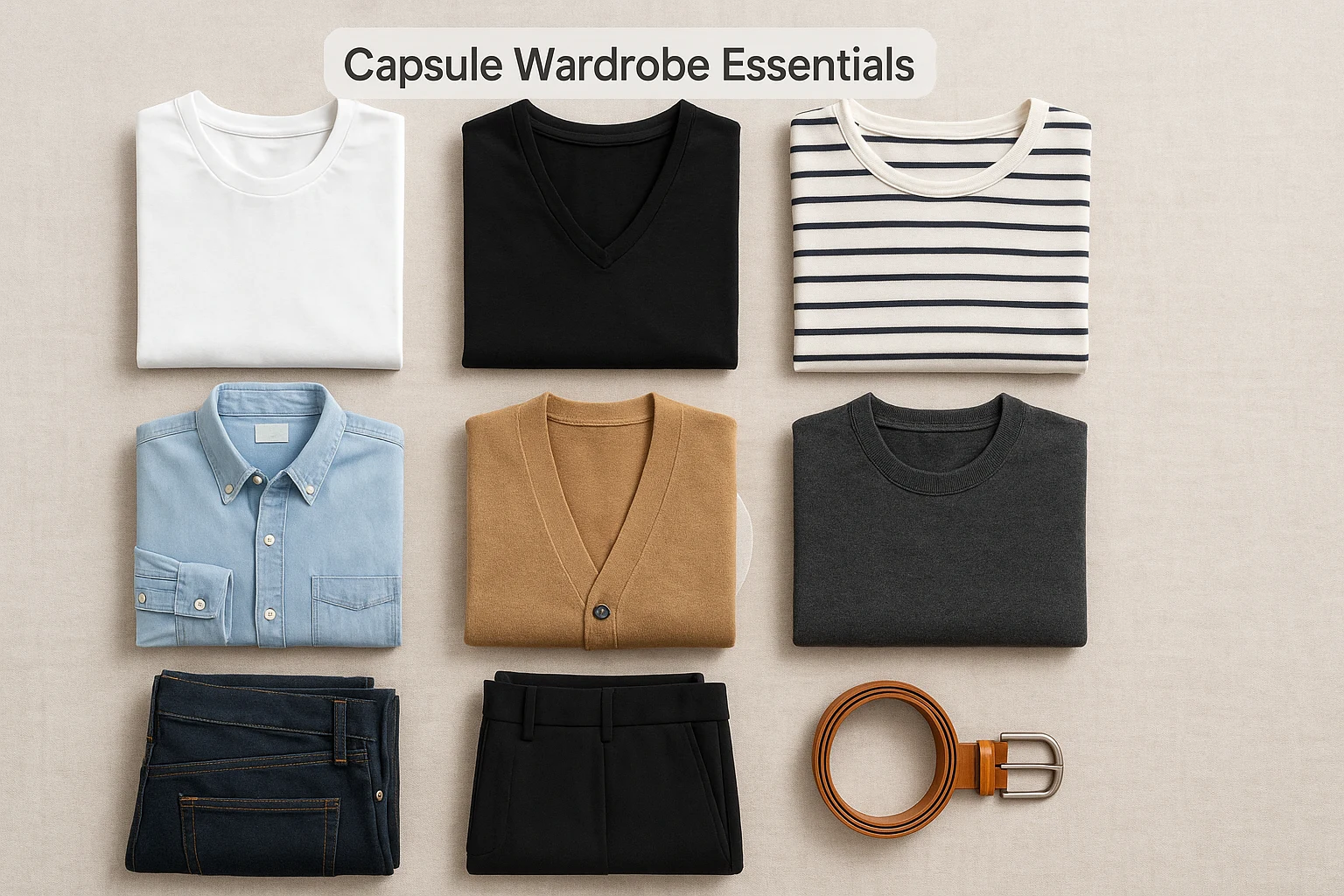
Build a Capsule Wardrobe Around Your Real Life
If you are learning how to build a wardrobe on a budget, start with your calendar, not a generic essentials list. A capsule for a hybrid office schedule, a hot climate, or school pickups should not look identical.
1. Track What You Wear for Two Weeks
Make a quick note of what you wear, what you change out of, and which outfits feel easy. This shows your real uniform before decluttering enthusiasm or aspirational style takes over.
2. Sort Everything by Its Next Action
Use five groups: wear now, repair or alter, sell or donate, recycle where a suitable textile option exists, and store for a specific season or occasion. Give uncertain pieces a deadline instead of returning them to the closet indefinitely.
3. Define a Style Formula
Choose three style words, two silhouettes you enjoy, and one reliable outfit shape. For example: relaxed, polished, practical; straight or softly tailored bottoms; simple top + structured layer + comfortable shoe. This gives you a filter without forcing one aesthetic.
4. Choose a Palette That Multiplies Outfits
Pick two or three base colors that already dominate your wardrobe, then add one or two accents and an optional pattern. Your base colors do not have to be black, white, or beige; the best palette is the one that helps your existing clothes combine.
5. Write a Gap List and Wait
A useful gap is specific: “a weatherproof layer for wet commutes that works over my two work outfits” is better than “new jacket.” List the situation, the function, and at least three pieces it must work with. Then wait through a laundry cycle before buying so you can see whether the gap is real.
| Wardrobe job | You probably have enough when |
|---|---|
| Everyday tops | You can dress for a normal laundry cycle without relying on pieces you dislike. |
| Bottoms | Each main bottom works with several tops and more than one shoe option. |
| Layers | Your usual indoor and outdoor conditions are covered without near-duplicates. |
| Shoes | Every common activity has a comfortable pair that works with multiple outfits. |
| Occasion pieces | You can handle realistic events without keeping a closet of “just in case” options. |
| Accessories | Each one adds function, personality, or a useful change of proportion. |
Only solve storage after you know what is staying. If the pieces you kept already have a practical home, an organizer is not a capsule-wardrobe requirement.
Create More Outfits From Fewer Pieces
A smaller wardrobe feels stylish when the same pieces can change jobs. Instead of trying to invent a new outfit every morning, use a few repeatable formulas and vary the color, texture, layer, or accessory.
- Everyday polished: simple top + straight or relaxed bottom + structured layer + clean shoe. Change the layer, cuff the sleeve, or add one visible accessory.
- Casual weekend: base top + favorite denim or relaxed bottom + casual jacket + sneaker. Swap the top, add a scarf, or change the jacket shape.
- Work or meeting: knit or button-down + tailored bottom + blazer or cardigan + loafer or boot. Repeat the base and change only the layer or jewelry.
- Warm weather: breathable top + light bottom or simple dress + optional open layer. Use a belt, bag, or different shoe to shift the mood.
Give Repeated Outfits a Signature
Choose one or two details you enjoy enough to repeat: a bright color, a favorite earring shape, a structured bag, a soft texture, a sharp collar, or a consistent sleeve cuff. Repetition makes a small wardrobe look intentional; changing one focal detail keeps it from feeling like a uniform.
Use Proportion, Not Body Correction
Advice about what clothes make you look taller or which clothes make you look slimmer is usually advice about visual proportion, not a problem with your body.
A continuous color line, a clearly placed waist, a hem that lands cleanly, or an open structured layer can make an outfit look longer or more balanced. Choose the version that lets you move and sit comfortably.
If an almost-right piece sits unworn, try a different tuck, sleeve roll, hem, button, or layer before replacing it. For bigger changes, use our clothing upcycling guide to give an existing piece a new job.
Is This a Real Wardrobe Gap?
You have already identified your routines and outfit formulas. Now test one situation or item before it turns into another vague shopping goal. The checker will point you toward using, repairing, editing, observing, or buying. It does not generate a shopping list.
Answer four questions to see the most useful next move.
Your next move
Complete the four questions
The result will help you decide whether to use what you own, repair something, wait and observe, edit duplicates, or write a precise purchase brief.
Use the result as a gate. A real gap moves forward to a precise purchase brief; the other results send you back to styling, repair, editing, or observation. That is not a failed shopping trip—it is the tool doing its job.
Shop Only for Real Gaps
A practical approach to dressing well on a budget is simple: buy for a job, not for a mood. Know what a purchase must do, how often you will wear it, and when buying nothing is the better choice.
Turn a Real Gap Into a Purchase Brief
If the checker identifies a genuine gap, write the brief before you browse. Include four things:
- Situation: the recurring activity, weather, or dress-code problem the item must solve.
- Function and fit: what it must let you do comfortably for the full time you will wear it.
- Connections: at least three pieces you already own that it should work with.
- Limits: your budget, care routine, repair tolerance, and non-negotiable deal-breakers.
This turns shopping into a search for one defined solution. If a candidate misses the brief, its price or novelty does not make it a bargain.
Thrift From a Gap List
Thrifting can stretch a capsule-wardrobe budget, but prices and selection vary by store and location. Bring measurements, inspect the item in good light, and include cleaning or tailoring in the real cost. Our thrifting strategies can help you check fit, fabric, seams, and care needs without turning every low price into a purchase.
Check Construction in Five Minutes
Read the fiber and care labels, then inspect the seams, hems, fasteners, lining, and fabric recovery. Pull gently at a seam, test every closure, and check whether the fabric returns to shape after a light stretch.
For U.S. shoppers, the FTC explains that covered textile products generally carry fiber information and that clothing care labels should provide safe cleaning instructions. Use the label as a maintenance clue, not a promise that one fiber is always superior. See the FTC apparel-labeling guidance.
Choose Affordable Shoes That Earn Their Space
When choosing affordable shoes that still look polished, use cost per wear as the main test: comfort, stable construction, and a shape that works with several bottoms matter more than a trend label. Follow the care instructions, wipe shoes after wear, and rotate pairs when possible so one pair is not carrying the entire week.
A small alteration or repair can be better value than replacing an almost-right piece. Price the tailor, cobbler, zipper repair, or new buttons before assuming the garment is finished.
Keep the repair setup small: if simple fixes keep stalling because the basics are scattered, a compact starter sewing kit can save setup time. Skip the kit if you already keep suitable needles, thread, small scissors, pins or clips, and spare fasteners together. Our clothing repair guide helps you choose between a portable starter, a fuller home kit, and tools for heavier repairs.
Keep the Wardrobe Working Year-Round
A capsule is not a sealed collection. It should change when the weather, dress code, body, mobility, or daily routine changes—and good pieces should get basic care before they are replaced.
- Rotate instead of rebuilding: keep two or three bridge pieces available, such as a light knit, weatherproof layer, or versatile shoe.
- Clean before storing: follow care labels, use breathable storage where appropriate, and choose pest-deterrent methods that are safe for your home.
- Repair before replacing: keep a visible repair basket and schedule a real date to handle hems, buttons, stains, and minor damage.
- Review when life changes: reassess the capsule after a move, job change, climate shift, pregnancy, injury, or major schedule change rather than on an arbitrary shopping calendar.
Pilling Is Not the Same as Damage
If a sweater still fits, has no thinning or holes, and earns regular wear, surface pills may be a maintenance problem rather than a reason to replace it. Test a hidden area first, use light pressure, and skip delicate, loose-knit, embroidered, or already weakened fabric.
Here is the cost-per-wear logic: a $30 sweater worn 15 times costs $2 per wear. If careful depilling helps you comfortably wear it 10 more times, the same sweater falls to $1.20 per wear. That is a useful outcome only when the fabric underneath is still sound.
For sound knits with surface pills: BEAUTURAL Fabric Shaver and Lint Remover.
A practical option when pilling affects several frequently worn pieces and the fabric underneath is still strong.
Limitation: A fabric shaver removes surface pills; it does not repair thinning, holes, stretched shape, or poor fit. For those problems, skip the shaver and use our clothing repair guide or let the item go.
Keep the benefits practical: a coordinated wardrobe can lower shopping pressure, make mornings faster, and reveal your real style more clearly. Keeping usable clothes in circulation longer can also reduce what enters the waste stream; the EPA textile-waste overview provides U.S. material-specific context.
Minimalist Fashionista FAQs
Start With One Laundry Cycle
Do not rebuild your wardrobe in a weekend. For the next two weeks, track what you actually wear, note the moments when your closet fails, and use the wardrobe gap checker whenever a missing item or tempting purchase starts to feel urgent.
Then wait through one laundry cycle before buying. The goal is not fewer clothes at any cost; it is a wardrobe that makes ordinary mornings easier, feels recognizably yours, and keeps unnecessary purchases out of the cart. For the same decision-first approach to other household costs, use our frugal living handbook.