
A cheap wardrobe gets expensive when half of it goes unworn. Frugal fashion asks a better question than “How little can I pay?”: “How much use will I get?” The answer starts before you shop—with the clothes you already wear, the gaps you can name, and the purchases that fit your life well enough to earn repeat wear.
This guide turns that idea into a five-step system. You will audit your closet, build repeatable outfits, give your clothing budget a job, test purchases before buying, and decide what to care for, repair, upcycle, or let go. By the end, you should have a short gap list, a few reliable outfit formulas, and a clear next move—even when the best move is buying nothing.
This post contains affiliate links. If you purchase through them, we may earn a commission at no extra cost to you. As an Amazon Associate, I earn from qualifying purchases. Learn more.
Table of Contents
- What Frugal Fashion Means in Practice
- Step 1: Audit the Wardrobe You Already Have
- Step 2: Build a Flexible Capsule Around the Outfits You Wear
- Step 3: Give Every Clothing Dollar a Job
- Step 4: Shop for a Gap, Not a Mood
- Before You Buy: Buy-or-Wait Checker
- Step 5: Care, Repair, Upcycle, or Let Go
- Put It Into Practice: A 30-Day Frugal Fashion Reset
- Common Frugal Fashion Questions
- Start With the Closet, Not the Checkout
What Frugal Fashion Means in Practice
A frugal wardrobe earns its space. Sometimes the cheapest move is buying nothing. Sometimes it is thrifting, tailoring a good piece, or paying more for the item that fits properly and replaces several weaker options. Sticker price matters, but it is only one part of the cost.
It also does not require a beige uniform or a tiny closet. Color, prints, vintage pieces, and statement accessories can all belong in a frugal wardrobe when they suit your style and work with the clothes you already reach for. The goal is not minimalism for its own sake. The goal is a wardrobe that is easy to wear and difficult to impulse-buy for.
This approach overlaps with sustainable fashion because keeping clothes in use longer can reduce what you discard. For U.S. context, the EPA’s textiles material-specific data reports national generation and recovery figures for 2018. You do not need to replace your current closet with a new “ethical” capsule to make progress; using what you already own is the most budget-friendly place to begin.
The sale test: If you would not buy the item at full price and cannot name where you will wear it, the discount is probably encouraging a purchase—not saving you money.
Step 1: Audit the Wardrobe You Already Have
Do not start by making a shopping list. Start by finding out what your current wardrobe already does well. Your most-worn clothes reveal more about what you enjoy wearing than a mood board or a list of “must-have” basics.
Do a focused closet audit
- Pull your recent favorites. Set aside the pieces you wore most in the last two weeks. Note what they have in common: fit, color, fabric, comfort, or ease.
- Name three style words. Choose words that describe those outfits—such as relaxed, polished, colorful, practical, vintage, or sporty.
- Sort by next action. Make four groups: wear now, repair or alter, unsure, and ready to release.
- Photograph ten outfits. Use complete outfits you would genuinely leave the house in. This becomes your quick-morning lookbook.
- Write no more than three gaps. A useful gap is specific: “black trousers that fit at the waist and work with three office tops,” not “more work clothes.”
Leave the “unsure” group out of sight for a few weeks. If you do not miss anything, the decision becomes easier. If you reach for a missing piece, you have learned exactly what job it performs.
Step 2: Build a Flexible Capsule Around the Outfits You Wear
A capsule wardrobe should be a working set of clothes, not a new shopping project. Start with what already fits and combine it around your routine. The right number of pieces depends on your climate, laundry schedule, dress code, activities, and how much variety you enjoy.
Build around outfit formulas
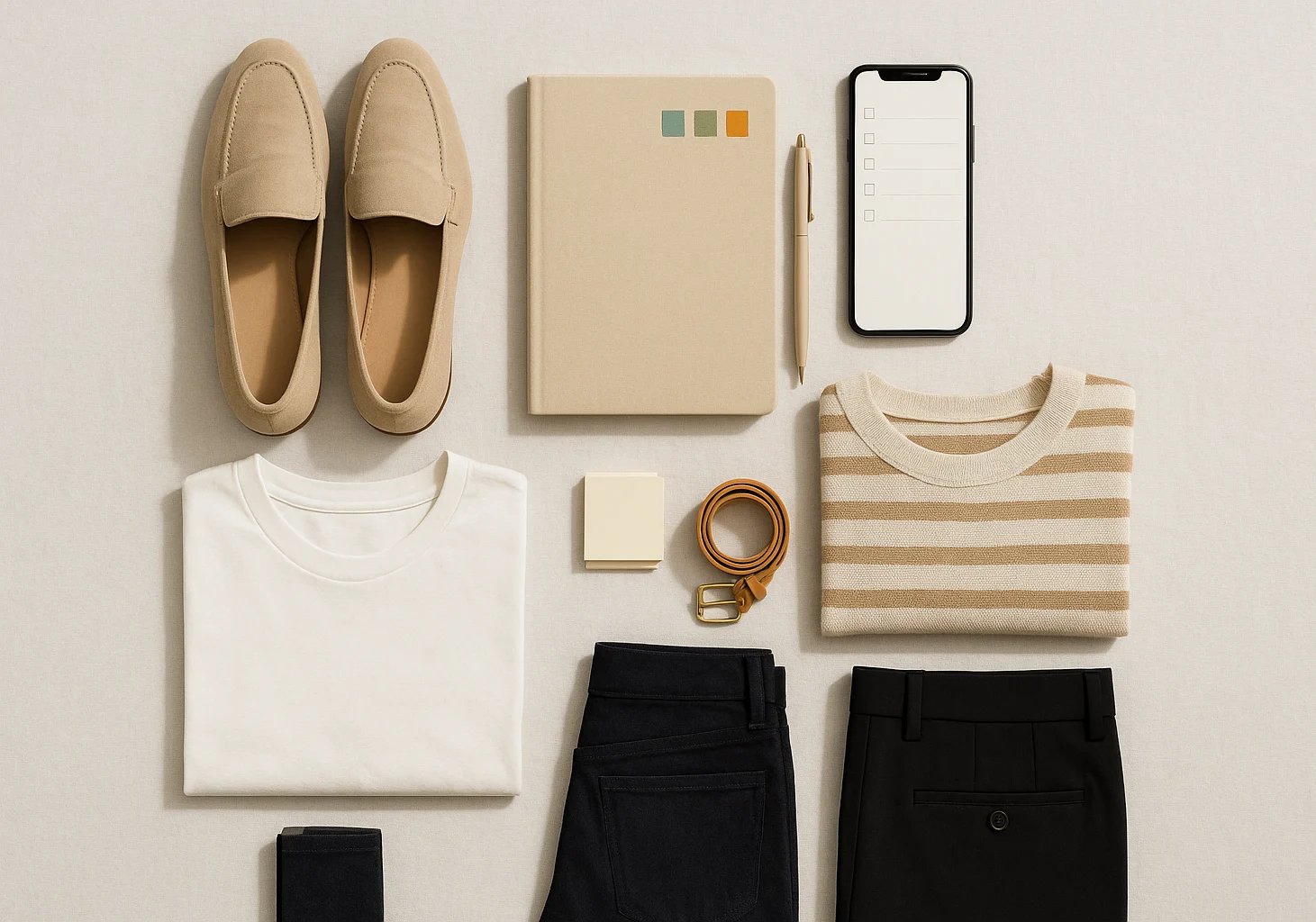
An outfit formula is more useful than a rigid list of staples because it describes how you dress. Try formulas such as:
- straight-leg jeans + knit top + loafers or sneakers;
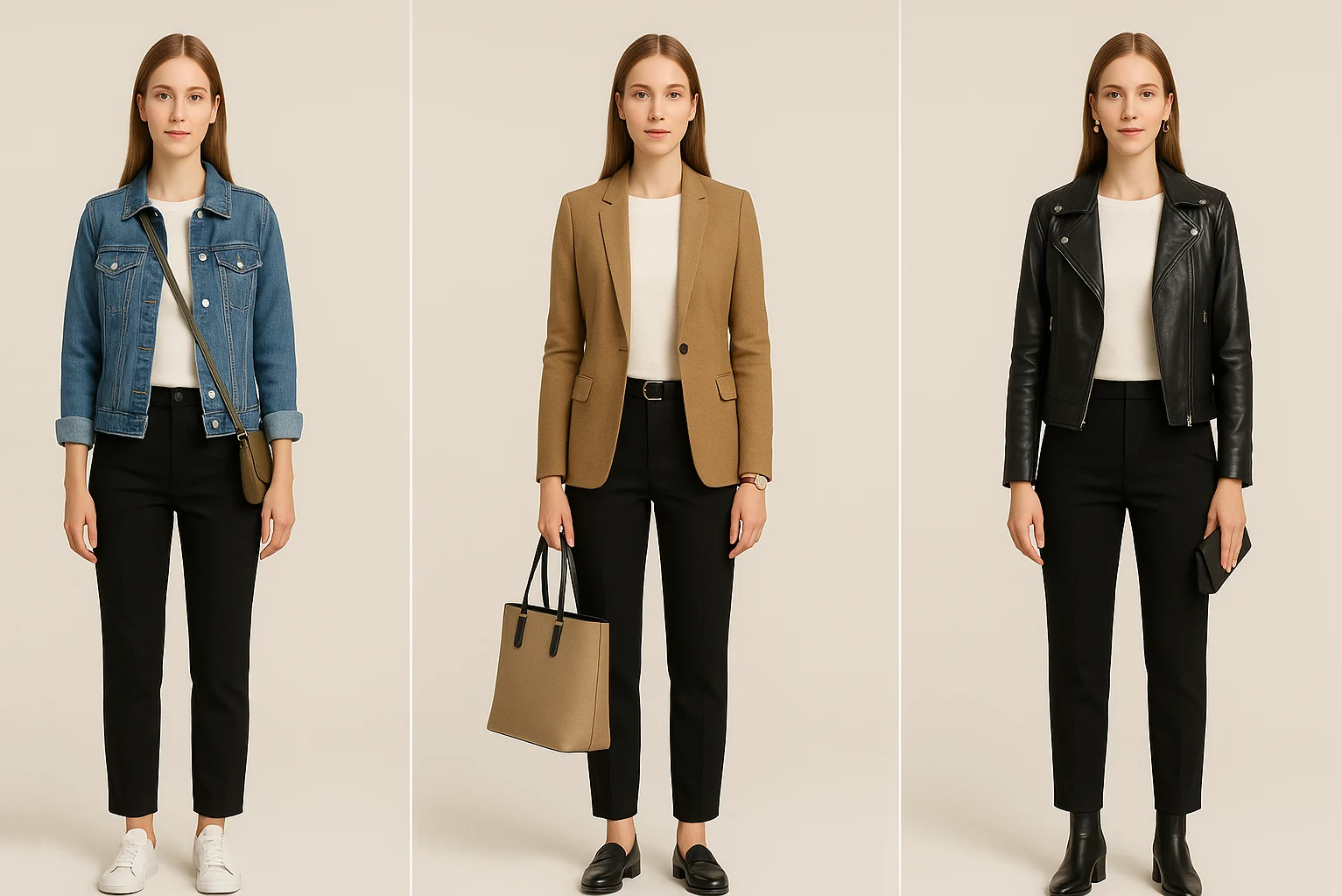
- trousers + fitted tee + blazer or overshirt;
- midi skirt + simple top + denim jacket;
- one-piece outfit + layer + one strong accessory;
- comfortable base + structured outer layer + practical bag.
Keep the formulas that match your week and ignore the ones that do not. A polished budget style comes from repeatable combinations, good fit, and intentional finishing—not from owning every recommended “essential.”
Let your climate and routine set the capsule
Instead of forcing one year-round number, build a warm-weather core and a cool-weather core, then identify the pieces that cross between them. A denim jacket, mid-weight knit, practical shoes, or lightweight layer may work across seasons, but your weather and routine should decide the mix.
For a more pared-back approach, the minimalist fashionista capsule wardrobe guide goes deeper into building a smaller closet without turning the process into another buying challenge.
Repeat outfits on purpose
Outfit repeating is a strength, not a failure of creativity. Keep a reliable base and change one or two elements: shoes, belt, bag, jewelry, layer, or color. The outfit still feels familiar to you while reading differently to everyone else. Once you have a few reliable formulas, spending decisions get simpler because you can see exactly what keeps those outfits working.
Step 3: Give Every Clothing Dollar a Job
A useful clothing budget is not only a monthly spending cap. It separates replacement needs from maintenance, planned upgrades, and fun purchases so one sale does not quietly consume the money meant for something important.
| Budget bucket | What it covers | Simple rule |
|---|---|---|
| Replacements | True replacements and frequently worn basics | Fund the items that keep your week working before optional upgrades. |
| Care and repair | Tailoring, resoling, mending, cleaning, and storage | Protect good clothes before replacing them. |
| Planned upgrades | A specific gap where better fit or function matters | Save for the brief; do not substitute a random bargain. |
| Fun and style | Trends, occasion pieces, color, and statement items | Use a clear limit so experimentation stays enjoyable rather than guilty. |
The percentages can change from month to month. A winter coat replacement may take the whole budget one month; another month may need only a small repair. The point is to know which job each purchase is doing.
Do this now: Review your last three clothing purchases and assign each one to a bucket. If an item fits none of them, it was probably an impulse purchase or an unclear decision.
Step 4: Shop for a Gap, Not a Mood
Shopping becomes easier when each item has a one-sentence brief. Write what the piece must do, how it should fit, what it should pair with, and the maximum total cost you are comfortable carrying—including care or alterations.
Write the gap before you browse
“A jacket” is not a gap. “A light, machine-washable layer for cool offices that works with my black trousers, jeans, and two dresses” is. The clearer the brief, the easier it is to reject attractive items that solve a different problem.
Run four checks before buying
- Fit now: Sit, reach, walk, and check the garment from several angles. Do not buy for a future body or a repair you already know you will avoid.
- Three outfits: Name at least three combinations using clothes you already own. “It goes with everything” does not count.
- Fabric, finish, and care: Check the weight, weave, stretch recovery, seams, hems, closures, lining, and care label. A good fabric is only good when it suits the garment and your maintenance tolerance.
- Wait and compare: Compare secondhand, repair, rental, borrowing, and waiting. A pause is especially useful when the item was not on your gap list.
Use secondhand shopping strategically
Secondhand is most useful when you know your measurements, preferred brands, fabric tolerances, and repair limits. Inspect high-friction areas, test every closure, and include cleaning or tailoring in the total cost. The full thrifting tips guide covers where to shop, what to inspect, and how to handle finds after you bring them home.
For example, a $20 top worn twice works out to $10 per wear, while $70 trousers worn 50 times work out to $1.40 per wear. The higher price can be the better value—but only when the item also passes the fit, outfit, care, and budget checks.
If you are holding a specific item, use the checker below to turn those four questions into a clear next step. The cost-per-wear estimate adds context, but fit, usefulness, and timing still decide whether the item has earned a yes.
Before You Buy: Buy-or-Wait Checker
Enter the price and a realistic wear estimate, then answer the four checks. The result will show whether the item is a strong candidate, needs more proof, is badly timed, or should be skipped for now.
Simple estimate: item price ÷ realistic wears. Add known tailoring or special-care costs to the price first; do not depend on an uncertain resale value.
Decision status
Complete the price, wear estimate, and four checks
Your simple cost-per-wear estimate will appear here.
Answer honestly. A low price cannot rescue poor fit, no outfit plan, or a purchase that does not fit your budget.
A strong-candidate result is permission to compare—not pressure to purchase. A wait or skip result tells you what the item has not yet proven. If you do bring it home, the next frugal decision begins immediately: keeping it useful.
Step 5: Care, Repair, Upcycle, or Let Go
The frugal choice after buying is to keep the item useful. That may mean careful washing, a quick repair, a small alteration, a creative remake, or an honest decision to pass the piece to someone else.
Care according to the garment
Start with the care label and the instructions for your machine and products. When the label permits it, turning clothes inside out, using a mesh bag, air-drying, or laying knits flat may reduce avoidable wear. The FTC’s Care Labeling Rule guidance explains what those manufacturer instructions are intended to communicate.
Use a fabric shaver only when the fabric is still sound
Loose pills can make a sturdy sweater or coat look worn before it is worn out. A shaver can remove that surface fuzz, but it cannot fix thinning fabric, holes, snags, stretched knits, or weak seams.
Optional care tool: BEAUTURAL Fabric Shaver and Lint Remover.
Consider it for sturdy, pill-prone fabrics. Test a hidden area first, use light pressure, and skip delicate, loose, embellished, or already-thinning material.
If the fabric itself is failing, skip the shaver. The next question is whether one clear repair would return the garment to regular wear.
Repair or tailor the piece when one fix unlocks real wear
A loose button, dragging hem, small tear, or slightly wrong sleeve can keep an otherwise useful garment out of rotation. Repair is usually worth considering when the fabric is sound, the item fits your life, and the fix solves the reason you are not wearing it. The clothing repair and alterations guide covers simple hems, zipper problems, patches, and starter tools.
Upcycle when the material is good but the garment is not
If the fabric still has value but the shape, length, or details no longer work, a small remake can create something you will use. Start with reversible or low-risk changes and practice unfamiliar techniques on scrap fabric. These DIY clothing upcycling projects offer beginner-friendly ways to turn old clothes into useful pieces without pretending every garment can be saved.
Choose the right next step
- Wear: It fits, feels good, and works in your current life.
- Repair or tailor: One clear fix would put it back into rotation.
- Upcycle: The material is useful, but the garment’s current form is not.
- Sell or swap: It is wearable and desirable, just not right for you.
- Donate or recycle where available: It has no realistic role in your wardrobe; be honest about condition before passing it on.
For resale, use recent comparable sold listings rather than the original retail price. Include platform fees, shipping, condition, and the time required to photograph and list the item. Sometimes a quick swap or donation is the more frugal use of your attention.
Put It Into Practice: A 30-Day Frugal Fashion Reset
This reset is designed to create better information before you spend. It does not require a no-buy year, a closet purge, or a replacement capsule.
- Week 1 — Observe: Track what you wear, what feels easy, and what repeatedly gets rejected.
- Week 2 — Recombine: Photograph ten complete outfits and try one new combination each day.
- Week 3 — Restore: Repair, clean, tailor, or schedule one item that could return to regular use.
- Week 4 — Decide: Review your gap list. Buy only when the need still exists and the item passes the fit, outfit, quality, care, and cost-per-wear checks.
Success is not an empty shopping cart. It is finishing the month with clearer outfits, fewer vague wants, and confidence about the purchases that are genuinely worth making.
Common Frugal Fashion Questions
Start With the Closet, Not the Checkout
Do one thing today that gives you better information: photograph three outfits, repair one neglected piece, or write one specific gap brief. Then stop. You do not need to rebuild your wardrobe in a weekend.
Frugal fashion works when your closet becomes easier to use and harder to shop for impulsively. The best wardrobe is not the cheapest or the smallest. It is one you can afford to maintain, enjoy wearing, and add to only with intention.