
The internet makes it easy to start learning and surprisingly hard to finish. You can save courses, watch tutorials, and switch apps for weeks without producing anything you can use. To learn new skills without wasting time or money, start with one clear outcome and one small piece of proof.
This guide helps you choose that outcome, build a weekly routine around the time and budget you actually have, practice in a way that sticks, and finish a useful result within 30–90 days. The system works for career, language, creative, practical, and hobby skills; for more inexpensive ways to spend your free time well, explore our frugal entertainment guide.
This post contains affiliate links. If you buy through our links, we may earn a commission at no extra cost to you. Learn more.
Table of Contents
- Choose one skill with a finish line
- Build your first-week learning plan
- Use a four-part practice loop
- Build a free or low-cost resource stack
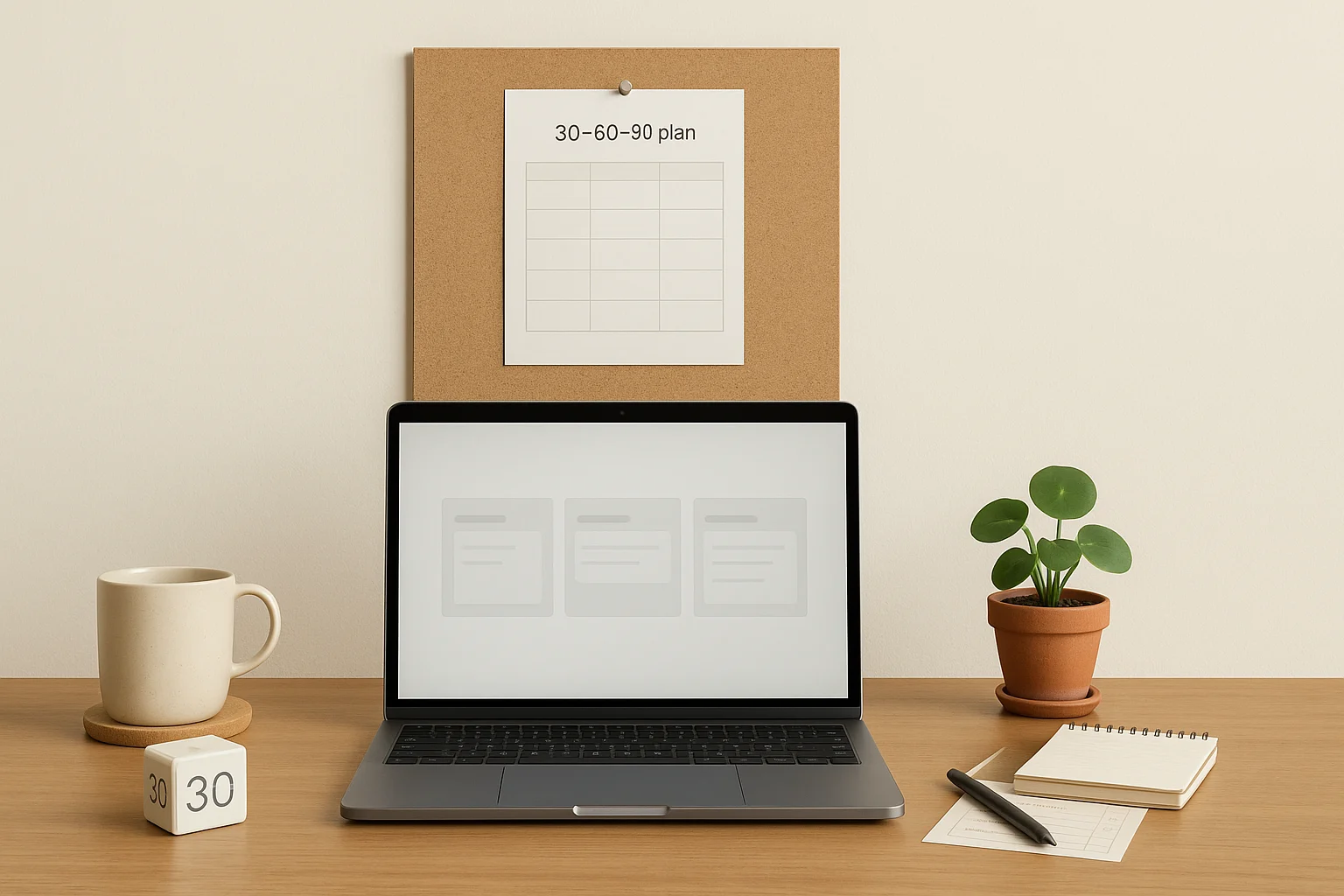
- Follow a 30–60–90 day plan
- Fix the reason your learning stalled
- Measure progress with proof
- Frequently Asked Questions
- Your first seven days
Choose One Skill with a Finish Line
Start with the finish line, not the curriculum. “Learn spreadsheets” or “learn Spanish” names a subject; “build a working budget dashboard” or “hold a three-minute conversation” names proof. Complete this sentence: “In 30 days, I want to be able to…”
Good new skills to learn at home are specific enough to practice, useful enough to repeat, and small enough to show. “Learn design” is too broad; “redesign one mobile screen and explain three choices” is workable. “Learn a language” is too broad; “introduce myself, ask five questions, and understand the answers” gives every session a target.
Examples of New Skills to Learn by Goal
Use the result you want—not the trendiest course—to narrow your starting point:
- Work and digital confidence: try spreadsheets, writing, coding, design, or presentation skills. First proof: one working dashboard, page, draft, or presentation.
- Communication: try language practice, public speaking, interviewing, or clear writing. First proof: a short recording, conversation, or edited explanation.
- Creative time: try photography, drawing, sewing, music, or video editing. First proof: one finished piece with a note about what you would improve.
- Everyday independence: try cooking, budgeting, clothing repair, organization, or low-risk home care. First proof: one repeatable task completed safely without unnecessary purchases.
When two skills compete, choose the one you can practice three times a week, get feedback on, and prove within 30 days. Keep one main learning goal; dividing serious practice across four new goals usually produces four unfinished starts. For a broader system that connects practical skills with lower household costs, see the Frugal Living Handbook.
You have the target. Now choose a routine small enough to survive a busy week.
Build Your First-Week Learning Plan
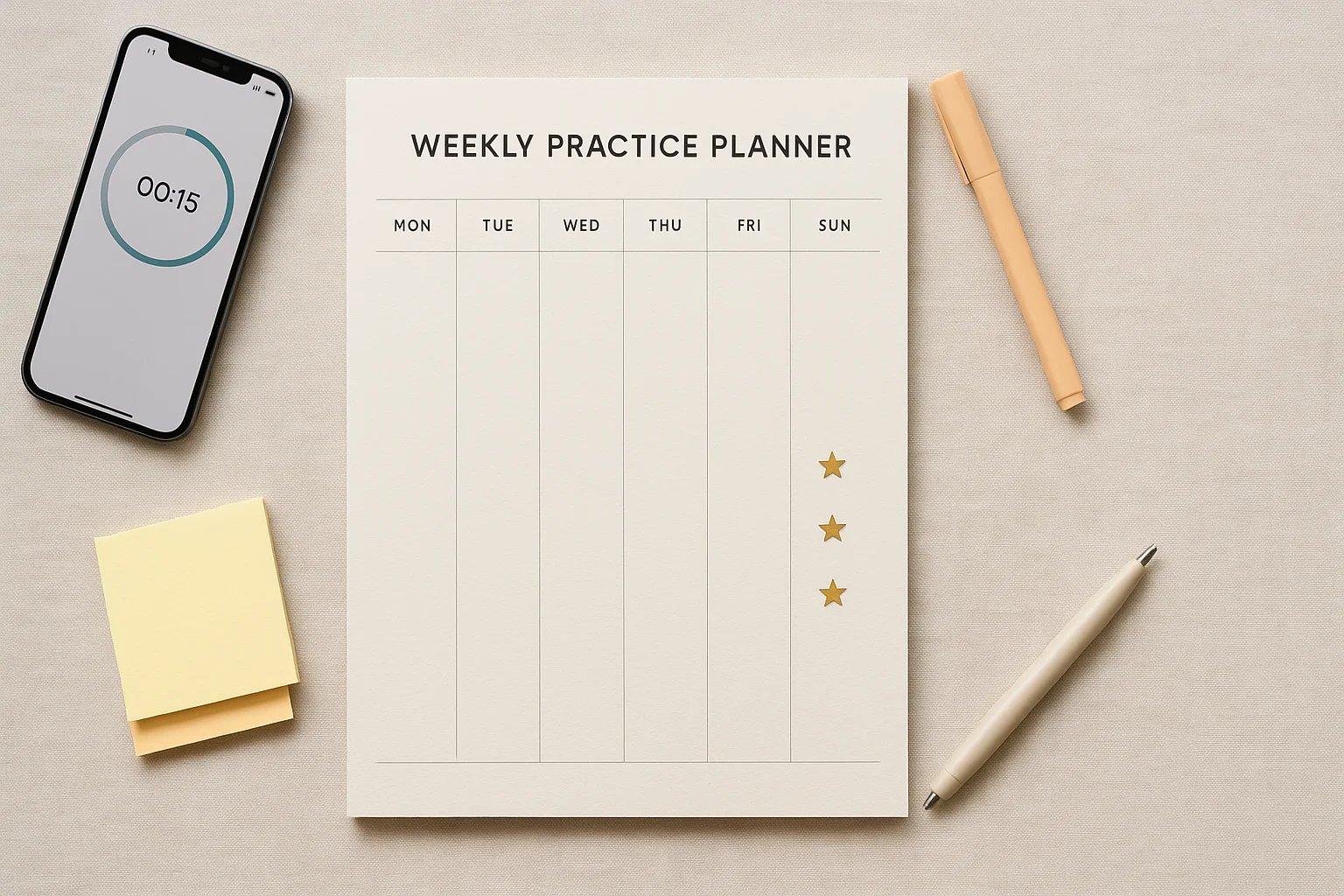
You already have a skill and a first piece of proof. Choose the time you can genuinely protect, how you will practise, and the obstacle most likely to derail you. The planner turns those choices into a seven-day routine.
Choose three options to build your first week
Start with the easiest choice. You can change any answer without restarting.
- Schedule:
- Practice rule:
- Protect the week:
The goal is one rough piece of proof by day seven—not a perfect week.
The schedule removes one decision. The next section shows what to do inside each practice block so it produces recall, feedback, and proof—not another saved lesson.
How to Learn New Skills: Use a Four-Part Practice Loop
Courses are useful, but watching is not the same as learning. The most useful study skills strategies turn information into repeated action. Use this loop in each session:
- Learn one small idea. Read or watch only enough to attempt the next task. Stop before research becomes a substitute for practice.
- Retrieve it without looking. Close the lesson and explain the idea, write the steps, solve a small problem, or demonstrate the movement from memory.
- Apply it in context. Use the idea in a real sentence, spreadsheet, repair, design, conversation, or mini-project.
- Get feedback and adjust. Compare your result with a model, rubric, test, teacher, peer, or your previous attempt. Choose one weakness for the next session.
Spacing practice across several sessions and actively retrieving what you learned can support longer-term retention. For a research-based overview, see the Australian Education Research Organisation’s guide to spacing and retrieval practice. The point is not to make every session academic; it is to spend less time re-consuming information and more time producing an answer or result.
Build a Free or Low-Cost Resource Stack
You do not need six platforms. A useful learning stack has four jobs: one source that explains, one place to practice, one way to get feedback, and one record of progress. Start with free options, then pay only when a credential, teacher, specialist tool, or structured deadline solves a real problem. Our best freebies for frugal living list can help you find additional no-cost resources and trials.
| Resource and best use | How to start without wasting money |
|---|---|
| Coursera or edX: structured introductions and academic subjects | Check for audit or preview access; pay only when graded work or a certificate matters. |
| freeCodeCamp: project-first coding practice | Complete one lesson, then change the example instead of copying it. |
| Khan Academy: math, computing, and science foundations | Start at the first gap and do the exercises even when the explanation feels familiar. |
| Library + LinkedIn Learning: business and software training | Ask whether your library card includes access; finish one path before switching. |
| Official documentation: software and technical workflows | Follow one official starter project and test each step as you read. |
| YouTube and specialist blogs: one precise problem or demonstration | Search the exact task you need next; do not let recommendations become your curriculum. |
Your free stack may be enough for vocabulary, grammar, and listening. If your 30-day proof is a real conversation but you cannot spot your own pronunciation, pacing, or response gaps, live feedback may be more useful than another course.
When a Conversation Partner Is the Missing Piece
italki lets you compare one-to-one lessons with qualified teachers and native speakers and pay per lesson. Use a session to practise the exact conversation you are building toward and request feedback on one weak point. Skip it if a free exchange or practice partner already gives you useful correction.
Follow a 30–60–90 Day Learning Plan
A 30–60–90 plan keeps a broad goal from turning into endless preparation. Each phase should end with evidence, not merely completed lessons.
Days 1–30: Build the minimum foundation
Choose one primary resource, identify the two or three subskills that matter first, and complete a tiny result during week one. By day 30, you should be able to perform a basic version of the skill without following every step in real time.
Days 31–60: Repeat with variation and feedback
Complete two or three small projects, conversations, performances, or practical tasks that use the same core skill in different ways. Ask for feedback on one specific weakness at a time. Keep a short mistake log so the next session begins with a target.
Days 61–90: Finish one useful proof
Combine the subskills into one result you can use, demonstrate, or explain. That might be a working budget dashboard, a short website, a three-minute conversation, a repaired item, a set of finished designs, or a clear presentation. Add a brief note describing the problem, your approach, what changed, and what you would improve next.
Set the checkpoint now: write the date of day 30, day 60, and day 90 on your calendar. Under each date, name the result that must exist—not the number of lessons you hope to finish.
Fix the Reason Your Learning Stalled
When progress stops, motivation is not always the problem. Diagnose the friction before changing courses:
- The goal is too broad: reduce it to one subskill and one proof you can finish this week.
- You understand lessons but cannot perform: close the notes, retrieve the steps, and attempt a small task before watching more.
- You keep switching platforms: stay with one primary path until you complete the first proof, unless the material is inaccurate or unusable.
- Sessions keep getting skipped: lower the starting cost—prepare materials in advance and make the minimum session ten minutes.
- You repeat the same mistake: get targeted feedback or compare your result with a clear model instead of adding more repetition.
- Practice feels easy but progress is flat: choose one weak point just beyond your current comfort level and work on it deliberately.
On difficult days, use a small cue rather than waiting for inspiration: open the file, tune the instrument, write one sentence, or complete one practice problem. A short prompt from our daily habit quotes can help you begin, but the useful measure is whether you did the next action.
Measure Progress with Proof, Not Study Time
Hours studied and lessons completed are weak evidence by themselves. Save proof of what you can now do: a progress record makes improvement visible, gives the next practice session a starting point, and can become a portfolio for project-based work without needing to be public or polished.
- Save one artifact each week: a screenshot, recording, draft, solved problem, checklist, or before-and-after result.
- Add three lines: what you tried, where you struggled, and what you will change next.
- Every four weeks, compare the newest result with the oldest and choose the next subskill from the difference.
For employment or freelance work, explain the problem, constraints, decisions, result, and honest trade-offs. Certificates may matter for particular roles, but a clear record of applied work helps show what you can actually do. If your goal is enjoyment rather than work, the same proof can be a simple album, journal, or folder. You may also find a low-cost direction in our guide to affordable hobbies.
Frequently Asked Questions
Your First Seven Days
Do not redesign your whole life. Use the next seven days to test whether this learning system fits:
- Today: write one sentence describing what you will be able to do in 30 days, then choose one primary resource.
- This week: schedule three practice sessions and finish one rough attempt using the four-part loop.
- On day seven: save the result, name the biggest obstacle, and decide whether to keep the routine or make it smaller.
Change one variable at a time. If the week failed, shorten the sessions or narrow the proof before replacing the skill, platform, and schedule together. Finish one rough result, learn from it, and begin the next version.