
Fun gets expensive by default when boredom, convenience, or last-minute plans make the decision for you. Frugal entertainment is not about refusing to spend; it is about choosing enjoyable plans you can repeat, keeping the full cost predictable, and paying only when an experience is worth it.
Start with the idea picker to get one realistic option for your mood, budget, and time. Then use the guide to find free entertainment, compare paid choices by how often you will use them, and build a short menu of frugal fun activities you will actually do.
Frugal Entertainment Idea Picker
Choose what fits right now. You’ll get one practical plan to try, two backups, and a clear next step.
What sounds good right now?
This post contains affiliate links. If you purchase through them, we may earn a commission at no extra cost to you. As an Amazon Associate, I earn from qualifying purchases. Learn more.
Table of Contents
- Frugal entertainment idea picker
- What Frugal Entertainment Should Do for You
- Choose Something That Fits Today
- Frugal Entertainment Ideas by Situation
- How to Find Free Entertainment Near You
- Compare Paid Fun by Cost per Hour
- Keep Cheap Fun From Becoming an Expensive Hobby
- Build a Weekly Entertainment Rhythm
- Make Low-Cost Plans Social
- Fix the Reasons Frugal Plans Fail
- Build Your 7-Day Frugal Entertainment Plan
- Frequently Asked Questions
- Make Frugal Fun the Easy Default
What Frugal Entertainment Should Do for You
Frugal entertainment is a way to protect both your budget and your free time. The goal is not to make every activity free. The goal is to stop boredom, convenience, or social pressure from turning every evening and weekend into an unplanned purchase.
A useful plan passes three tests:
- You would choose it even without the savings. A free activity you dread is not a bargain.
- It is easy enough to repeat. Complicated prep, long travel, or special gear can quietly kill a good idea.
- The full cost is visible. Include transport, food, supplies, subscriptions, storage, and the chance that you will use it only once.
Frugal does not automatically mean free. A modest paid activity you repeat can be better value than a “free” outing that requires fuel, parking, food, and a full day of preparation.
Choose Something That Fits Today
The best activity is not the most impressive one. It is the option that fits your energy, company, weather, available time, and willingness to prepare right now.
| Your situation | Start here | Avoid this trap |
|---|---|---|
| You have 20 quiet minutes | Journal, sketch one object, read a library chapter, or take a short photo walk | Spending more time choosing an app or buying supplies than doing the activity |
| You need to leave the house | Use the free outdoor activities guide for parks, trails, and local-search ideas | Turning a simple outing into a restaurant, shopping, or driving day |
| You want to make progress on something | Choose one small project or learn a new skill on a budget | Collecting courses, tools, and plans without practicing |
| You want connection | Invite someone to a walk, potluck, game, skill swap, or free local event | Leading with “I cannot afford it” instead of offering a specific plan |
| You want a hobby you can keep | Browse these affordable hobbies under $50 and shortlist two that fit your space, time, and energy | Buying a full starter kit before you have tried the activity three times |
| You want a whole low-cost weekend | Build a simple itinerary with these staycation ideas | Filling every hour and making the weekend feel like work |
Frugal Entertainment Ideas by Situation
Use this as an idea bank, not a checklist. Pick the row that matches the kind of experience you want, choose one starting idea, and keep the optional upgrade small until you know you want to repeat it.
| What you want | Free start | Low-cost upgrade | Repeatable version |
|---|---|---|---|
| A quiet reset | Library reading, journaling, a podcast walk, stargazing, or a puzzle swap | One drink, used puzzle, or notebook you will actually use | Protect the same quiet hour each week |
| Something creative | Phone photography, collage from packaging, a one-page zine, creative writing, or drawing with supplies you own | One basic material that removes a real limitation | Choose a weekly theme instead of buying a larger kit |
| More movement | Walking routes, bodyweight strength, a dance playlist, stairs, or a park circuit | A used disc, jump rope, or community drop-in session | Repeat one route or routine long enough to notice progress |
| Time with other people | Potluck, card night, skill swap, volunteer shift, neighborhood walk, or home karaoke | Shared ingredients, a table fee, or one planned ticket | Rotate hosts and let each person choose a week |
| Family fun with low prep | Scavenger hunt, pantry cooking challenge, story night, blanket fort, or playground circuit | One reusable game, craft material, or special snack | Keep a short rainy-day list where everyone can see it |
These are starting points for diy leisure: you shape the experience yourself instead of buying a finished entertainment package every time.
How to Find Free Entertainment Near You
The biggest obstacle is often not a lack of options; it is finding them before the weekend. Create a ten-minute weekly search routine instead of starting from zero whenever someone asks, “What should we do?”
- Check your library calendar. Look for clubs, workshops, films, children’s programs, passes, and any local “Library of Things.” Offerings vary, so use your own branch’s current page.
- Check city and parks pages. Search your city or county name with “free events,” “parks and recreation,” “concerts,” “classes,” or “community calendar.”
- Check museums and community venues. Look for free hours, pay-what-you-wish periods, openings, talks, and neighborhood festivals.
- Save two realistic options. Keep one indoor and one outdoor choice so weather or energy does not erase the plan.
- Confirm the full cost before leaving. Check parking, reservations, food rules, equipment, age limits, and transport.
Current park check: For 2026, National Park Service fee-free days waive entrance fees for U.S. residents. Non-U.S. residents still pay applicable entrance and nonresident fees, and reservations, tours, camping, or parking may cost extra. Review the current NPS passes and fee information before planning the trip.
Compare Paid Fun by Cost per Hour
Sticker price alone cannot tell you whether an activity is good value. Use this simple comparison:
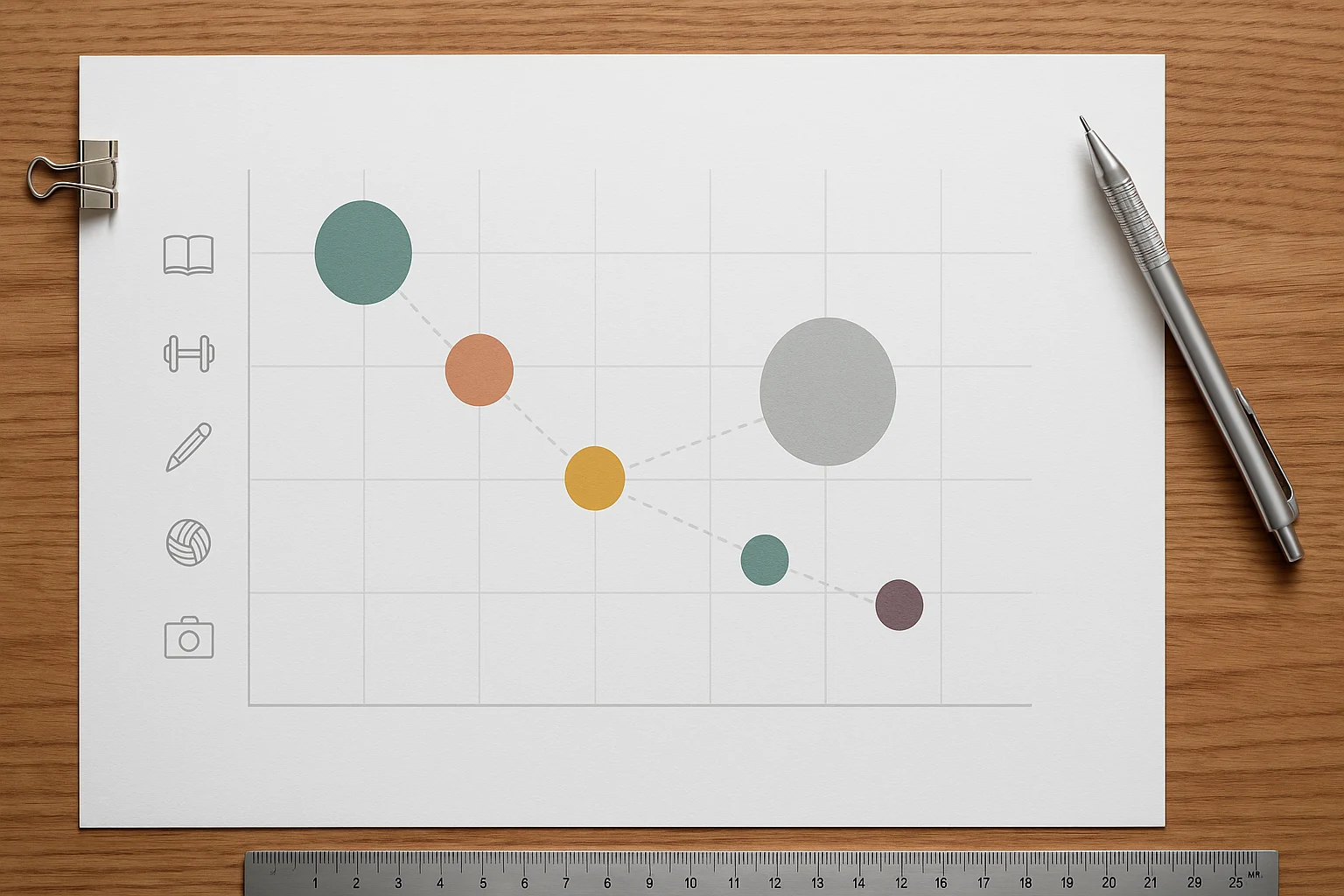
(Setup cost + recurring costs + realistic extras) ÷ hours you expect to use it
Count only the hours you are genuinely likely to use—not the optimistic schedule you imagine while shopping. The examples below are hypothetical; replace them with your own numbers.
| Example | Total cost counted | Realistic use | Example cost per hour | Decision |
|---|---|---|---|---|
| Library reading | $0 | 8 hours | $0 | Excellent when access and transport are easy |
| One $24 board game | $24 | Four two-hour game nights | $3 | Strong value if the group wants to replay it |
| One $15 craft kit | $15 | One 90-minute session | $10 | Weak value unless it teaches a skill or leads to repeat use |
| A $72 annual pass | $72 plus transport | Twelve two-hour visits | $3 before transport | Good only when the visits will actually happen |
Value is personal. Cost per hour is a decision aid, not a command. A short experience may still be worth paying for when it matters to you; a cheap purchase is wasteful when it sits unused.
When Buying One Board Game Can Make Sense
Borrow a game, use a deck of cards, or check a library game shelf first. Buying becomes reasonable when the same two to five people want a structured 30–60 minute game they will replay regularly. In that situation, this is one option worth comparing.
Best for repeat game nights: Ticket to Ride (2025 Refresh).
It works for two to five players and usually fits into a 30–60 minute evening. Consider it when your group enjoys light strategy and will replay the same game. Skip it for very short party-game sessions or when you already own a reliable favorite.
Keep Cheap Fun From Becoming an Expensive Hobby
Many budget hobbies become expensive during the setup phase: a reader buys the premium tools, storage, accessories, and subscription before learning whether the activity fits their life.
Use a three-session rule before a meaningful purchase:
- Try the smallest workable version. Use what you own, borrow, rent, or attend one drop-in session.
- Repeat it three times. Notice whether you look forward to it, lose track of time, or feel curious enough to continue.
- Buy only the limitation. Purchase the one item that makes the next sessions easier—not the entire imagined hobby identity.
Borrowing script: “Does anyone have [item] I could borrow for a week? I’ll pick it up, take care of it, and return it on [day].”
- Check your library, neighbors, community groups, rental options, and secondhand listings.
- Set the return reminder before collecting the item.
- Write down the actual sessions you completed.
- Include storage, refills, transport, memberships, and future supplies in the decision.
Build a Weekly Entertainment Rhythm
A long list does not solve decision fatigue. A small repeatable rhythm does. Choose one easy anchor, one social or outdoor plan, and one flexible backup.
Solo: one reset, one curiosity, one movement
Example: Tuesday library hour, Thursday photo or writing prompt, Saturday walk with a podcast. Keep the activities small enough that starting does not require motivation.
Couples or friends: alternate free and planned
Example: one home meal or game night, one walk or free local event, and one low-cost outing chosen in advance. Alternating who plans prevents one person from carrying the whole social calendar.
Families: rotate the chooser and keep a backup
Let one person choose from a short approved list each week. Keep one indoor backup ready for bad weather, low energy, or a canceled event so the default does not become an expensive last-minute outing.
Make Low-Cost Plans Social
People usually respond better to a clear invitation than to a discussion about what you cannot spend. Lead with the experience, give the plan a time, and make the contribution simple.
Use this formula: specific activity + specific time + easy shared contribution.
- “Free concert at the park Friday at 7. I’ll bring snacks; can you bring a blanket?”
- “Game night at my place Saturday. Bring one game or something to drink.”
- “Want to take a photo walk Sunday morning and grab coffee only if we still feel like it?”
- “Let’s each teach one tiny skill—cards, a recipe, a stretch, or a phone shortcut.”
For cheap date ideas, the same structure works: choose one main experience, decide the spending limit before leaving, and avoid stacking dinner, tickets, drinks, transport, and shopping into one plan.
Fix the Reasons Frugal Plans Fail
| What goes wrong | Likely cause | Try this instead |
|---|---|---|
| Nothing sounds fun | The options are too broad or aspirational | Choose the least objectionable 20-minute activity and test it once |
| Nobody agrees | Every plan requires a group decision | Rotate the chooser or give everyone two approved options |
| The “cheap” day gets expensive | Food, transport, and impulse stops were not planned | Pack what you need and choose the spending boundary before leaving |
| You are too tired to start | The setup is larger than the entertainment | Keep a ten-minute version and a ready-to-use supply bin or list |
| Weather ruins the plan | There is no indoor backup | Pair every outdoor plan with one home, library, or community option |
| A hobby becomes shopping | Research and gear provide faster rewards than practice | Do three sessions before buying and purchase only a proven limitation |
Build Your 7-Day Frugal Entertainment Plan
By the end of this week, the goal is to have three dependable options: one quick solo activity, one social or family plan, and one flexible outing.
- Day 1: Use the idea picker and schedule the result within the next 48 hours.
- Day 2: Write a five-item “I can do this tonight” list using things you already own.
- Day 3: Check your library, city, parks, and community calendars; save one indoor and one outdoor option.
- Day 4: Send one specific low-cost invitation using the formula above.
- Day 5: Repeat the activity that felt easiest to start—not necessarily the most impressive one.
- Day 6: Price one paid option by total cost and realistic hours of use.
- Day 7: Keep three go-to choices, delete the rest, and put the next one on the calendar.
Do this before leaving: choose the exact day, time, and first action for one plan. “Walk sometime” is an idea; “walk the river loop Saturday at 9” is a plan.
Frequently Asked Questions
Make Frugal Fun the Easy Default
The strongest frugal entertainment plan is not the longest list. It is a short menu that works when you are tired, bored, social, restless, or watching your spending. Keep one 20-minute option, one plan with other people, and one outing you can schedule ahead.
Choose one now and put it on the calendar. Repeat the plans that feel good, drop the ones that feel like chores, and use the staycation guide when you want to turn several low-cost ideas into a full weekend. Frugal fun becomes sustainable when it is easier to start than spending by default.
This guide is general information. Check current venue, park, reservation, transport, and safety requirements before you go, and choose physical activities that fit your health, conditions, and experience.