
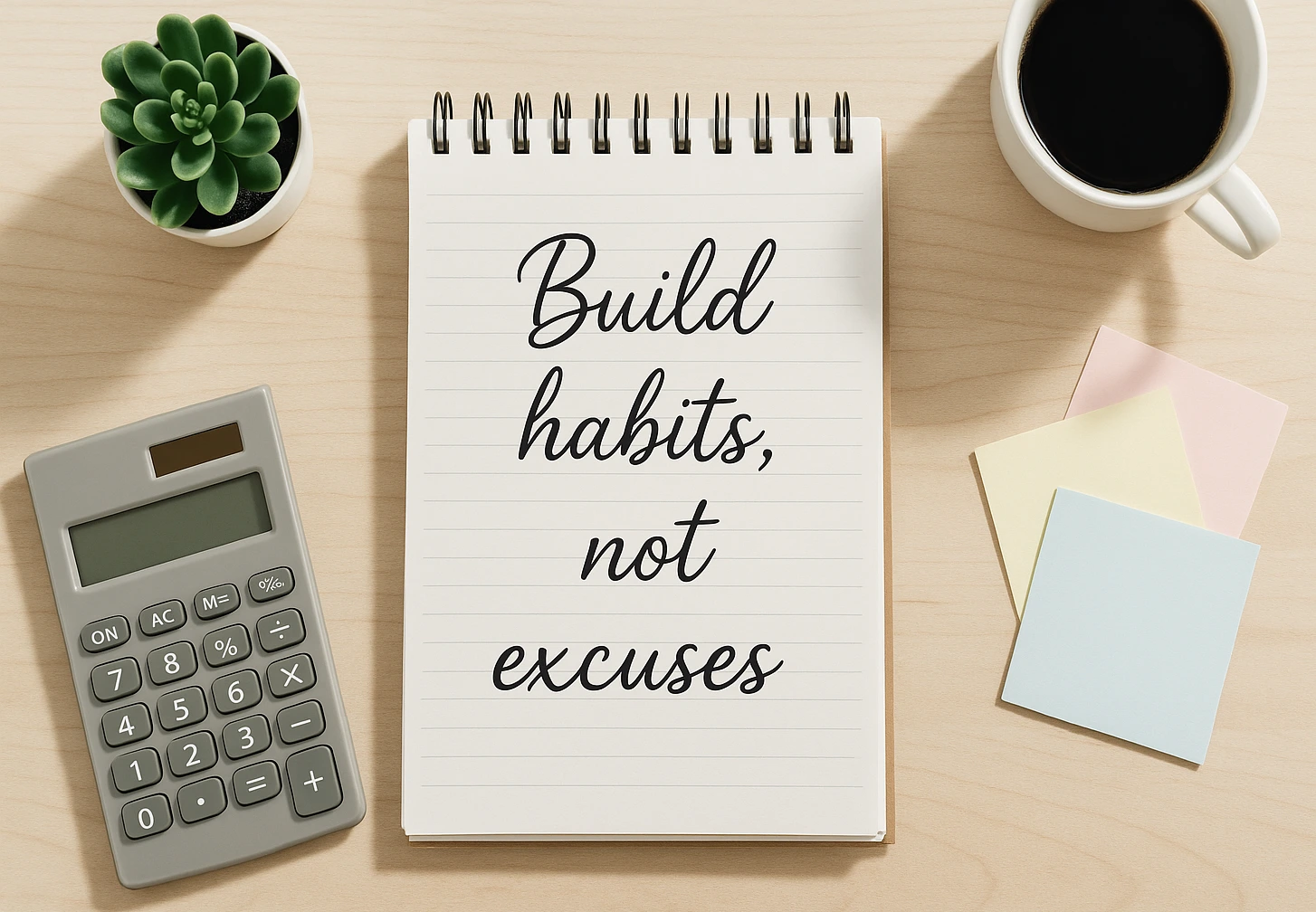
A useful daily habit quote should change your next decision, not just your mood. The goal is to build budgeting habits that stick: choose one short reminder, pair it with a tiny action, and repeat it when the same money situation appears again. For a broader system covering spending, saving, food, home costs, and family routines, start with the Frugal Living Handbook.
Last updated August 2026.
Table of Contents
- Find the daily habit quote you need today
- 20 daily habit quotes with practical actions
- How to turn one quote into a real habit
- A simple seven-day quote routine
- Questions about daily habit quotes
- Use one quote at your next money decision
Find the Daily Habit Quote You Need Today
Pick one focus to get an original reminder, a two-minute action, and more ideas for the same habit.
What would help most today?
Choose one focus to see today’s reminder.
About these quotes: the 20 lines below are original Frugal Life Project reminders, not sayings attributed to celebrities. Use them as prompts. One line practiced is more useful than twenty lines skimmed.
20 Daily Habit Quotes with Practical Actions
I prefer reminders that point to a behavior. Each quote below includes one small action, so you can move from motivation to something you can actually finish.
Spend More Mindfully
Use these when a sale, convenience purchase, or impulse buy is pulling you away from the plan. For a deeper spending workflow, see 15 practical ways to save at the grocery store.
“A pause is a budget tool.”
Try it: wait ten minutes before a nonessential purchase and name what changed during the pause.
“Buy for the life you live, not the sale you found.”
Try it: write down the job the item must do, then check whether you already own something that does it.
“A small expense repeated is a large decision.”
Try it: multiply one frequent purchase by four weeks and decide whether the monthly total still feels worth it.
“Need, use, price—check all three before you pay.”
Try it: buy only when the need is real, the item will be used, and the price fits the plan.
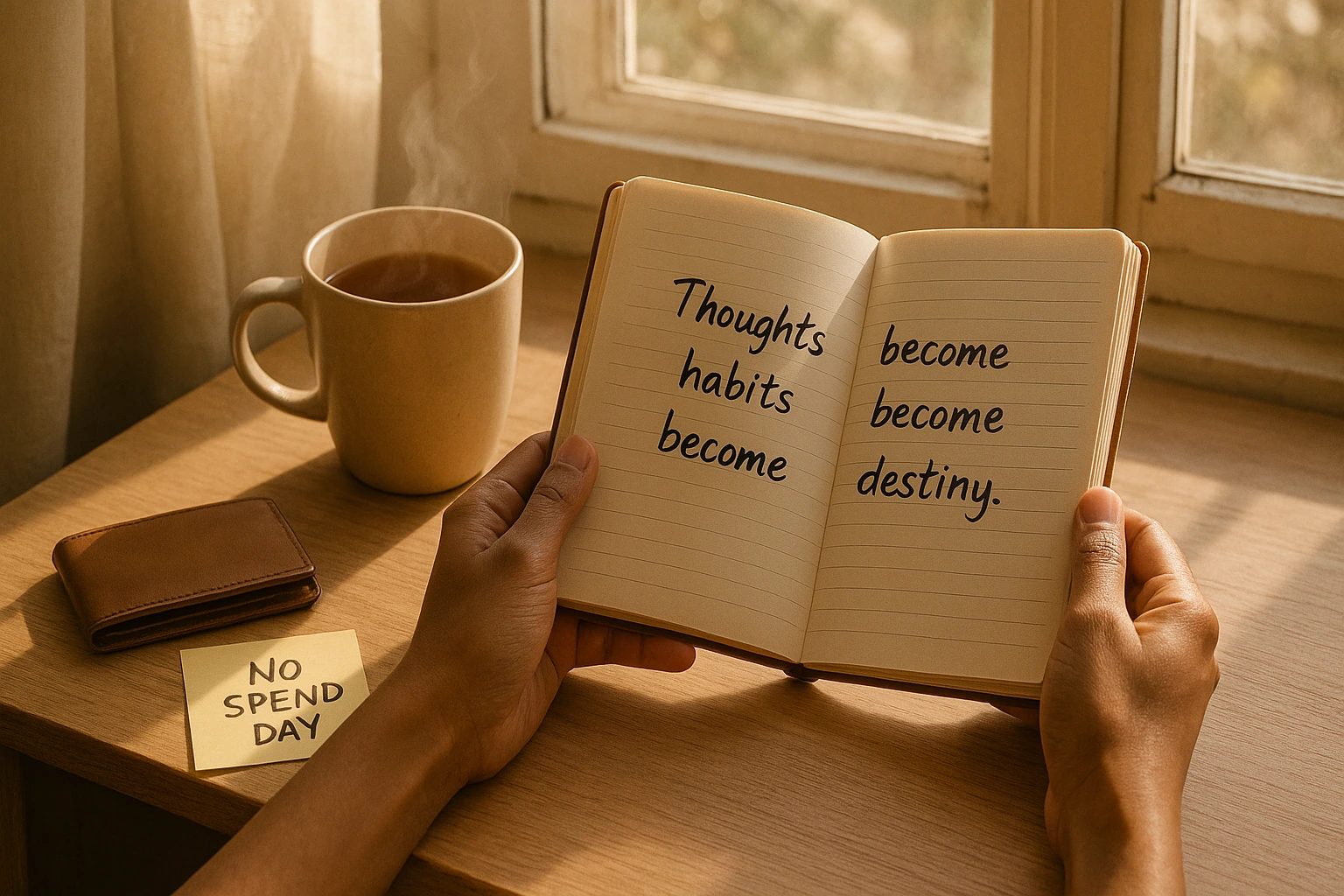
Save Consistently
Saving works best as a repeatable routine rather than whatever remains at the end of the month. The same principle applies to food: a planned week usually costs less than seven rushed decisions, which is why a simple frugal meal plan can support the habit.
“Save first, then make the rest fit.”
Try it: move a small amount today and schedule the same transfer for your next payday.
“A small saving habit beats a perfect plan you cannot repeat.”
Try it: choose an amount you can repeat even in an ordinary month.
“Give every raise a job before lifestyle takes it.”
Try it: decide in advance how much of the next increase will go to saving, debt, and spending.
“An emergency fund buys time to choose.”
Try it: set the first milestone small enough to reach, then build from there.
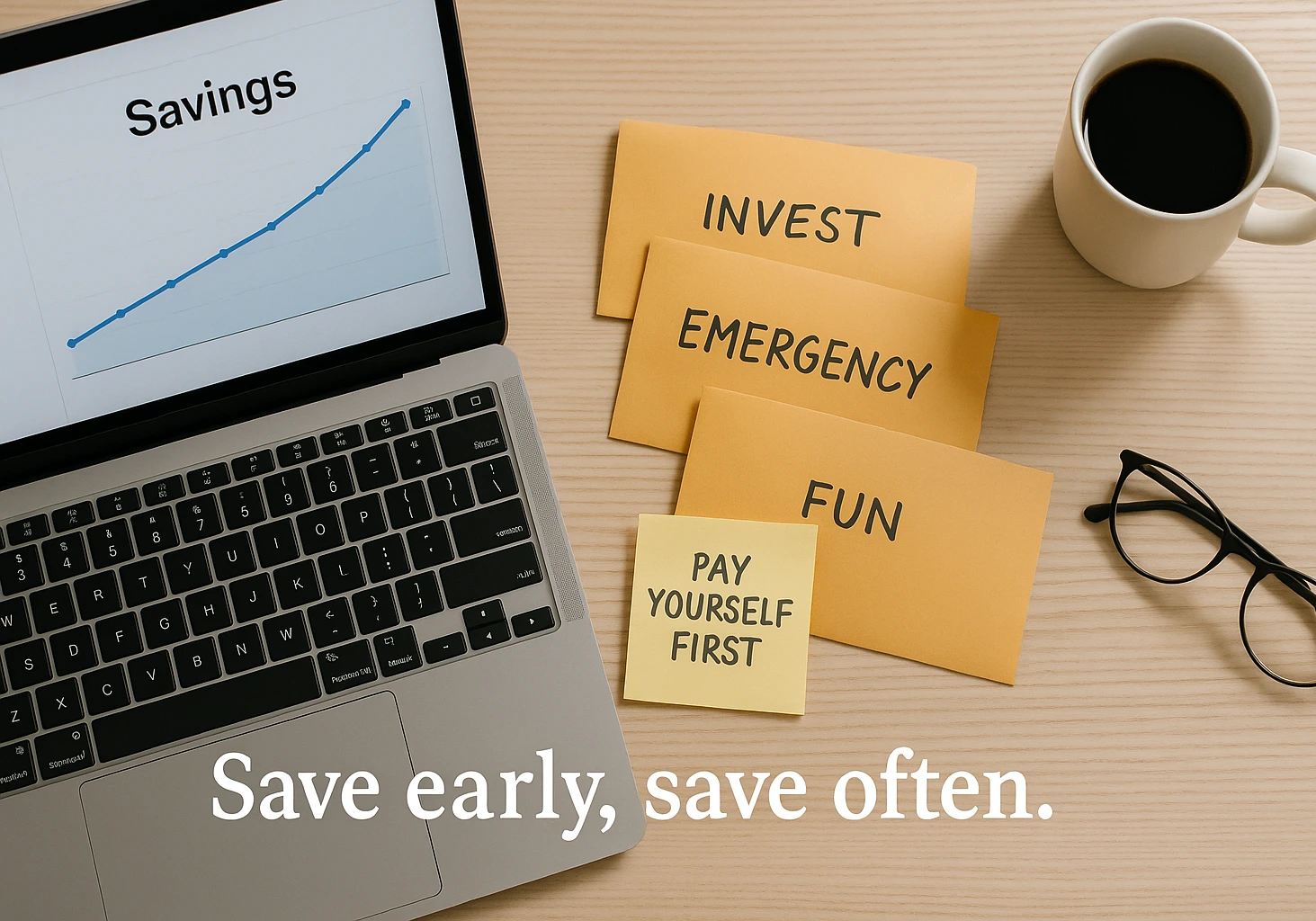
Make Steady Debt Progress
Debt can make every month feel like a verdict. These reminders keep the focus on a plan you can repeat without skipping essentials or pretending one perfect month will solve everything.
“Every extra payment gives your future budget more room.”
Try it: after minimums and essentials, add one repeatable extra amount to a single balance.
“A smaller balance is still progress.”
Try it: record today’s balance and the next checkpoint instead of waiting for zero to celebrate.
“Do not borrow from tomorrow to impress today.”
Try it: use a 24-hour pause for purchases driven by status, comparison, or pressure.
“A debt plan must be simple enough to repeat.”
Try it: choose one payment date, one target balance, and one amount you can keep doing.
Decide What “Enough” Means
Contentment is not pretending you never want anything. It is deciding what “enough” means before a store, feed, or advertisement decides for you. When buying is not necessary, the best freebies for frugal living can offer a no-cost alternative.
“Enough is a number you choose before advertising chooses for you.”
Try it: set an “enough” number for one category, such as shoes, mugs, or subscriptions.
“Use what you own until it stops doing the job.”
Try it: maintain or clean one item before looking for its replacement.
“Gratitude makes comparison less expensive.”
Try it: list three things you already own that made today easier.
“A quieter life often costs less to maintain.”
Try it: remove one paid commitment that creates more pressure than value.
Use What You Have First
Frugality gets easier when buying is the fourth option rather than the first. Start with what you have, then repair, borrow, or repurpose. The same approach powers many of these frugal cleaning hacks.
“Repair, repurpose, borrow, then buy.”
Try it: run through the four options in order before replacing something.
“The cheapest replacement is the one you do not need yet.”
Try it: check the warranty, a repair guide, and the cost of one small part first.
“Plan the week once; avoid a week of rushed decisions.”
Try it: group meals, errands, and purchases into one short weekly plan.
“Frugal means protecting what matters, not choosing the lowest price.”
Try it: name the value you are protecting: time, safety, quality, freedom, or cash.

How to Turn One Quote into a Real Habit
A quote becomes useful when it appears at the moment of friction. Use this three-part method instead of trying to feel motivated all day:
- Choose the situation. Pick one repeat problem: late-night shopping, skipped savings, rushed groceries, or comparing yourself with someone else.
- Attach the reminder to a trigger. Put the line where the decision happens—on the shopping-list app, beside the card in your wallet, or in a calendar reminder before payday.
- Measure the action, not the feeling. At the end of the day, ask whether you paused, transferred, planned, repaired, or skipped the purchase. Motivation is optional; the action is the habit.
Pick one line now and place it beside the next decision it is meant to change. Do not add a second quote until the first has a clear job.
A Simple Seven-Day Quote Routine
This routine keeps the experiment small. Repeat the same quote for the full week if that is what you need; changing the line every day is not the goal.
- Day 1 — Notice: write down one money decision that keeps repeating.
- Day 2 — Pause: place your chosen quote where that decision happens.
- Day 3 — Act: complete the quote’s two-minute action.
- Day 4 — Reduce friction: automate, prepare, or remove one obstacle.
- Day 5 — Use what you own: solve one need without buying a replacement.
- Day 6 — Share the rule: agree on one family reminder before a shared purchase. The ideas in frugal living with kids can help turn it into a household habit.
- Day 7 — Review: keep, change, or retire the quote based on the action it produced.
Questions About Daily Habit Quotes
Choose One Quote and Use It at Your Next Money Decision
Do not leave with twenty new rules. Choose the one quote that fits today’s problem, put it where the decision happens, and complete its smallest action. When that behavior becomes easier, choose the next one. For a wider plan that connects these habits across your home and budget, return to the Frugal Living Handbook.
This article provides general motivational and budgeting education, not individualized financial advice. Check major decisions against your household’s numbers and seek qualified guidance when the stakes are significant.