Many homemade cleaning mistakes happen before anything is mixed: the recipe is chosen by ingredient instead of by surface. Vinegar can help with glass and mineral film, dish soap is better for everyday grease, and neither belongs everywhere. A cheap refill is not a bargain if it dulls stone, hazes a finish, or leaves a floor sticky.
This guide organizes homemade cleaning solutions around the decision that matters: surface first, mess second, and cleaning versus disinfection third. Use the Cleaner Match Tool for a quick route to the mildest useful method, the main no-go, and the point where a labeled or finish-specific product is the safer buy.
This post contains an affiliate link. If you complete the eligibility signup through it, we may earn compensation at no extra cost to you. Learn more.
Table of Contents
- Start Here: Match the Cleaner to the Surface
- Five Supplies That Cover Most Routine Cleaning
- Safety Rules Before You Mix Anything
- Cleaner Match Tool: Find the Mildest Useful Method
- Homemade Cleaning Recipes by Surface and Job
- When a Reusable Tool Is the Frugal Choice
- Make Small Batches and Label Them Clearly
- Troubleshooting Common DIY-Cleaner Problems
- Homemade Cleaning Questions
- Before You Mix: Use the Three-Question Rule
Start Here: Match the Cleaner to the Surface
For routine cleaning, soap, water, wiping, and a little scrubbing do most of the useful work. The CDC distinguishes cleaning, which removes dirt and germs, from disinfecting, which uses a product intended to kill remaining germs. In most homes, ordinary cleaning is usually enough unless someone is sick or a higher-risk situation calls for disinfection (CDC).
Use DIY mixes for routine cleaning—not as universal disinfectants. When disinfection is genuinely needed, choose an EPA-registered product that names the surface and follow its label, including the stated contact time.
Homemade mixes can also be cheaper per refill because you are buying a few multipurpose ingredients instead of a separate bottle for every room. The trade-off is that there is no one-size-fits-all formula: acids can etch stone, excess moisture can harm wood, and fragrances can create problems for sensitive people or pets.
“Natural” is not a safety guarantee. EPA notes that some household ingredients are useful, while others—including borax—carry meaningful hazards, and homemade products do not automatically outperform formulated cleaners (EPA Safer Choice FAQ). For fragrance-sensitive households, the dedicated guide to lower-irritant cleaning options for people with asthma is the better next stop.
Five Supplies That Cover Most Routine Cleaning
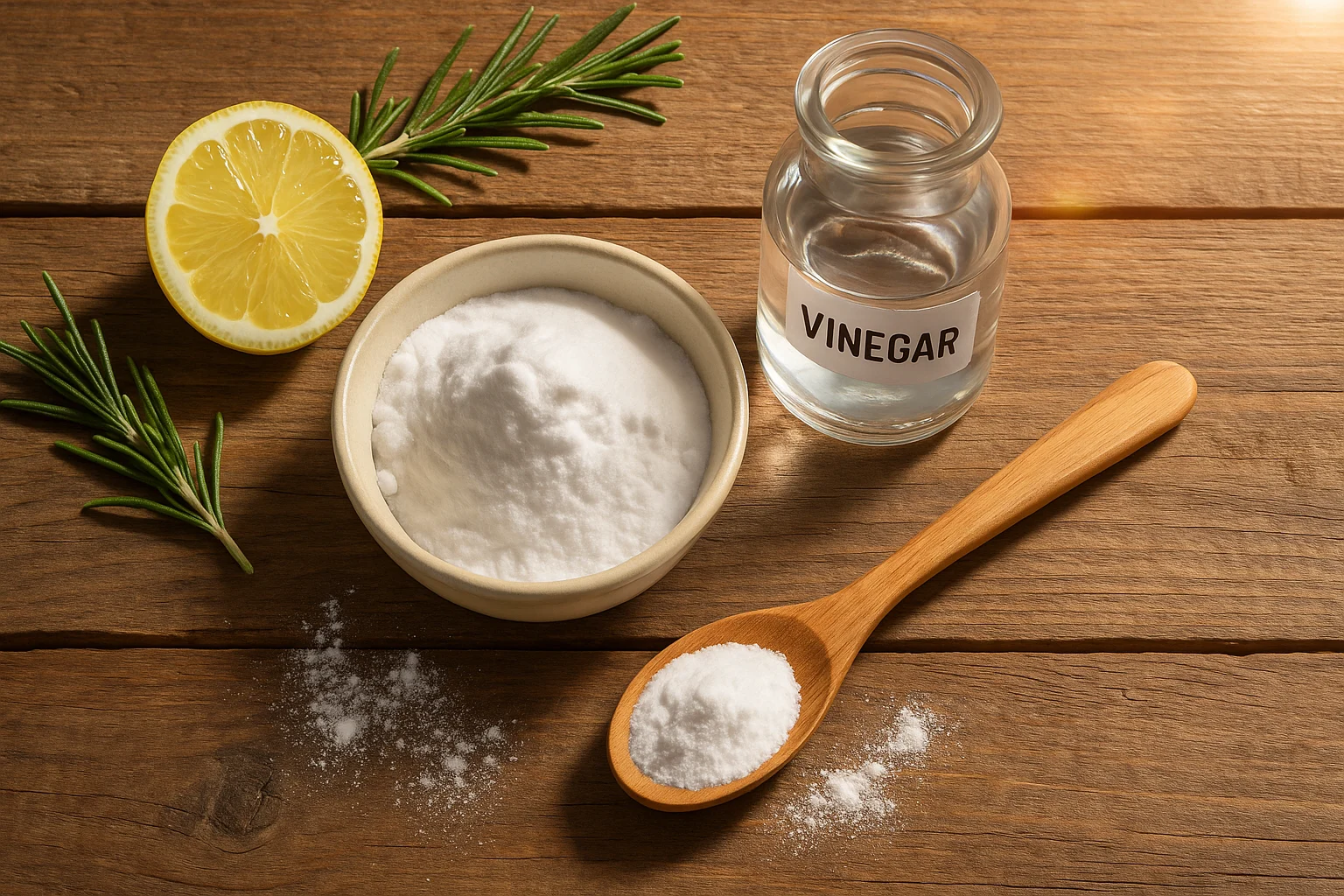
You do not need a shelf full of ingredients. These five cover most natural cleaning recipes without creating a chemistry cabinet.
| Ingredient | Best job | Main limit |
|---|---|---|
| Mild dish soap | Everyday grease and washable surfaces | Too much leaves residue; follow the surface maker’s guidance |
| Baking soda | Odor control and gentle paste scrubbing | Can scratch glossy or delicate finishes |
| White vinegar | Mineral film and glass on acid-safe surfaces | Avoid natural stone and many wood finishes |
| 3% hydrogen peroxide | Targeted stain treatment when the product label permits it | Can lighten color; do not mix with other cleaners |
| Microfiber cloths and a soft brush | Lifting dirt with less product | Use a non-scratching cloth or brush appropriate for the surface |
I leave essential oils out of the base recipes. They add scent, not cleaning power, and concentrated oils can be hazardous to pets. The ASPCA recommends keeping oils out of reach and being especially cautious around animals with breathing problems (ASPCA).
I also skip borax in a general-purpose starter kit. It is not necessary for the recipes below, and removing it keeps the system simpler for homes with children, pets, or uncertain storage.
Safety Rules Before You Mix Anything
- Never mix bleach or a disinfectant with another cleaner. CDC warns that dangerous vapors can be released. Use one product at a time and follow its label.
- Keep acids off acid-sensitive stone. Vinegar and lemon can dull or etch marble, limestone, travertine, and other calcareous stone. The Natural Stone Institute recommends a neutral cleaner or mild dish soap and warm water instead (Natural Stone Institute).
- Do not assume sealed wood tolerates vinegar. The National Wood Flooring Association advises using a small amount of pH-balanced wood-floor cleaner, avoiding excess water, and avoiding vinegar-and-water mopping because it can damage finishes over time (NWFA).
- Test color and finish first. Try the method in a hidden spot, let it dry, and check for dulling, whitening, color transfer, or tackiness.
- Use ventilation and basic protection. Open a window when odors build up, avoid inhaling sprays, and use gloves when a product label calls for them.
- Label every bottle. Include ingredients, the surface it is for, and the date mixed. Never reuse a beverage container.
Stop when the surface is unknown. Unsealed stone, antique finishes, specialty coatings, and upholstery without a readable care tag are not good places to experiment.
You do not need to memorize every exception. The next decision is whether this job calls for a simple homemade method, a labeled product, or a non-chemical first step.
Cleaner Match Tool: Find the Mildest Useful Method
Choose the job closest to yours. You will get a clear first move, the main caution, and a direct link to the full instructions.
Some jobs suit a simple homemade method; others are safer with a labeled product, care-code check, or mechanical step.
Read the full methodHomemade Cleaning Recipes by Surface and Job
Use the result to jump to the matching method below, then read the full surface limits before you mix. The short answer chooses the first move; the full section gives the ratio, application steps, and stop conditions. More ingredients rarely mean better cleaning.
Everyday Washable Surfaces
All-Purpose Cleaner Recipe for Washable Surfaces
- Mix: 2 cups warm water with 1 teaspoon mild dish soap.
- Use on: Most sealed, water-safe counters, cabinet fronts, appliance exteriors, and painted surfaces when the finish maker allows mild soap.
- Method: Dampen a cloth, wipe, then follow with a clean damp cloth if residue remains. Dry the surface.
- Avoid: Electronics, unfinished wood, and any surface whose maker prohibits soap or moisture.
Simple Glass and Mirror Cleaner
- Mix: 1 tablespoon white vinegar in 1 quart of water.
- Method: Apply lightly to a cloth rather than soaking the frame, wipe the glass, then buff dry.
- Avoid: Stone surrounds, specialty window films, and manufacturer-coated screens unless their care instructions allow vinegar.
This restrained ratio follows EPA’s household-waste guidance for a simple glass-cleaning alternative (EPA).
Kitchen Degreaser
- Mix: Warm water with a few drops of dish soap.
- Method: Hold a warm, damp cloth on the grease for a minute, wipe, then repeat before reaching for an abrasive.
- For stubborn spots: Make a paste of baking soda and water, test it, rub gently, and rinse.
- Avoid: Glossy finishes that may scratch and appliance openings that should not get wet.