
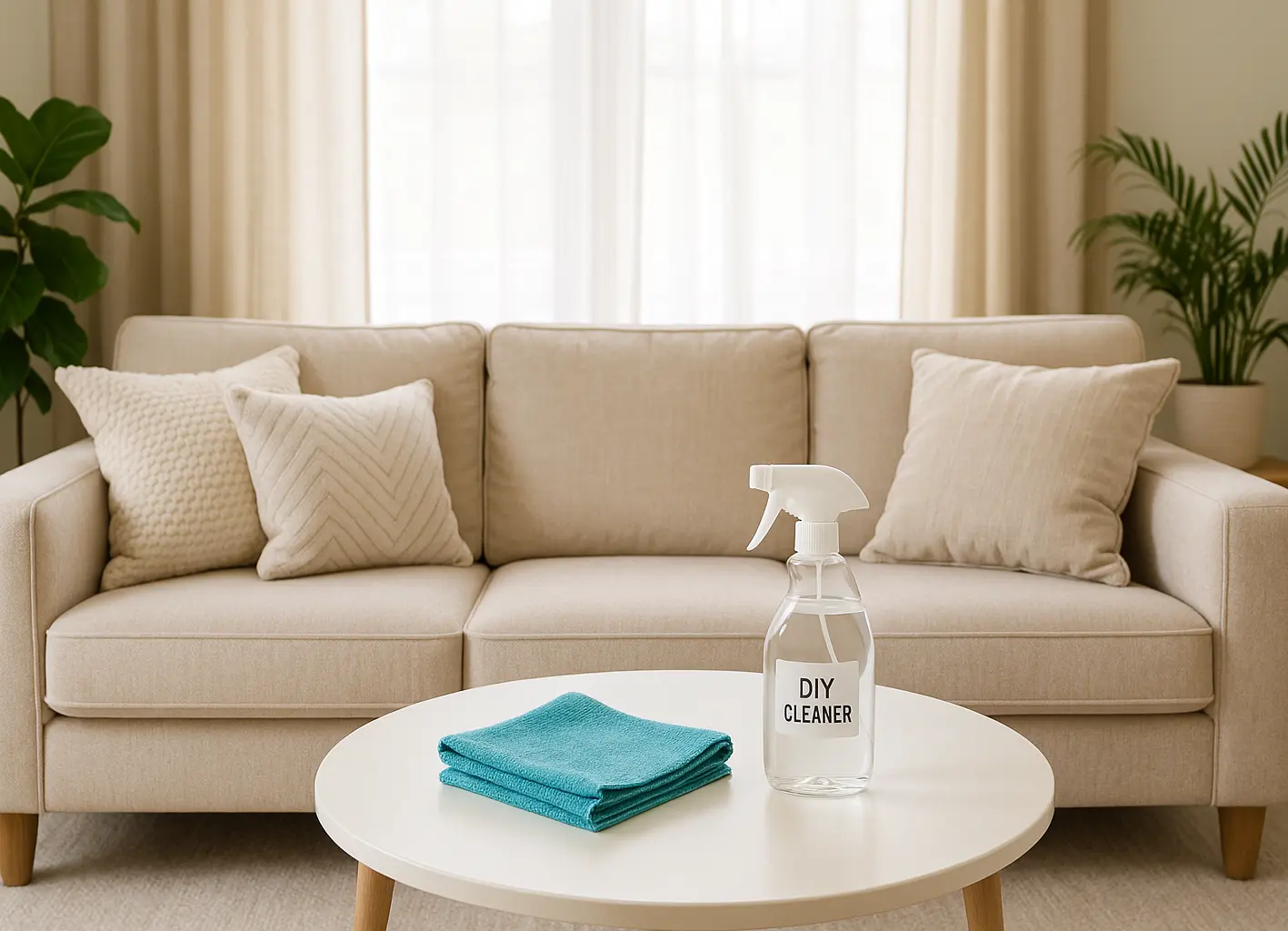
A homemade cleaning solution for upholstery can save a store run, but the wrong mix can leave a bigger mark than the original spill. Check the care tag first. If it says W or W-S/WS and the manufacturer allows a mild water-based cleaner, mix 1/4 teaspoon clear mild dish soap with 1 cup lukewarm water.
Use only the suds or a barely damp white cloth, blot from the outside inward, then remove residue with a second barely damp cloth and dry with airflow. Stop if you see dye transfer, a ring, texture change, shrinkage, or altered sheen. For S, X, unknown, leather, suede, silk, rayon, or manufacturer-restricted upholstery, skip this wet method.
This guide walks you from care code to stain type, spot test, and the point where DIY cleaning should stop. For other surfaces around the house, use the homemade cleaning solutions guide.
Find Your Upholstery-Cleaning RouteThis post contains affiliate links. If you buy through our links, we may earn a commission at no extra cost to you. As an Amazon Associate, I earn from qualifying purchases. Learn more.
Table of Contents
- Check the Care Code Before You Mix Anything
- Choose the Right Upholstery-Cleaning Route
- The Homemade Cleaning Solution for Upholstery
- Match the Cleaning Method to the Stain
- How to Spot-Test and Clean a Small Stain
- Stop DIY Cleaning When the Fabric Changes
- Keep Upholstery Clean Longer
- Frequently Asked Questions
- Let It Dry Before You Decide
Check the Care Code Before You Mix Anything
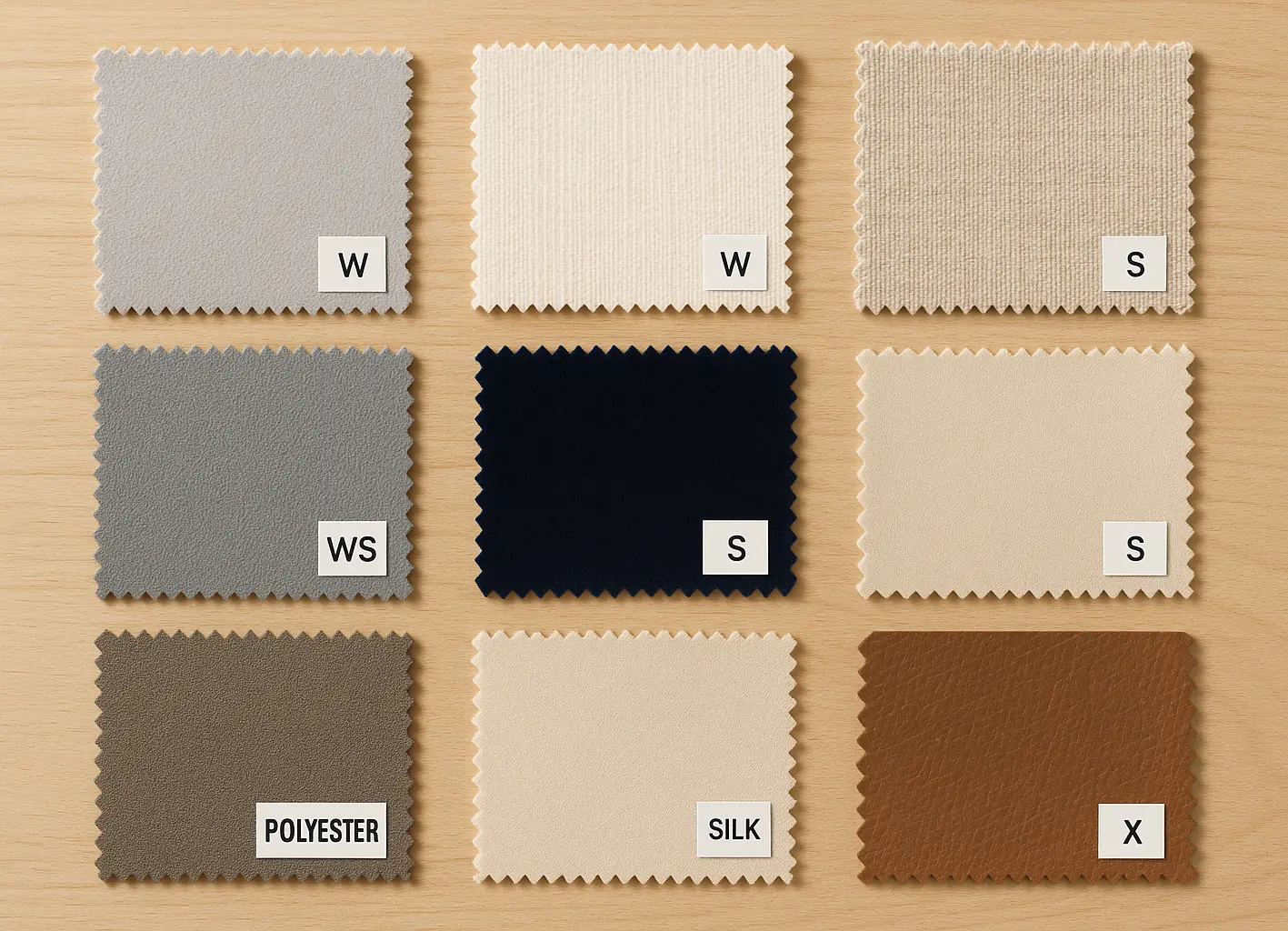
Look beneath a cushion or under the furniture frame for a W, S, W-S/WS, or X code. That code tells you which category of cleaner the fabric permits; it does not approve every recipe in that category. When the tag is missing or unreadable, do not treat a hidden spot test as permission to wet-clean. A zipper is not permission to wash a cushion cover separately; remove or wash it only when the manufacturer’s label says you can.
| Code | What the code permits | Use this recipe? |
|---|---|---|
| W | Water-based upholstery cleaning. | Only when the manufacturer permits a mild detergent method; pretest and do not saturate. |
| S | Water-free dry-cleaning solvent only. | No. Use the maker-approved solvent or a professional. |
| W-S / WS | A water-based product or suitable water-free solvent. | Possibly. Follow the manufacturer’s directions and pretest the exact method. |
| X | Vacuuming or light brushing only. | No liquid cleaner. |
Manufacturer guidance consistently puts the tag first: Ashley’s upholstery care guidance and La-Z-Boy’s fabric-care instructions both separate water-safe, solvent-only, and vacuum-only methods and warn against saturation.
Once you know the code, match it with the problem you are trying to clean. A W code does not make the homemade recipe right for ink, urine inside the cushion, or widespread soil.
Choose the Right Upholstery-Cleaning Route
Select the care code and the type of mess. The result tells you whether this homemade recipe fits and where to go next, but it cannot confirm a particular dye, finish, warranty, or stain chemistry.
Choose the code first, then select the type of mess. The code controls which cleaning category is allowed; the mess determines whether this recipe fits.
The Homemade Cleaning Solution for Upholstery
This is a small-batch spot cleaner for a fresh surface mark on manufacturer-approved W or W-S/WS upholstery. It is not an all-over sofa shampoo, disinfectant, urine treatment, mold treatment, or substitute for extraction when soil has reached the padding.
The frugal advantage is simple: mix only enough for one spot instead of buying a full bottle. That does not make a homemade cleaner universally safer; the care code and furniture maker still decide what belongs on the fabric.
What You Need
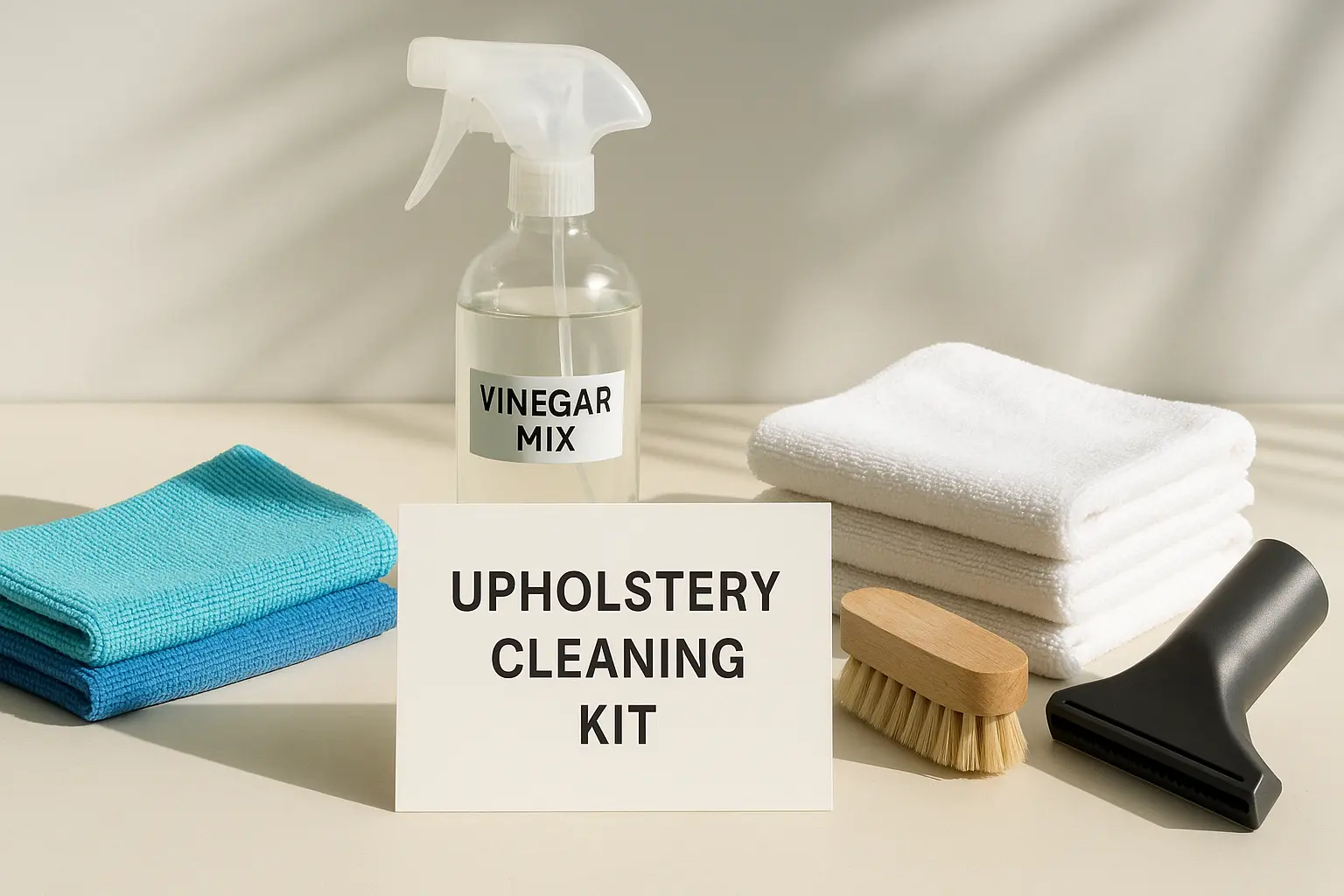
- 1 cup lukewarm water: the base for the diluted cleaner.
- 1/4 teaspoon clear mild dish soap: a low concentration is easier to rinse than a tablespoon-heavy mix.
- Two or more white microfiber cloths: one for the solution, one for the rinse, and a dry surface for final blotting.
- A small bowl: lets you use the suds or dampen a cloth without spraying the furniture.
- A fan: speeds drying after you have removed as much moisture as possible.
Need separate cloths for each step? Amazon Basics Microfiber Cleaning Cloths, 24-Pack.
Separate cloths keep loosened soil and soap from going back onto the fabric: use one for the solution, one for the plain-water rinse, and a dry one for blotting. Keep a white or very light cloth for the hidden color-transfer test. Skip it if you already own enough clean, lint-free cloths; it improves control, not fabric compatibility.
Should You Add Vinegar?
Not by default. Some furniture guidance permits diluted vinegar on certain water-safe fabrics, while other care instructions specify upholstery shampoo or mild detergent foam. Because vinegar is acidic and finishes vary, add it only when the furniture maker’s instructions specifically permit an acidic cleaner. The dish-soap-and-water mix is the more restrained base recipe.
Match the Cleaning Method to the Stain
Before you use the recipe, match the method to the stain and how far it has traveled into the furniture. A mild soap solution fits a fresh surface spill; grease, dye, contamination inside the cushion, and widespread soil need a different route.
| What you are dealing with | Best starting route | Why |
|---|---|---|
| Fresh food or drink spot on W/WS fabric | The mild dish-soap method above. | It targets a small surface spill without turning the whole cushion into a wet-cleaning project. |
| Grease, ink, makeup, dye, or an unknown old stain | A stain-specific product approved for the care code, or professional help. | Repeated soap, vinegar, or scrubbing can spread pigment, leave residue, or damage the finish. |
| Dry surface odor with no wet contamination | A very light baking-soda treatment only if the manufacturer permits dry powder. | Baking soda may reduce surface odor, but it is not a cleaner for contamination inside foam or batting. |
| Urine, vomit, milk, or odor inside the cushion | An approved enzyme product, extraction when allowed, or professional cleaning. | A surface wipe cannot remove material that has reached the filling. |
| Visible mold or a musty sofa after water damage | Stop DIY spot cleaning. Follow EPA mold-cleanup guidance and use a restoration professional when needed. | Mold can grow inside porous upholstery, where surface cleaning may not remove it completely. |
| Widespread soil or a generally dingy sofa | Manufacturer-approved extraction or professional upholstery cleaning. | A small homemade batch is for spot work, not even all-over cleaning. |
Baking soda is a deodorizing option, not the main recipe. Test a hidden area, use a light layer, keep children and pets away, and vacuum until no powder remains. Skip it when the furniture maker prohibits powders or when residue could lodge in textured fabric.
How to Spot-Test and Clean a Small Stain
For DIY upholstery cleaning, control matters more than scrubbing power. Work on a small, recent stain, use as little moisture as possible, and stop if the fabric changes.
- Vacuum first. Remove crumbs, dust, and pet hair so they do not turn into muddy residue.
- Blot fresh liquid. Press with a clean white cloth; do not rub the spill outward.
- Mix the solution. Stir 1/4 teaspoon clear mild dish soap into 1 cup lukewarm water. Do not create dense foam or add extra soap for a “stronger” batch.
- Spot-test the exact method. Dampen a white cloth with the suds or solution, dab a hidden area, then let it dry completely. Check for dye transfer, a ring, texture change, shrinkage, or altered sheen.
- Blot the stain from the outside inward. Use a barely damp cloth and repeat with clean sections rather than soaking or hard-scrubbing the fabric.
- Rinse the residue. Blot with a second cloth barely dampened with plain water, then press with a dry cloth.
- Dry with airflow. Use a fan and keep people and pets off the area until it is fully dry. Avoid high heat unless the manufacturer specifically permits it.
Never mix vinegar with chlorine bleach. The combination releases irritating chlorine gas; see Poison Control’s vinegar safety guidance.
Stop DIY Cleaning When the Fabric Changes
Do not respond to a failed spot test by trying a stronger homemade mixture. Stop and change methods when you see any of these signs:
- Color transfers to the white cloth.
- A ring, pale patch, dark patch, or altered sheen appears as the test dries.
- The nap, pile, or texture looks crushed, fuzzy, stiff, or distorted.
- The stain spreads, returns after drying, or smells as if it has reached the cushion filling.
- You see mold or notice a musty odor after water damage; porous upholstery may require professional remediation or disposal.
- Soap residue remains after a careful plain-water blot.
- The furniture is valuable, antique, under warranty, or made from an unknown or delicate material.
Let the area dry, photograph the change, and check the furniture maker’s stain instructions before doing anything else. For widespread water-safe soil, extraction may be appropriate; for S, X, unknown, delicate, or manufacturer-restricted upholstery, use the approved specialist route instead.
When water-safe upholstery needs extraction: BISSELL Little Green 1400B Portable Carpet & Upholstery Cleaner.
Use it only when the furniture maker permits extraction and the soil is widespread or has moved below the surface. Skip it for a small mark that is responding to blotting, and for S-, X-, unknown, delicate, or manufacturer-restricted upholstery. Use only formulas approved for both the machine and the furniture.
Keep Upholstery Clean Longer
Routine dry care prevents many stains from becoming wet-cleaning jobs. These habits are more useful than repeatedly reaching for a stronger mix:
- Vacuum seams, arms, and high-contact areas regularly with an upholstery attachment.
- Blot spills immediately with a clean white cloth instead of rubbing.
- Rotate removable cushions and use washable throws in the highest-use spots.
- Keep the fabric away from strong sun and heat when the manufacturer warns about fading or drying.
- Use professional cleaning when the whole piece is soiled or the label calls for it.
For more low-cost routines that reduce repeat cleaning purchases, see these budget-friendly cleaning tips.
Frequently Asked Questions
Let It Dry Before You Decide
Once the spot is clean, stop touching it and let it dry completely. Check it in daylight for a ring, color shift, stiffness, altered sheen, or returning odor. If the fabric looks and feels normal, the job is done; if not, do not add more cleaner—use the stop signs above.
That is the real goal: not the strongest formula, but the mildest method that lifts the stain without changing the upholstery. For other surfaces around the house, use the homemade cleaning solutions guide.
Disclaimer: This guide shares general home-cleaning information, not instructions for every fabric or stain. Follow the furniture manufacturer’s care code and product directions. Never mix vinegar with chlorine bleach; the combination releases irritating chlorine gas. Do not use this water-based recipe on S- or X-coded upholstery, unknown fabric, leather, suede, silk, rayon, antiques, or any piece whose warranty or care guide prohibits it. For those cases, use a professional upholstery cleaner.