
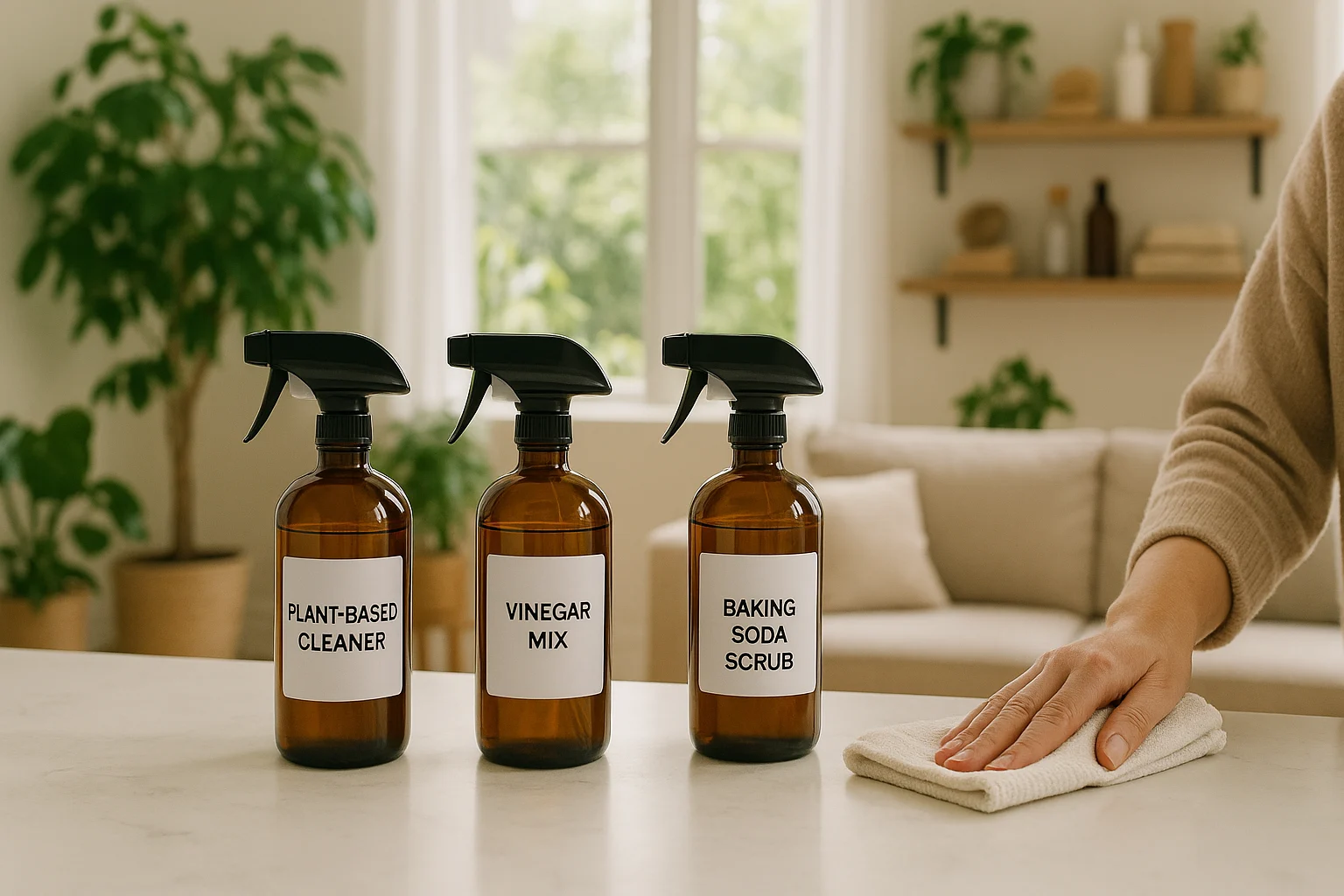
The best starting point is not the strongest cleaner; it is the simplest method that can finish the job. For routine dirt, that often means fragrance-free soap or detergent and water. Save an EPA-registered disinfectant for situations that truly require disinfection, and follow its label exactly.
This guide to natural cleaning products for asthmatics compares five lower-exposure options and shows how to screen labels, application methods, and your own reactions. “Lower-exposure” means reducing fragrance, spray mist, dust, and unnecessary disinfectant use—not promising that a product is safe for everyone. For surface-specific recipes, use the homemade cleaning solutions guide.
This post contains an Amazon affiliate link. If you purchase through it, we may earn a commission at no extra cost to you. As an Amazon Associate, I earn from qualifying purchases.
Table of Contents
- Quick Start: Match the Cleaner to the Job
- How to Choose a Cleaner When You Have Asthma
- Check Whether a Cleaner Fits the Job
- 5 Lower-Exposure Cleaning Options
- What to Avoid or Use With Extra Care
- A Lower-Exposure Cleaning Routine
- Frequently Asked Questions
- Start With the Cleaner You Use Most
Quick Start: Match the Cleaner to the Job
Lower-exposure does not mean under-cleaning. It means matching the least complex effective method to the job, then checking the label, application method, and your own trigger history.
| Cleaning job | Start with | Check before use |
|---|---|---|
| Everyday counters and washable hard surfaces | Fragrance-free soap or mild detergent and water | Surface directions; use a cloth or controlled application when the label permits |
| Dishes, laundry, and dishwasher loads | A verified fragrance-free or Free & Clear product | The exact label, because formulas and certifications vary by product |
| Grease and several routine household jobs | A fragrance-free concentrate diluted exactly as directed | Dilution, ventilation, and whether one formula fits the surface |
| Scrubbing and odor control | Baking soda mixed into a paste | Surface compatibility and keeping dry powder out of the air |
| Mineral deposits and compatible glass or fixtures | White vinegar, only if you tolerate the odor | Surface compatibility; vinegar is not an EPA-registered disinfectant |
| Disinfecting after illness or another higher-risk situation | An EPA-registered disinfectant for that surface and purpose | Contact time, ventilation, protective equipment, and every label direction |
How to Choose a Cleaner When You Have Asthma
People often search for “asthma-safe cleaners,” but no label can promise that every person will tolerate a product. A better decision uses four checks:
- Check the fragrance claim. Prefer a verified “fragrance-free” claim to “unscented.” EPA’s optional fragrance-free Safer Choice label means the qualifying product contains no fragrance materials, including masking fragrance.
- Check what becomes airborne. A liquid applied to a cloth may create less mist than an aerosol. A baking-soda paste may create less dust than shaking dry powder. Follow the product label rather than changing the application method when the label does not allow it.
- Use only as much chemistry as the job needs. Cleaning removes dirt with soap or detergent. Disinfecting is a separate job that uses a registered antimicrobial product. Do not use a disinfectant by default when ordinary cleaning is enough.
- Change one thing at a time. Keep the rest of the routine stable, define your stop condition before you start, and stop using a product if it causes coughing, wheezing, chest tightness, or another reaction.
Treat labels as evidence, not guarantees. If you have a product type in mind, use the checker next to compare it with the job you need it to do. The result will point you to the most relevant option or caution below.
Check Whether a Cleaner Fits the Job
Choose the cleaning job and the product type you are considering. The result will show whether it is a sensible starting fit, a limited fit, or a higher-concern choice—and what to check next. This is a screening aid, not medical clearance.
Choose both fields to see the fit and next step.
Use the exact product label as the final authority for surfaces, dilution, contact time, ventilation, and protective equipment. Never mix cleaners—especially bleach with ammonia, vinegar, acids, or other products.
5 Lower-Exposure Cleaning Options and Where They Fit
Use these five options as a shortlist, not a universal shopping list. Start with the one that fits the job, then verify the exact label, surface directions, and your own tolerance.
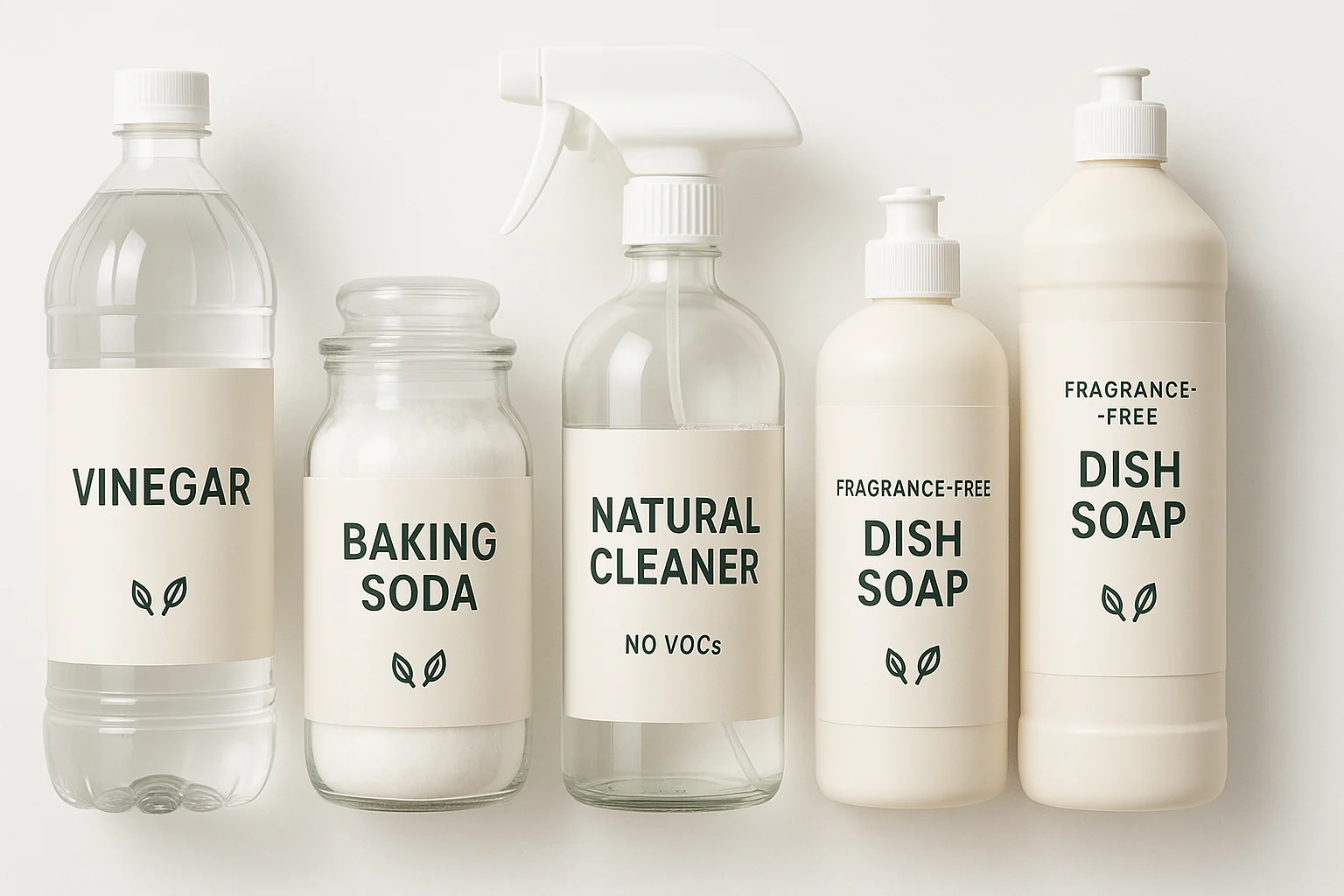
1. Fragrance-Free Soap or Mild Detergent: The Everyday Default
Best for: Routine wiping, dishes, and washable surfaces when the label allows it. CDC and EPA guidance distinguish ordinary cleaning with soap or detergent from disinfecting, so this is often the first place to simplify.
Watch for: “Unscented” is not the same as fragrance-free, and formulas can vary within one product family. Check the exact bottle rather than relying on the brand name. Seventh Generation’s current Free & Clear range is one example to evaluate, not a tolerance guarantee; our Target guide covers current store options.
2. Fragrance-Free Concentrate: One Product for Several Jobs
Best for: Reducing the number of bottles under the sink when one concentrate is labeled for several surfaces. A concentrate can also be mixed in the quantity and strength specified by the manufacturer instead of relying on multiple scented sprays.
Watch for: Dilution and surface directions matter. Branch Basics describes its concentrate as fragrance-free and plant/mineral-based, but that does not establish asthma safety for every reader. Review the current product and dilution directions before use.
3. Baking Soda Paste: Scrubbing Without Added Fragrance
Best for: Gentle scrubbing and odor control on compatible surfaces. Mixing baking soda into a paste can keep more of the product on the surface than scattering dry powder.
Watch for: Fine powder can become airborne, and abrasiveness can damage some finishes. Apply it carefully and use the DIY floor-cleaning guidance only on compatible flooring.
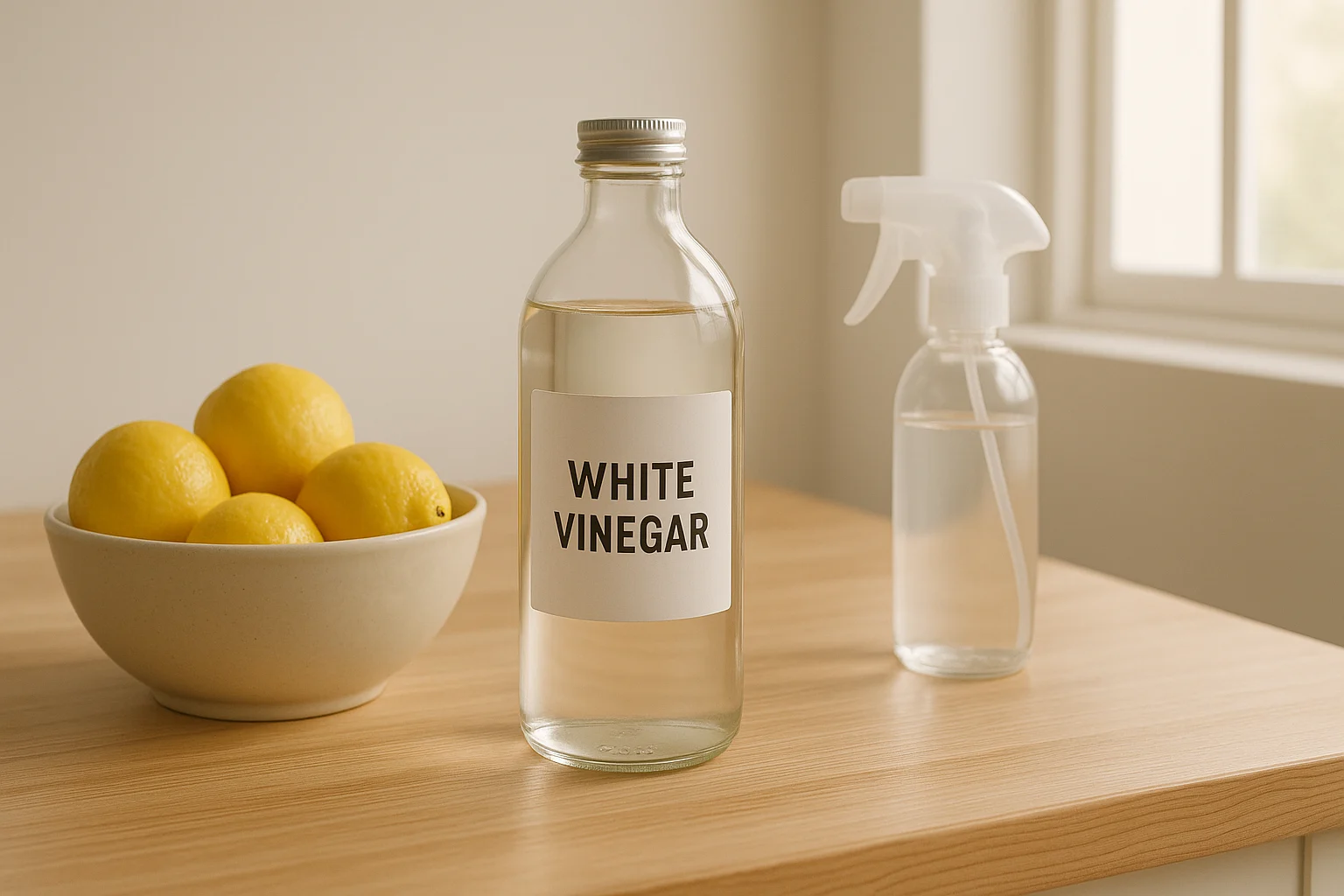
4. White Vinegar: Useful for Mineral Deposits if You Tolerate It
Best for: Some mineral deposits and routine cleaning jobs on acid-safe surfaces. It is inexpensive, contains no added fragrance, and can often be applied without an aerosol.
Watch for: The acetic-acid odor can irritate sensitive airways, and vinegar can damage natural stone and other acid-sensitive materials. It is not an EPA-registered disinfectant and must never be mixed with bleach. For a surface-specific example, see the homemade upholstery cleaner.
5. EPA-Registered Disinfectant: Reserve It for a Real Disinfecting Job
Best for: Situations in which a surface actually needs disinfection, such as after illness or according to public-health guidance. Choose a product registered for the intended surface and organism, and follow the contact time exactly.
Watch for: Disinfectants can still trigger asthma symptoms. Use the label’s ventilation and protective-equipment directions, never mix products, and consider EPA’s DfE-certified disinfectant list when an appropriate option is available. The DfE label is a screening aid, not an endorsement or individual safety guarantee.
If your result points to a fragrance-free soap, detergent, or another ready-made routine cleaner, the next step is comparing exact products. Our guide to affordable natural cleaning products at Target covers store options you can look at in person, which makes it easier to compare exact labels, fragrance claims, and current formulas before buying.
What to Avoid or Use With Extra Care
The five options above are only starting points. Exposure can come from the ingredient itself, the way it is applied, or using more chemistry than the task requires.
Fragrance, Air Fresheners, and Aerosol Sprays
Strong scents and spray products can trigger symptoms for some people. Fragrance-free is the more cautious starting point when scent is a known trigger, and a controlled liquid application may reduce mist when the product label permits it.
Bleach, Ammonia, Acids, and Quats
The CDC/NIOSH list of work-related asthma exposures includes ammonia, bleach, acids, quaternary ammonium compounds, biocides, formaldehyde, and spray products. That does not mean each exposure affects every person in the same way, but it does justify reading the label and avoiding unnecessary exposure. See the NIOSH exposure guidance.
Never mix bleach with ammonia, vinegar, acids, or other cleaners. When disinfecting, clean the surface first if the label or public-health guidance calls for it, keep the surface wet for the full contact time, and follow every ventilation direction. CDC’s cleaning and disinfecting guidance explains the difference.
VOCs and “Natural” Scents
VOCs are gases released from some liquids and solids, including many cleaners and aerosol products. EPA notes that VOC levels can be higher indoors and that health effects vary widely by chemical and exposure. Citrus terpenes and essential oils are still fragrances; “natural” does not make them automatically low-risk. See EPA’s indoor VOC overview.
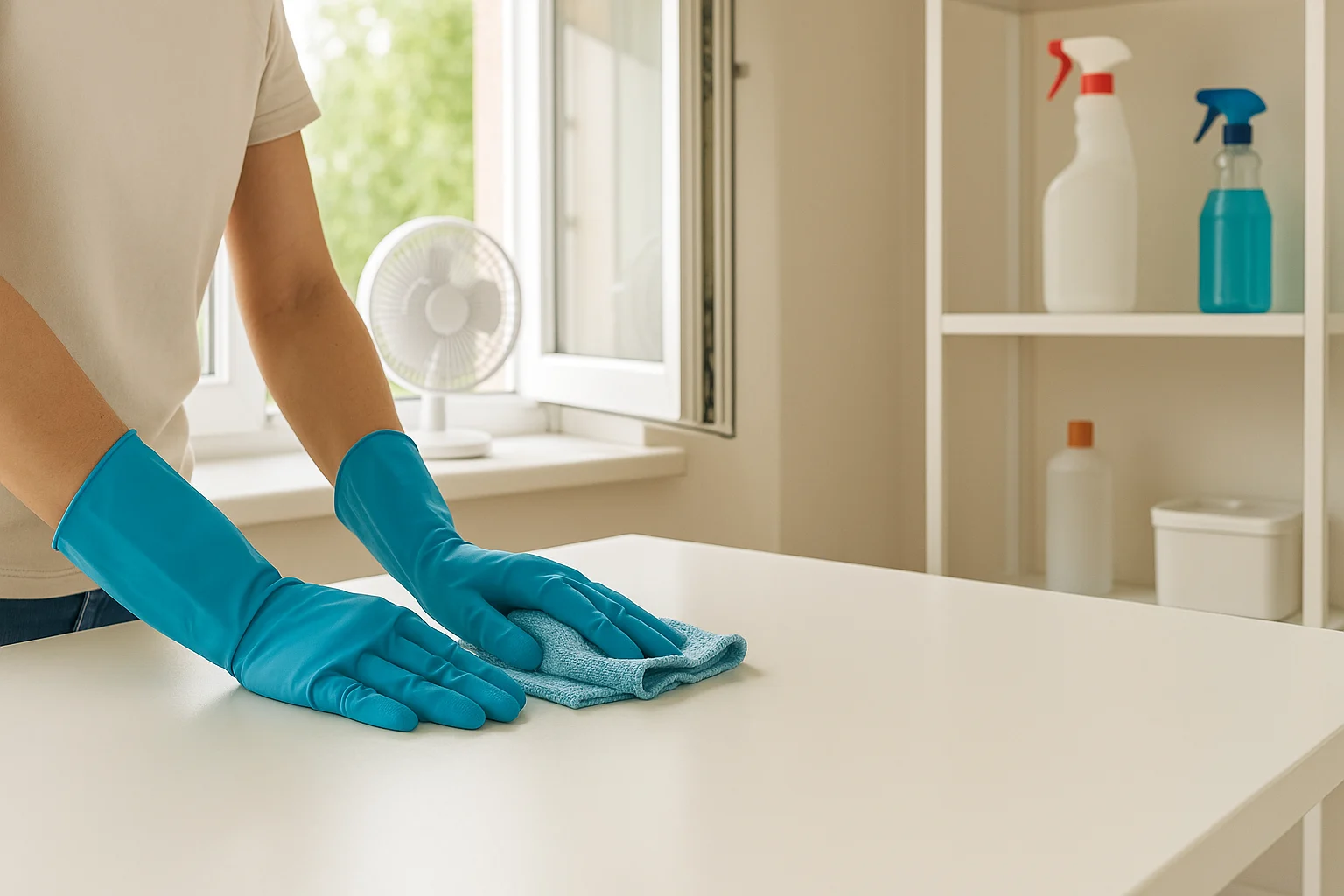
A 6-Step Lower-Exposure Cleaning Routine
Products are only half the decision. Use this sequence to reduce avoidable fragrance, mist, dust, and mixing risk while still finishing the job.
- Remove the main exposure first. Start with the product or method that creates the most fragrance, spray mist, dust, or symptoms.
- Choose the simplest effective method. Use soap or detergent and water for routine cleaning; reserve disinfectant for a real disinfecting need.
- Control what becomes airborne. Damp-dust, avoid aerosols when the label permits another application, and turn baking soda into a paste instead of scattering powder.
- Ventilate appropriately. Follow the label and use exhaust fans or open windows only when outdoor air quality and conditions make that helpful.
- Clean in short, top-to-bottom sessions. Finish with the floor so settled dust is removed last, and leave the area if vacuuming stirs up a known trigger.
- Record the result before changing another product. Note the product, method, room, ventilation, and any symptoms so the next decision is based on a pattern rather than guesswork.
One Reusable Tool for Controlled Application
Washable microfiber cloths can support damp dusting and controlled liquid application when the cleaner label permits it. They are a cleaning tool—not an asthma treatment—and they do not make a product safe for every person.
If spraying into the room is part of the problem:
Amazon Basics Microfiber Cleaning Cloths, 24-Pack
Choose them for damp dusting or for applying a label-approved liquid to the cloth instead of spraying into the room. Skip this purchase if you already own washable cloths, and follow the product label whenever it requires a different application method.
For lower-cost ways to simplify the kit without adding more products, use these frugal cleaning ideas.
Frequently Asked Questions
Start With the Cleaner You Use Most
Do not replace the whole cabinet at once. Pick the product you spray or smell most often and choose the simplest fragrance-free alternative that can do the same job. Keep the rest of the routine unchanged for the first use.
Write down the product, application method, ventilation, and any symptoms. If it works and you tolerate it, keep it; if it bothers your breathing, stop. For the next surface, use the homemade cleaning solutions guide for recipes and compatibility checks. The goal is a smaller, simpler kit—not a longer list of products labeled natural.
Medical & safety disclaimer: This article provides general educational information about cleaning exposures and product labels; it is not medical advice. Talk with your healthcare provider about asthma management and product choices. For disinfecting, follow public-health guidance and use EPA-registered products as directed. Never mix bleach with ammonia, vinegar, acids, or other cleaners. Ventilate as directed and stop using any product that bothers your breathing.