
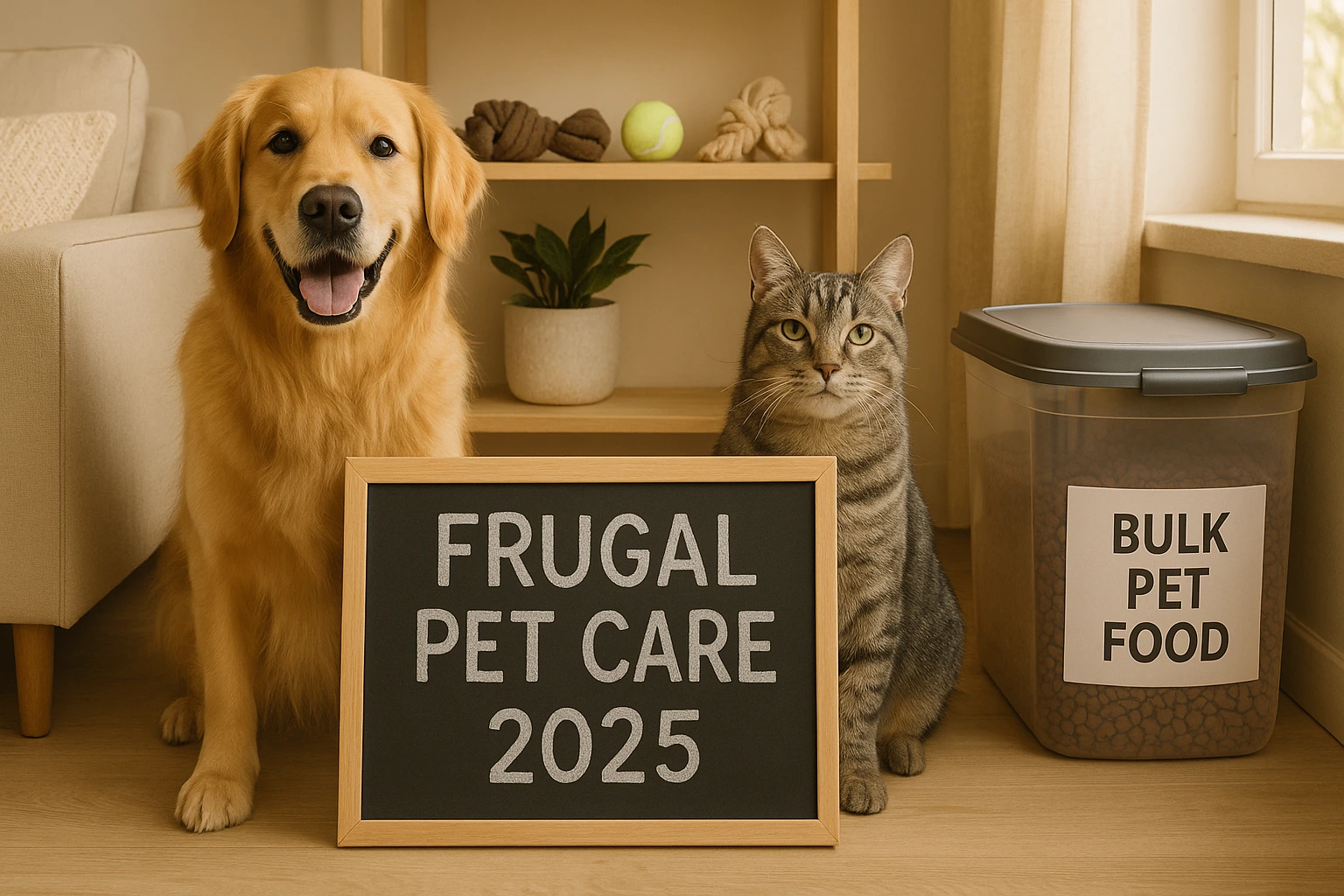
Frugal pet care is not about buying the cheapest version of everything. It is about finding the costs that repeat, cutting waste and convenience fees, and knowing which jobs are safe to handle at home. Food that goes stale, duplicate toys, rushed grooming appointments, and unplanned routine care can drain a budget without improving your pet’s life.
My rule is simple: save on repetition, storage, shopping habits, and low-risk maintenance—never on prescribed food, medication, urgent care, or a task that frightens or hurts your pet. To apply that rule across the rest of your household, start with the Frugal Living Handbook.
This post contains affiliate links. If you buy through our links, we may earn a commission at no extra cost to you. As an Amazon Associate, I earn from qualifying purchases. Learn more.
Table of Contents
- Start With the Cost That Repeats
- Choose Where to Save First on Pet Care
- Lower Pet Food Costs Without Guessing
- Plan Veterinary Costs Before They Become Urgent
- Handle the Right Grooming Jobs at Home
- Buy Fewer, Better Pet Supplies
- Cut the Boarding Bill Before You Travel
- A 30-Day Frugal Pet Care Reset
- Frequently Asked Questions
- Save on the Routine, Not the Care
Start With the Cost That Repeats
A one-off coupon feels productive, but the bigger win is usually a repeat expense. Before changing anything, look at one month of spending and sort it into food, veterinary care, grooming, supplies, medication, and boarding or pet-sitting.
- Pick one category. Work on the largest flexible cost first instead of trimming a dollar from six different places.
- Set your red lines. Prescribed diets, medication, necessary treatment, safe transport, identification, and emergency care are not bargain-hunting categories.
- Choose one rule you can repeat. Unit-price checking, a grooming calendar, a 24-hour wait on extras, or an automatic pet-fund transfer will outlast a single sale.
The two-question tool below focuses on five areas you can review now: food, veterinary costs, grooming, supplies, and boarding or pet-sitting. It will choose one place to start and send you to the matching section.
Choose Where to Save First on Pet Care
Choose the cost that bothers you most and the constraint that matters right now. You’ll get one practical first move without a one-size-fits-all savings estimate.
Choose one answer in each group to see your first move.
Lower Pet Food Costs Without Guessing
Compare Daily Cost, Not Just Bag Price
A larger bag often has a lower unit price, but it is only a bargain if your pet finishes it while the food is still fresh. Start with a simple calculation: package price ÷ the number of days it lasts = daily food cost. Compare suitable foods on that basis rather than comparing shelf prices alone.
Use the feeding guide as a starting point, then follow your veterinarian’s advice for your animal. A food with a lower sticker price can still cost more per day if the feeding amount is larger. The same unit-price habit is useful for human groceries too; the grocery shopping guide shows how to compare sizes without getting distracted by package claims.
Check Nutritional Fit Before Price
Look for the nutritional adequacy statement that names the species and life stage. AAFCO explains that “complete” means the required nutrients are present and “balanced” means they are in the correct ratios. Therapeutic diets and food changes for pets with medical conditions belong with the treating veterinarian, not a budget experiment. Read AAFCO’s pet-food label guide.
| Check | What to compare | Why it matters |
|---|---|---|
| Nutritional adequacy | Species and life-stage statement | Confirms the food is intended as a complete diet for the right animal and stage |
| Daily cost | Package price divided by days used | Accounts for different feeding amounts and bag sizes |
| Medical fit | Allergies, weight goals, prescriptions, and current symptoms | These can matter more than a lower price |
Store What You Buy Properly
Waste turns bulk buying into false economy. The FDA recommends keeping dry food in its original bag, or placing the whole bag inside a clean container, so the lot number and “best by” information stay available. Store unopened food in a cool, dry place below 80°F, refrigerate or discard unused canned or pouched food promptly, and clean storage containers between bags. See the FDA storage guidance.
This is where bulk buying quietly fails. The bigger bag is cheaper per pound, but only if the food is still good by the time you reach the bottom of it — and thirty-eight pounds is awkward to lift, store, and pour from twice a day.
An airtight bin on casters makes both easier. The IRIS USA 38 lb container latches shut against moisture and humidity, and the wheels are the part people underrate — you roll it out from under the counter to the bowl instead of dragging a sack across the kitchen. It is a one-time cost set against a bag you replace every few weeks, which is what keeps buying the larger size practical.
Keep the FDA advice intact when you fill it: slide the whole bag inside if it fits. If it does not, save the UPC, lot number, product name, manufacturer, and best-by date, and tape that information to the outside of the container. Wash and dry the bin between bags rather than topping up old kibble with new.
Keeping the big bag fresh and movable: IRIS USA 38 lb container
Worth it when you buy the large bag often enough that the last of it would otherwise go stale, and you have somewhere cool and dry to keep it. Skip it if a smaller bag stays fresher for your household, or if you cannot lift a full one comfortably. Keep the packaging information with the food, as described above.
Keep Treat Spending Small
Treats are optional calories and an easy place to overbuy. Keep one open pack, choose a size your pet will finish, and use part of the normal food allowance for training when your veterinarian says that is appropriate.
Dog-safety check: read ingredient labels on peanut and nut butters. The FDA warns that xylitol—also called birch sugar or wood sugar—can be poisonous to dogs. If you think a dog ate xylitol, contact a veterinarian, emergency clinic, or animal poison-control service immediately. Read the FDA xylitol warning.
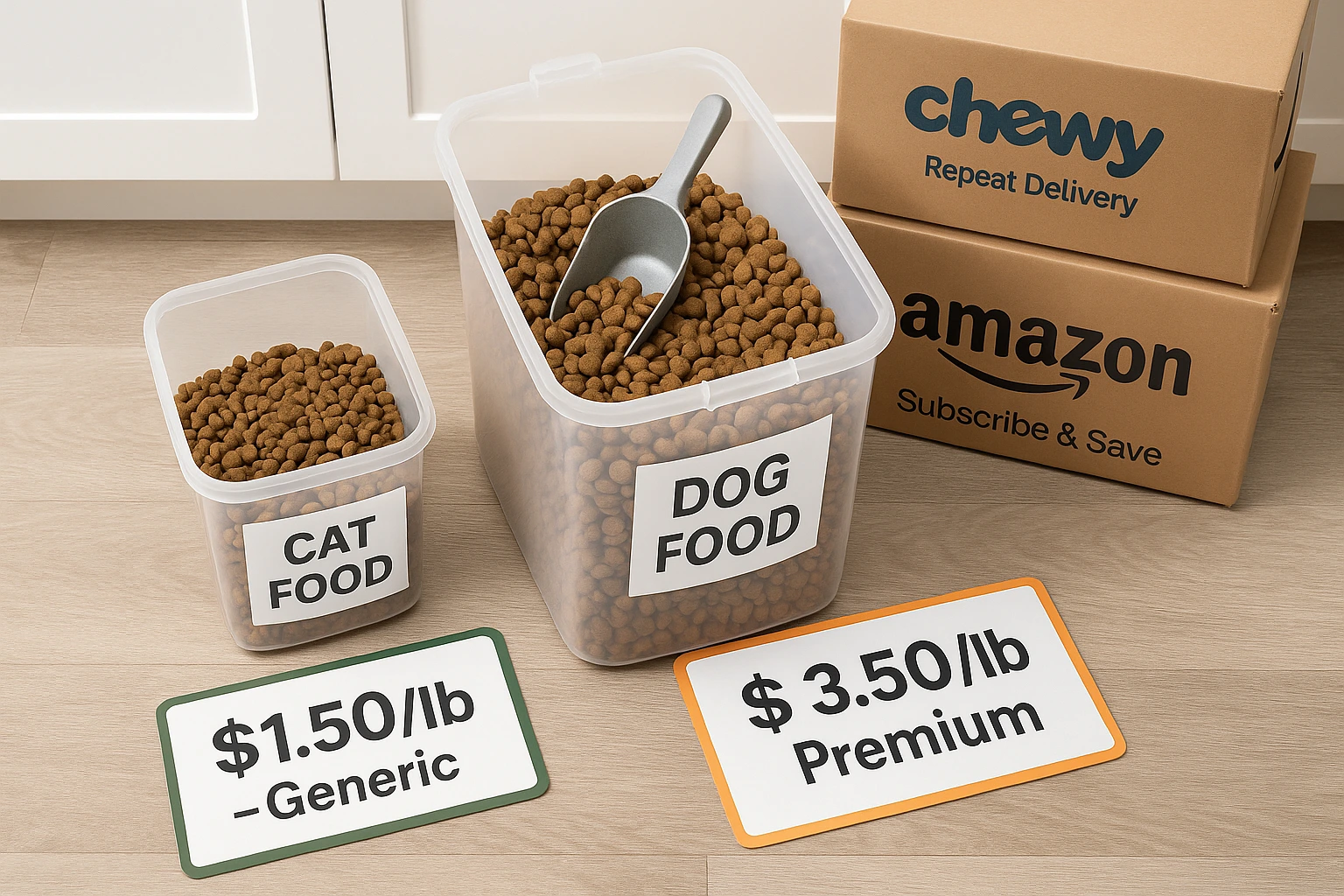
Plan Veterinary Costs Before They Become Urgent
Ask for a Written Routine-Care Plan
Ask your clinic what routine care is recommended for your pet’s age, species, health, lifestyle, and local disease risks. Put the next visit, refill, and vaccine dates in one calendar. Keeping records together also makes it easier to avoid duplicate work when you change clinics or use an emergency hospital.
Regular visits let the veterinary team check areas such as weight, teeth, skin, ears, eyes, and mobility. The goal is not to book the maximum number of appointments; it is to know what your pet actually needs and what changes should trigger an earlier call.
Compare Routine Services Before Booking
Local shelters, nonprofit clinics, veterinary schools, and community programs may offer lower-cost vaccines, microchips, or spay/neuter services. Compare the same service, confirm eligibility and current pricing directly, and ask what follow-up is included. A lower clinic fee is not a saving if you later have to pay again for records, an exam, or aftercare that was excluded.
Choose a Plan for Large Bills
No single option is best for every household. The useful question is which risk you can carry yourself and which risk you want to transfer.
| Option | Useful when | Main limitation |
|---|---|---|
| Dedicated pet fund | You want flexible money for routine or unexpected costs | A major bill can arrive before the fund is large enough |
| Pet insurance | You want help with eligible large or unpredictable bills | Premiums, deductibles, exclusions, waiting periods, and reimbursement rules vary |
| Clinic wellness plan | You want predictable payment for named routine services | It is usually not insurance and may cover only one clinic |
| Payment or financing option | You need to spread an approved bill over time | Fees, interest, eligibility, and missed-payment costs can erase the benefit |
For additional planning and assistance routes, the AVMA maintains a page on veterinary-care costs and financial assistance.
Ask for a Line-Item Estimate
If cost is a concern, say so before the plan is finalized. Ask what is essential now, what each item is intended to answer or treat, whether a lower-cost equivalent medication is appropriate, and whether any part can safely be staged. Only the veterinary team can decide what is safe to delay for that animal.
Do not shop around during an emergency. Difficulty breathing, severe bleeding, seizures, collapse, choking, suspected poisoning, or major trauma need immediate veterinary guidance or care. See the AVMA emergency list.
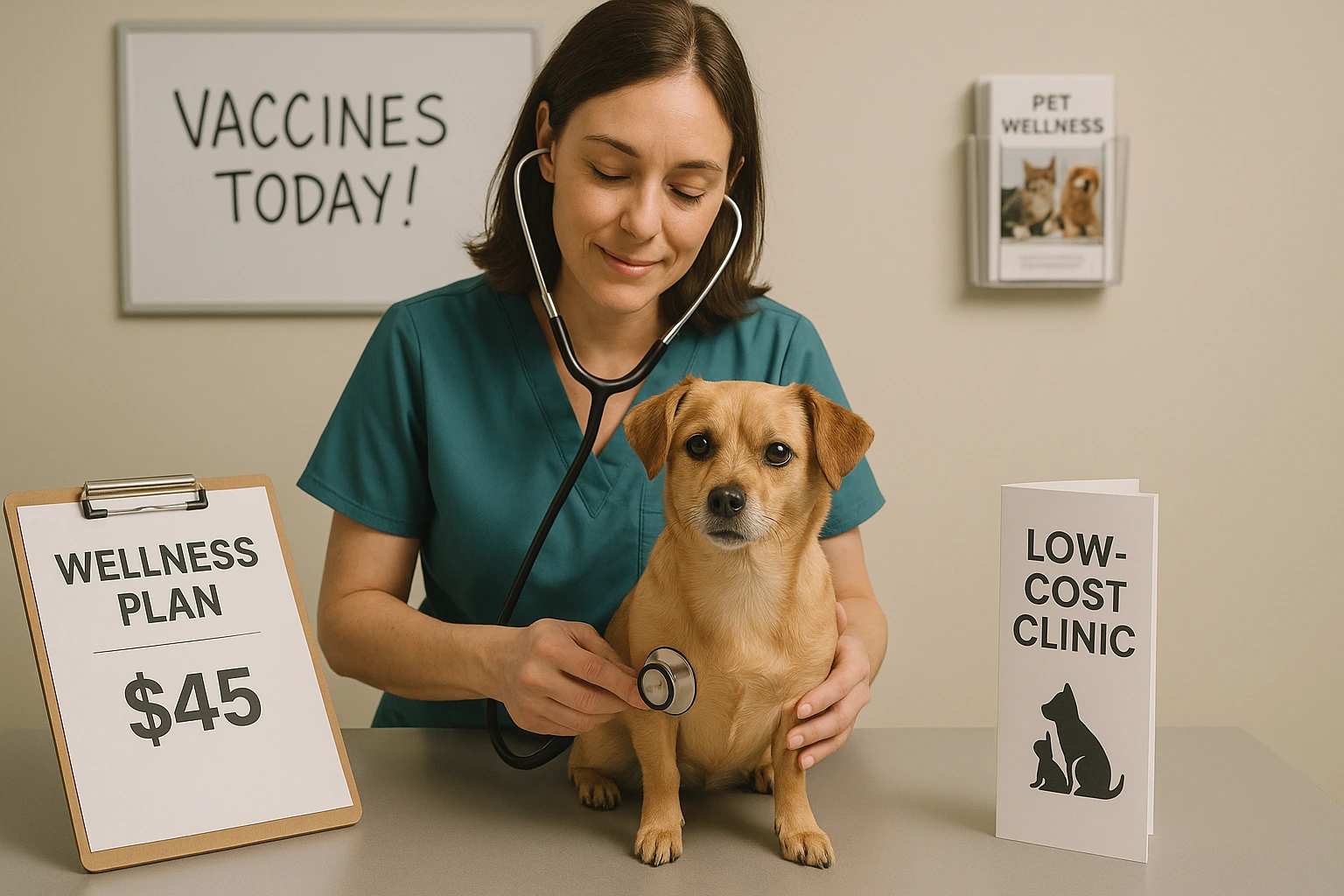
Handle the Right Grooming Jobs at Home
Grooming is a good DIY category only when the task is routine, the pet is comfortable, and you know when to stop. I would start with the job that repeats most often—usually brushing, coat wiping, or simple paw checks—rather than buying a full kit on day one.
Build a Small Task Ladder
- Start with brushing. Use a brush or comb that matches the coat and work in short sessions.
- Add bathing only when needed. Use a pet-specific product according to its label and veterinary guidance.
- Learn nail care slowly. If you cannot identify a safe cutting point, your pet panics, or there has been bleeding before, use a groomer or veterinary professional.
- Leave painful or medical problems alone. Tight mats near the skin, swelling, discharge, strong odor, wounds, or worsening itch need professional assessment.
The money-saving goal is not “do every job yourself.” It is to handle the calm, frequent maintenance that reduces how often you need outside help, while keeping difficult trims and medical problems with the right professional.
Buy Tools One at a Time
Start with the brush or comb you will use every week. Choose it for the coat, not because it comes in a large kit. For pets whose coat is suited to a slicker brush, the Hertzko Self-Cleaning Slicker Brush is one practical option; use a different tool if a groomer or veterinarian recommends one for your pet’s coat or skin. Add clippers, a de-shedding tool, or another specialty item only after the first tool proves insufficient.
The one tool to start with: Hertzko Self-Cleaning Slicker Brush
The single tool that covers the most frequent job — routine coat maintenance between professional visits. Skip it if your pet’s coat type does not suit a slicker, and stop entirely at tight mats near the skin, swelling, discharge or a wound, which need a groomer or vet rather than a brush.
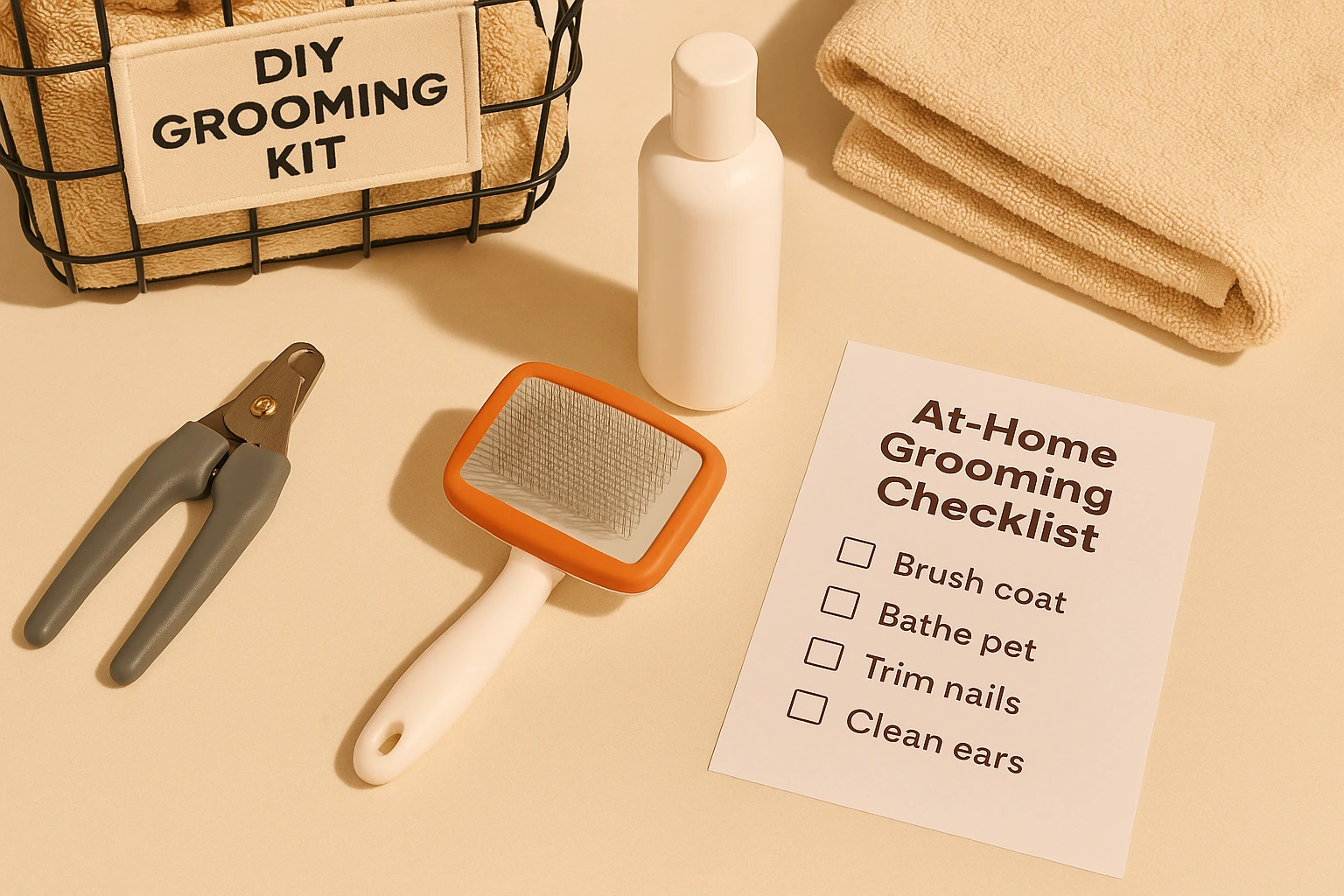
Buy Fewer, Better Pet Supplies
Use Cost per Use, Not Sticker Price
Cheap pet supplies are only a bargain if they fit, last, and stay safe. A leash, bed, bowl, carrier, toy, or cleaner that survives regular use can cost less over time than a string of replacements. Before buying, ask how often the item will be used, what usually fails, and whether the cheaper option can be inspected, cleaned, and repaired.
Buy Used Selectively
Second-hand beds, blankets, bowls, gates, and some carriers can work when they are washable, intact, the correct size, and free from sharp edges or damaged hardware. Be more cautious with safety-critical items. Replace a compromised leash, collar, harness, crate latch, or carrier rather than trusting a repair you cannot verify.
DIY Toys Need a Safety Rule
Homemade enrichment can be useful, but “free” materials are not automatically safe. Match the toy to the animal’s size and chewing style, supervise the first uses, remove loose strings or small pieces, and discard the toy when it starts to break apart. The DIY Pet Projects guide is the better place for step-by-step builds.
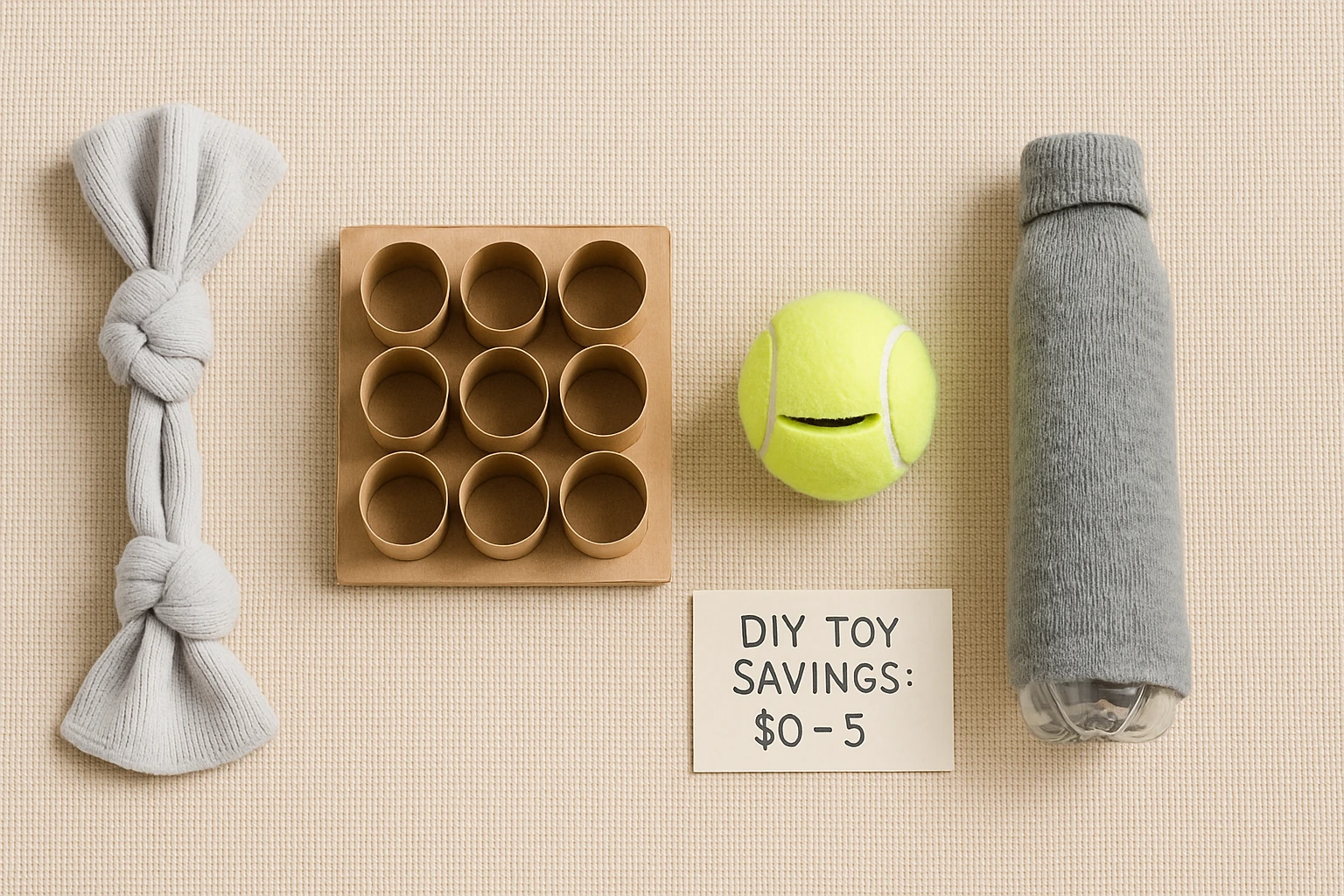
For dogs that quickly destroy lightweight toys, repeated replacements can become a false economy. The KONG Classic Stuffable Dog Toy is one option to compare, but only in the size and shape that suit the dog — the link below is the Medium. Supervise use and replace the toy if it becomes damaged.
For dogs that shred soft toys: KONG Classic Stuffable, Medium
Made for dogs that destroy soft toys faster than you can replace them, so one durable item replaces a recurring cost. Skip it if your pet plays gently with what it already has, and size it to the dog rather than buying the largest option.
Use One Cleaner for Recurring Accidents
For accidents and recurring odors, one appropriate cleaner used correctly is usually better than a shelf of half-used products. For that job, Nature’s Miracle Advanced Stain & Odor Eliminator is the option I would compare first; check the label for compatible surfaces and directions before use. The frugal cleaning guide covers the same “buy fewer, use properly” approach around the home.
For repeat accidents in the same spot: Nature’s Miracle enzyme cleaner
One cleaner used correctly beats a shelf of half-used bottles when accidents keep happening in the same place. Skip it if the problem is a one-off, and treat repeated accidents in one spot as a possible health or behavior signal worth raising with a vet rather than a cleaning problem.
Cut the Boarding Bill Before You Travel
Boarding is the odd one out among pet costs. Food and supplies leak away slowly, but care while you are away arrives as a single large bill — and it is the most predictable expense on the list, because you usually know the dates weeks ahead. That combination is what makes it worth planning rather than absorbing.
The options run from free to expensive, and the cheap end has to be arranged before you need it:
- A reciprocal swap. Another pet owner covers your trip and you cover theirs. There is no nightly fee and your pet stays home, but it needs a trustworthy match and cannot be arranged in the week before you leave.
- A sitter network. An annual membership can take the place of nightly care fees when you find a suitable sitter, which changes the math for anyone away more than a few nights a year.
- An independent sitter. Priced per visit or per night, and worth it when your pet needs someone familiar rather than a facility.
- A boarding facility. Usually the highest cost, and the right answer when your pet needs supervision, medication, or quick veterinary access.
Two rules keep this from becoming a false saving. Do not cut costs on care for a pet that is medicated, elderly, anxious, or under monitoring — the cheapest arrangement is the wrong one there. And book early for holiday periods, when rates rise and the affordable options fill first. Keep vaccination records and feeding instructions in one place; most facilities require the first, and every sitter needs the second.
When you travel more than a few nights a year
TrustedHousesitters matches pet owners with sitters who stay in your home, so one annual fee takes the place of a nightly rate. The honest catch is the break-even: it only beats boarding if you are away enough nights to clear the membership. You choose and vet the sitter yourself.
A 30-Day Frugal Pet Care Reset
- Week 1: Track. Write down every pet expense and label it necessary, flexible, or optional.
- Week 2: Fix one repeat cost. Compare daily food cost, move one grooming task home, or replace an impulse-buy habit with a waiting rule.
- Week 3: Plan care. Gather records, request the routine-care schedule, and write down the nearest emergency clinic.
- Week 4: Build the buffer. Automate a transfer, review insurance or clinic-plan terms, and set the next monthly check-in.
At the end of the month, keep only the changes that were easy to repeat and did not reduce care. A complicated system that lasts ten days is not frugal; a simple rule you follow all year is.
Frequently Asked Questions
Save on the Routine, Not the Care
A good frugal pet care plan is intentionally boring: calculate daily food cost, store it properly, learn one low-risk grooming task, buy supplies for cost per use, keep records together, and fund the next bill before it arrives. Those habits reduce waste without asking your pet to carry the risk.
The goal is not to spend the least. It is to know which expense you can change today—and which one deserves professional care.