
Most grocery bills do not jump because of one dramatic mistake. They creep up through four smaller leaks: shopping without a plan, adding extras, paying more than necessary for repeat purchases, and throwing away food that was never used. I would not try to fix all four at once. Find the biggest leak first. Correct that routine, and let the savings repeat.
The latest U.S. Bureau of Labor Statistics data show that the average consumer unit spent $6,224 on food at home in 2024—about $519 a month. That is a national average, not a target for your household. Location, household size, dietary needs, and where you shop all change the number.
Think of this as a grocery shop save money guide built around one rule: fix the leak you repeat most often. These 15 budget grocery tips focus on decisions you can control—not on chasing every sale. For the broader home-budget system, continue with the main guide to frugal living at home.
Find Your First Grocery FixThis post contains affiliate links. If you buy through our links, we may earn a commission at no extra cost to you. Learn more.
Table of Contents
- Find the Grocery Habit to Fix First
- Plan Before You Shop
- Compare Price and Value
- Use More of What You Buy
- Build a Grocery Routine That Lasts
- Frequently Asked Questions
- Start With One Fix This Week
Not sure which section to start with? Use the two-step check below, then jump straight to the strategy that matches your answer.
Find the Grocery Habit to Fix First
Choose one answer in each step. Your result appears as soon as both are selected.
Answer both questions to get your first grocery-budget fix.
This week:
Plan Before You Shop
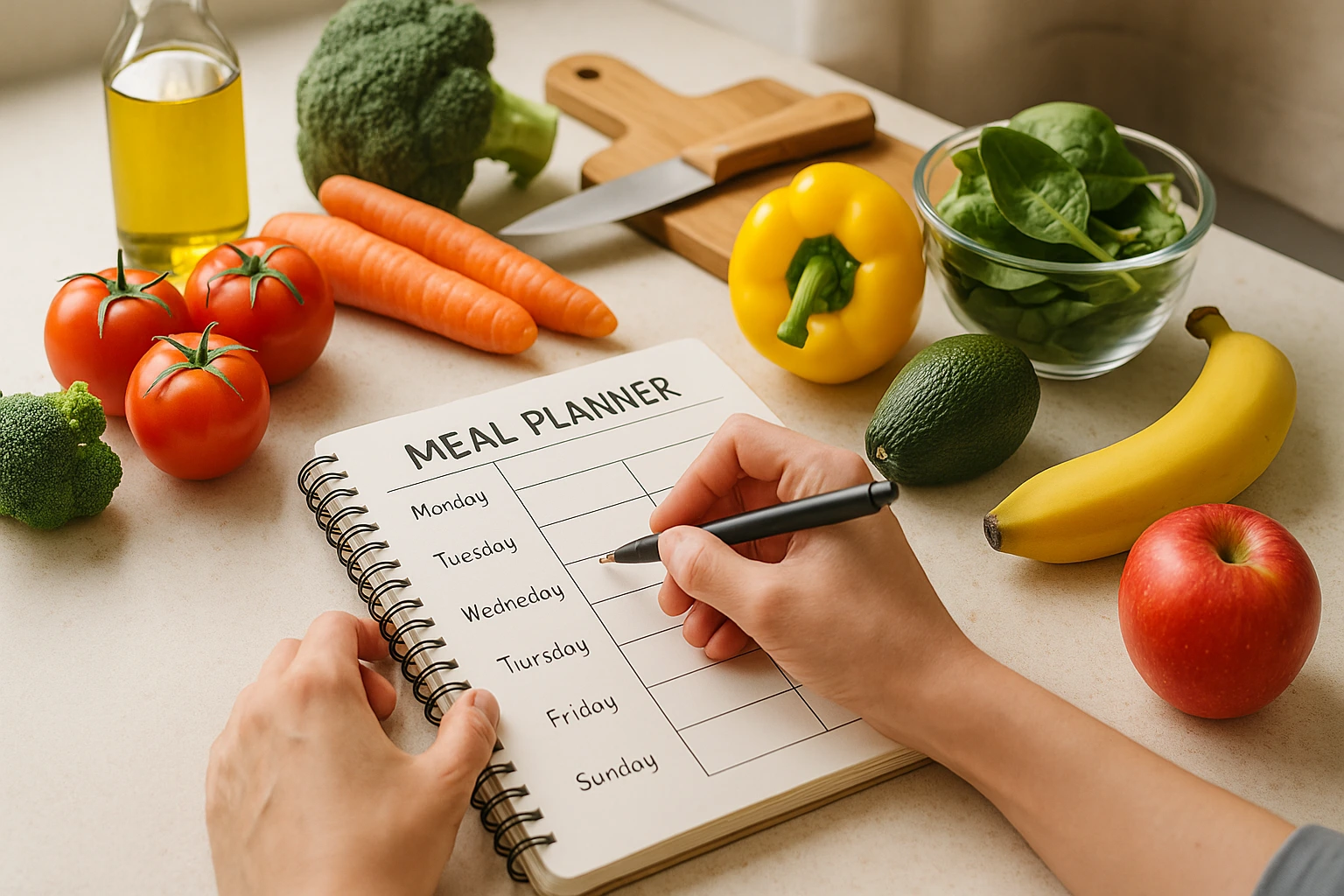
The cheapest decision is often the one made before you enter the store. Planning does not mean scheduling seven elaborate dinners. It means giving each purchase a job.
1. Shop your kitchen first
Open the refrigerator, freezer, and pantry before making the list. Look for food that needs to be used soon, then build one or two meals around it. This prevents duplicates and turns half-used ingredients into part of the plan instead of future waste.
2. Plan only three or four dinners
A short plan is easier to follow than a perfect seven-day schedule. Choose three or four dinners, leave one night for leftovers, and keep one low-effort pantry meal for the evening when the plan falls apart. The goal is to reduce emergency takeout and extra shopping trips, not to make every meal impressive.
3. Give every ingredient a second job
Choose meals that share ingredients. Roasted vegetables can become soup or a grain bowl; cooked chicken can become tacos or sandwiches; herbs can work in two meals instead of one. Shared ingredients lower the chance that a specialty purchase is used once and forgotten.
4. Organize the list by store section
Group the list into produce, pantry, dairy, meat or alternatives, frozen, and household items. A list that follows the store layout reduces backtracking and gives tempting displays fewer chances to interrupt the plan.
You do not need an app to use the method above. A planning app may be useful when you shop for children and repeatedly lose track of meals or list items between trips. If paper or a notes app already keeps the plan and list together, keep using it.
Optional for families: Keep the meal plan and grocery list together
Little Lunches creates family-focused meal plans and matching grocery lists. It is designed mainly for households with children, so check that the audience and features match your routine before signing up.
Compare Price and Value
Once the list is set, compare value without letting a sale rewrite it. The best deal is the lowest cost for the amount you will actually use—not the biggest package or brightest discount sign.
5. Compare unit prices
Use the shelf label when it is available. When it is not, divide the price by the ounces, pounds, count, or other useful unit. Compare like with like: price per ounce against price per ounce, not package price against package price.
| Option | Package | Price | Unit price | Decision |
|---|---|---|---|---|
| Cereal A | 12 oz | $4.50 | $0.38/oz | Higher cost per ounce |
| Cereal B | 18 oz | $5.00 | $0.28/oz | Better value if it will be eaten |
6. Test store brands on repeat purchases
Start with products where brand differences matter least to your household: flour, canned beans, oats, frozen vegetables, or basic dairy. Compare ingredients and package size, then keep the store brand only when the quality works for you. A cheaper product nobody eats is not a saving.
7. Apply sales and coupons after the list is finished
Check the weekly ad and digital coupons for items already on the list. Add a sale item only when it replaces something planned or fills a real pantry need. Treat cashback the same way: a rebate can lower the cost of a purchase, but it should not create the purchase.
8. Buy in bulk only after three checks
Before buying the larger package, compare the unit price, estimate how much the household will realistically finish, and confirm that you have suitable storage. If the package is still larger than you will use soon, freeze or seal the extra immediately.
Use More of What You Buy
Reducing waste does not require eating questionable food. It requires making good food easier to see and use. The USDA estimates that 30–40% of the U.S. food supply is lost or wasted; that broad national estimate is not a claim about your household, but it shows why prevention matters.
9. Create an eat-first zone
Choose one visible shelf or bin for leftovers, open packages, and food nearing its quality date. Check that area before planning a meal or buying a snack. Visibility is more reliable than trying to remember what is hidden behind newer groceries.
10. Store leftovers in useful portions
Put leftovers into clear, meal-sized containers instead of one large container that feels like another cooking project. Label the contents and date. Keep tomorrow’s lunch at eye level; freeze portions that will not be used soon.
Every kitchen has that one orange-tinted tub nobody opens. That is the whole problem — food you cannot see is food you throw away, and the eat-first shelf dies quietly. Cheap sets get there within a year.
Rubbermaid Brilliance is the buy-once version.
Around $30 for the set, and it earns that back quickly — airtight lids keep leftovers good long enough to actually get eaten, and food you rescue is money you already spent. Stain-resistant Tritan does not cloud, the lids latch leak-proof so tomorrow's lunch travels, and one matching size stacks at eye level. BPA-free, dishwasher, microwave and freezer safe.
11. Freeze with a future meal in mind
Freeze bread in slices, cooked grains in meal-sized portions, and meat or alternatives in the amount used by one recipe. A freezer full of unlabelled packages is delayed waste. Write the item, quantity, and date where you can read it without opening the package.
12. Read date labels correctly
Most U.S. date labels describe quality rather than an automatic safety cutoff. Current USDA guidance says “Sell By” is for store inventory, “Best if Used By/Before” concerns peak quality, and “Use By” is generally a quality date except on infant formula. Storage conditions and signs of spoilage still matter. For product-specific storage times, use the official FoodKeeper guide.
Build a Grocery Routine That Lasts
The last three strategies turn one good shopping trip into a repeatable system. Keep the tracking small enough that it still happens on a busy week.
13. Keep a five-item price book
Track the unit price of five products you buy often. Note the usual price at one or two stores and update it when the pattern changes. This gives you a personal benchmark that is more useful than a national “cheap grocery store” list.
14. Build a low-cost meal rotation
Keep a short list of meals your household already accepts and that rely on affordable staples: bean chili, lentil soup, eggs and toast, pasta with vegetables, rice bowls, baked potatoes, or another equivalent that fits your diet. Rotate them instead of searching for a new budget recipe every week. Households planning around children may also find the routines in frugal living with kids useful.
15. Review one leak after each shop
Look at the receipt and ask one question: what did I buy that was not planned, overpriced, or unlikely to be used? Choose one correction for the next trip. Do not audit every line. The point is to notice the repeat leak while the trip is still fresh.
Frequently Asked Questions
Start With One Fix This Week
You do not need a new store, a pantry makeover, and a perfect meal plan at the same time. Use the leak finder, choose the section that matches your result, and apply one change for the next seven days.
My practical rule is to keep the fix only when it makes the next shopping trip easier. If the routine adds more tracking than it saves, simplify it: three dinners, one list, five unit prices, or one eat-first shelf is enough to begin.