

How to start a pet accessories business without overspending comes down to one rule: run a small test before you build a full workstation. Make one product three times, sell a tiny paid batch, and then buy the tool that removes the bottleneck you can actually see.
Treat the first month as a controlled validation project: one product, one sales channel, a five-order cap, and a clear stop point if the numbers or safety checks do not work. Still choosing what to make? Browse these DIY pet projects for low-cost ideas, then return here to test one product as a business.
This post contains affiliate links. If you buy through our links, we may earn a commission at no extra cost to you. As an Amazon Associate, I earn from qualifying purchases. Learn more.
Use the 5-Point Launch CheckTable of Contents
- How to Start a Pet Accessories Business in Three Spending Stages
- Choose One Product, Not a Collection
- The 5 Essential Tools—and When to Buy Them
- Price for a Real Margin
- Legal, Tax and Product-Safety Checks
- Are You Ready to Sell? A 5-Point Check
- Get Your First Five Paid Orders
- A 30-Day Launch Plan
- Questions Before Your First Sale
- Start Small Enough to Learn
How to Start a Pet Accessories Business in Three Spending Stages
For a pet business startup, the costly mistake is buying for imagined demand. The safer order is prototype → paid test → repeatable workstation. Each stage has a different job, so each stage earns a different spending limit.
| Stage | Goal | Planning range | What to buy |
|---|---|---|---|
| Prototype | Make the same item three times. | $0–$50 beyond what you already own | Only missing consumables or one basic hand tool. |
| Five-order test | Prove that buyers will pay the full price. | $50–$200 | Materials, packaging and the cheapest tool that prevents errors. |
| Repeatable workstation | Reduce production time after demand exists. | $200–$600+ | Equipment with a measurable payback, not decorative upgrades. |
Those are planning ranges, not live quotes. Your actual number depends mostly on whether you already own the main production tool. The important limit is behavioral: do not fund stage three before stage two produces paid evidence.
Choose One Product, Not a Collection
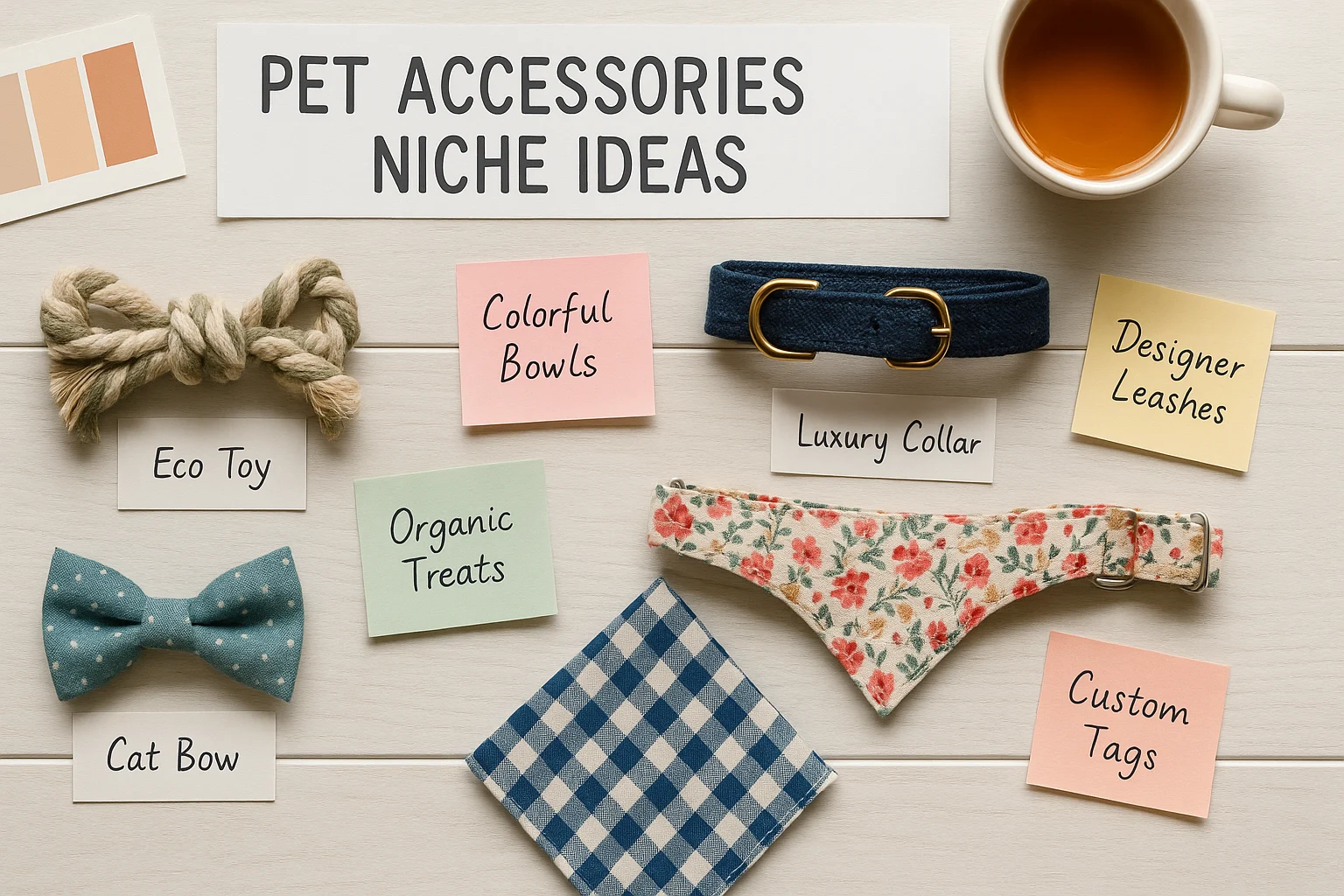
The first product should be easy to repeat, easy to inspect and hard to misunderstand. I would favor a simple, non-load-bearing fabric accessory over a collar, leash, harness, chew toy or anything whose failure could injure an animal.
A good first product passes four tests
- Repeatable: you can make three that look and measure alike.
- Easy to explain: the buyer can understand size, materials, care and intended use from one listing.
- Low-complexity: it does not depend on several sizes, custom hardware or difficult safety claims.
- Cheap to test: one small material purchase produces several samples.
A slip-over-collar bandana, simple decorative bow or washable accessory can be a more manageable first test than load-bearing gear. The DIY dog collar accessories guide can help you compare project ideas without committing to a full product line.
The 5 Essential Tools—and When to Buy Them
The five categories below matter, but they do not all belong in your cart on day one. The useful question is not “What does a proper business own?” It is “What is preventing the next accurate, paid order?”
1. A repeatable cutting setup
Sharp scissors, a ruler and a paper or cardboard template will cut a prototype perfectly well. The upgrade earns itself when uneven cuts start creating waste or making sizing inconsistent — a rotary cutter and self-healing mat save time at that point, though saving time is not the same as proving demand. Once the bottleneck is real, the Fiskars 3-piece fabric cutting set is one option to compare.
2. The main production tool
This may be a sewing machine, cutting machine or a small set of hand tools. Borrowing, buying used or using a machine you already own is enough for the prototype stage. Buy new only when the product is repeatable and the current tool is the measured bottleneck.
3. Measuring and quality-control tools
A flexible tape, rigid ruler, seam gauge, templates and a simple inspection sheet are less exciting than branding equipment, but they protect consistency. Record finished dimensions, seam quality, hardware, material batch and any warning that belongs with the product.
4. A shipping scale
A household kitchen scale may be enough for an early test when it covers the parcel’s weight range. Keep using it until packed parcels exceed that range, repeated weighing becomes awkward or small errors begin changing the postage cost.
Upgrade only when parcel weighing is the bottleneck: ACCUTECK 8580 110 lb Digital Postal Scale.
Choose this higher-capacity option only after the kitchen-scale workaround becomes unreliable; otherwise keep using what you already own.
5. A label printer—later
A normal printer, handwritten label or carrier counter can handle a tiny test. A thermal label printer earns its place when label handling becomes a recurring cost rather than an occasional chore. Until then, it is convenience equipment—not an essential purchase.
Check the label width you actually need before buying anything. Compact desktop models such as the Brother QL-800 are built for narrow address, product and barcode labels, which may cover early product-labeling needs. Standard 4 × 6 shipping labels need a wider printer, so confirm the maximum label width on any model before you order.
Price for a Real Margin
Your price has to cover more than fabric. Use the full unit cost:
materials + packaging + platform/payment fees + labor + overhead = unit cost
Then calculate the selling price from the margin you want. If the unit cost is $10.50 and you want a 30% gross margin, divide $10.50 by 0.70. The result is $15.00. Adding 30% would produce $13.65, but that is a 30% markup and only about a 23% margin.
| Cost item | Example |
|---|---|
| Materials | $2.00 |
| Packaging | $0.75 |
| Labor | $6.75 |
| Fees and overhead allowance | $1.00 |
| Total unit cost | $10.50 |
| Price at 30% gross margin | $15.00 |
Update the sheet after real orders. If customers need repeated resizing, if packaging takes longer than expected, or if the platform fee is larger than your allowance, your first price was a hypothesis—not a promise to keep losing money.
Legal, Tax and Product-Safety Checks
This is the section to slow down. A business name and a logo do not answer the important questions: which structure fits, what registrations apply, what records you need, and whether the product is compliant for its intended use.
- Business structure: review the U.S. SBA structure guide and your state or local requirements. The choice affects taxes, registration and personal-asset exposure.
- EIN: obtain it directly from the IRS EIN page when one is needed. The IRS does not charge for an EIN.
- Marketplace tax: Etsy collects and remits tax on qualifying U.S. orders under applicable marketplace-facilitator laws, but you may still have obligations for your location or other channels. Check Etsy’s current guidance.
- Product requirements: use the CPSC Regulatory Robot as a starting point for U.S. requirements, then verify the rules for the exact item and intended user.
- Creator promotions: a gifted product or paid relationship needs a clear disclosure. The FTC disclosure guide explains the standard.
Are You Ready to Sell? A 5-Point Check
Answer five practical questions. The result tells you whether to keep prototyping, fix a safety gap, run a small paid test, or open a limited launch.
Treat the result as a gate, not a score. If it sends you back to prototyping or safety, do not move on to paid orders yet. If it recommends a paid test or limited launch, use the first-five-order plan below.
Get Your First Five Paid Orders
The first launch should answer one question: will five people pay a price that covers the real cost? Keep the offer narrow enough that every defect, question and return teaches you something useful.
| Channel | Best use | Main trade-off |
|---|---|---|
| Local pre-orders | Test fit, care instructions and buyer questions with direct feedback. | Small audience and manual coordination. |
| Etsy | Test a searchable handmade listing without building a store audience first. | At this update, Etsy lists a US$0.20 listing fee and 6.5% transaction fee; payment processing, other fees, and a one-time shop setup fee that varies by location can also apply. |
| Shopify | Build a controlled branded store after you have traffic or repeat buyers. | Subscription and payment costs vary by plan and location; you must bring the traffic. |
Confirm current costs in the Etsy fees policy or Shopify pricing overview before you publish the price.
Make the listing answer the expensive questions
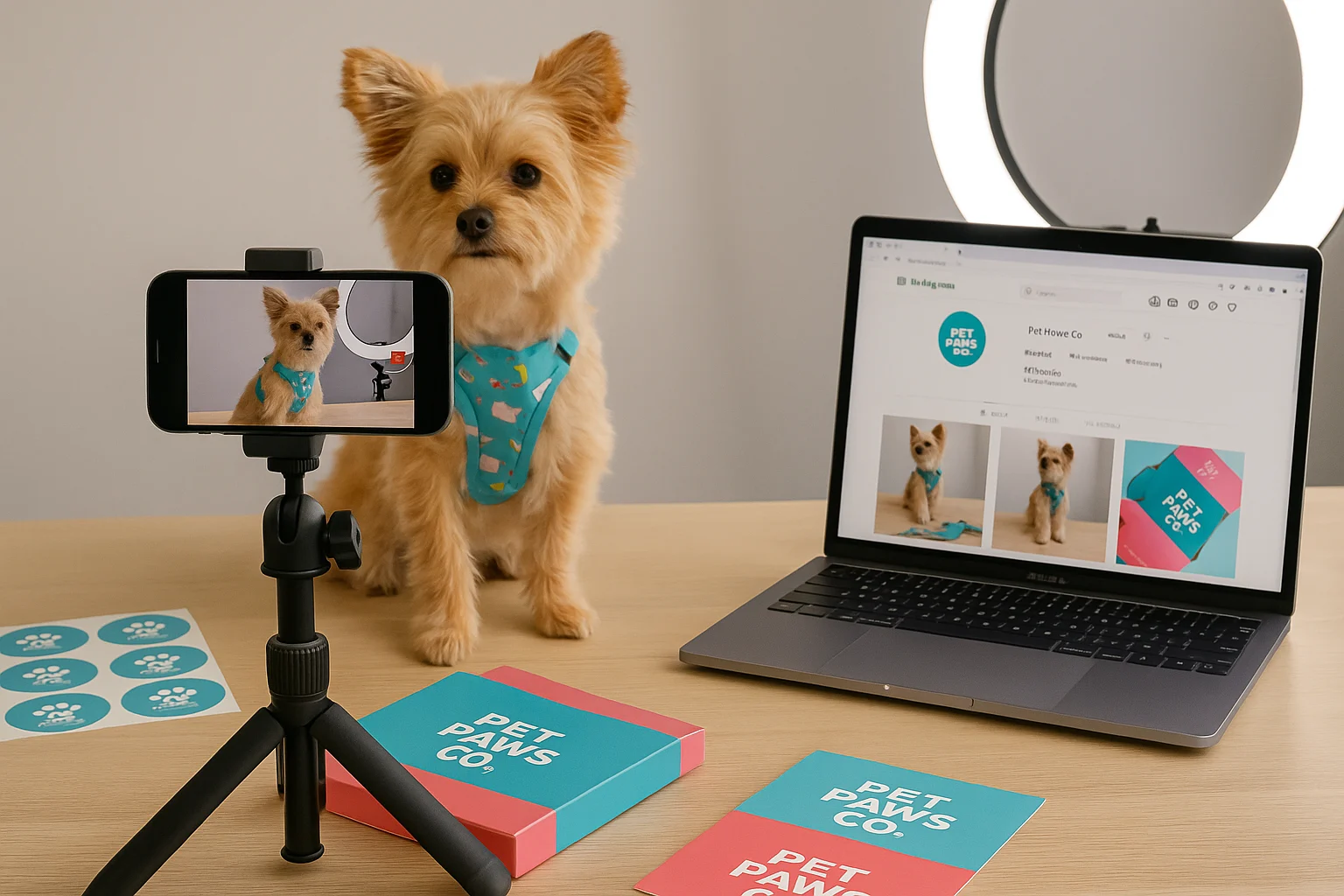
Show exact dimensions, materials, intended use, care, dispatch time and returns. Photograph the item from several angles and include a scale reference when size is easy to misread. Good listing copy reduces the questions that otherwise become unpaid customer-service time.
Use a paid test, not a permanent discount
A five-order cap is clearer than an open-ended launch. It limits your exposure, gives buyers an honest expectation and lets you stop to correct sizing, packaging or production time before a problem becomes a queue.
A 30-Day Launch Plan
- Week 1 — prototype: choose one product, make it three times and record materials, time and finished dimensions.
- Week 2 — cost and safety: calculate the full unit cost, document components and warnings, and check the rules for the exact product.
- Week 3 — listing and fulfillment: choose one channel, photograph the item, write the size/care/returns copy and pack one test parcel.
- Week 4 — five paid orders: open a limited batch, track every question and error, then decide whether to stop, revise or repeat.
Do not add a second product during the 30 days. The point is to learn whether one product can be made, priced, explained and delivered consistently. Across all four weeks, use one rule: do not buy equipment or promise capacity before the evidence is there.
Questions Before Your First Sale
Start Small Enough to Learn
You do not need a polished product line to learn how to start a pet accessories business. You need one repeatable item, a price that pays for the work, documented safety and fulfillment basics, and five customers willing to pay.
The next useful action is concrete: make the same item three times and write down the time, materials and finished dimensions. If those three versions do not match closely enough, fix the process before buying equipment or opening a store. If they do, use the readiness check and set a five-order cap.
Disclaimer: This guide provides general educational information, not legal, tax, financial or product-safety advice. Requirements vary by product and location. Verify current rules with the relevant authority and use a qualified attorney, accountant, insurer or product-safety professional when the risk or uncertainty warrants it. See the site disclaimer.