
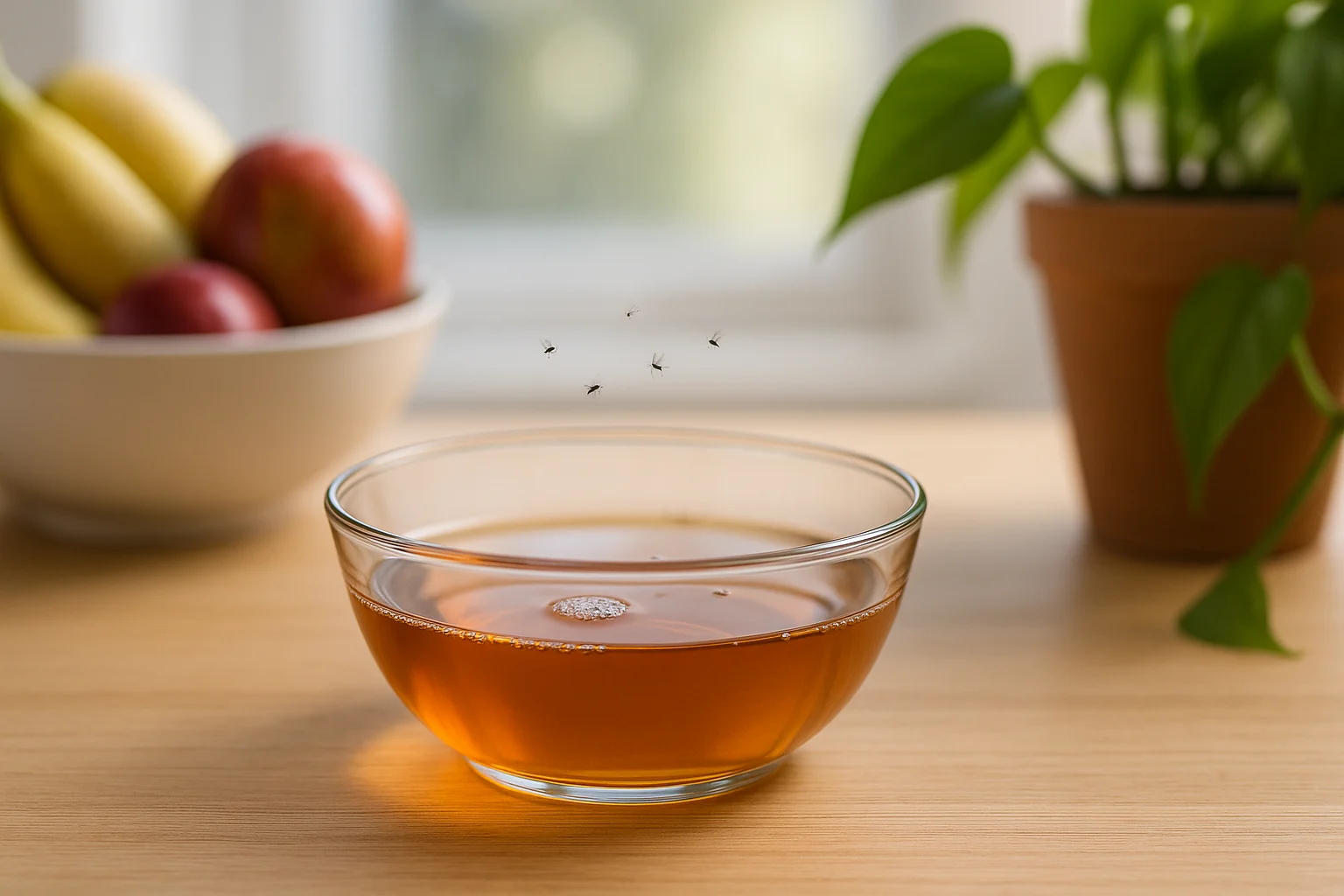
A bowl of apple cider vinegar can catch fruit flies, but it will not fix fungus gnats breeding in potting mix or drain flies behind biofilm. There is no single natural remedy for gnats—the fastest route is to identify where the insects are breeding before you treat them.
These home remedies for gnats give you a source-specific plan for fruit, houseplants, or drains, plus a quick tool that adjusts the next step based on what you have already tried and whether the problem keeps returning. If you want to kill gnats naturally, focus on the source first; for other low-cost household fixes, browse our home remedies guide.
This post contains affiliate links. As an Amazon Associate, I earn from qualifying purchases. If you buy through a link, I may earn a commission at no extra cost to you. Learn more.
Table of Contents
- Identify the Breeding Source
- Build Your Next-Step Gnat Plan
- Fruit Flies: Trap Adults and Remove Food
- Fungus Gnats: Dry Soil and Treat Larvae
- Drain Flies: Scrub the Biofilm
- Keep Gnats From Coming Back
- When to Call a Professional
- Frequently Asked Questions
- Treat the Strongest Hotspot
First, Identify Where They’re Breeding
Location and behavior are more useful than color alone when you are trying to identify a tiny indoor fly. Start with the place where activity is strongest.
| Where you see them | Likely pest | Best first move |
|---|---|---|
| Near ripe fruit, recycling, trash, or sugary spills | Fruit flies | Remove fermenting food and set a vinegar-and-soap trap |
| Hovering over damp houseplant soil, especially after watering | Fungus gnats | Let the soil surface dry and add yellow sticky traps |
| Fuzzy flies resting near a sink, shower, or floor drain | Drain flies | Confirm the active drain and scrub away the biofilm |
| Scattered through the room with no obvious hotspot | Source uncertain | Check fruit, plant soil, and drains separately before treating |
If the source is unclear, place a vinegar trap near fruit, a yellow sticky card over the most suspicious plant, and clear tape over part of a drain overnight. The table narrows the likely cause; the tool below turns that diagnosis into a next-step plan based on what you have already tried and how persistent the activity is.
Build Your Next-Step Gnat Plan
Fruit Flies: Trap Adults and Remove Fermenting Food
If you are wondering how to get rid of fruit flies naturally, an apple-cider-vinegar trap can reduce the adults you see. Apple cider vinegar is a common gnat remedy, but the lasting fix, reflected in Utah State University’s fruit-fly guidance, is to remove the fermenting food or residue where they are breeding.
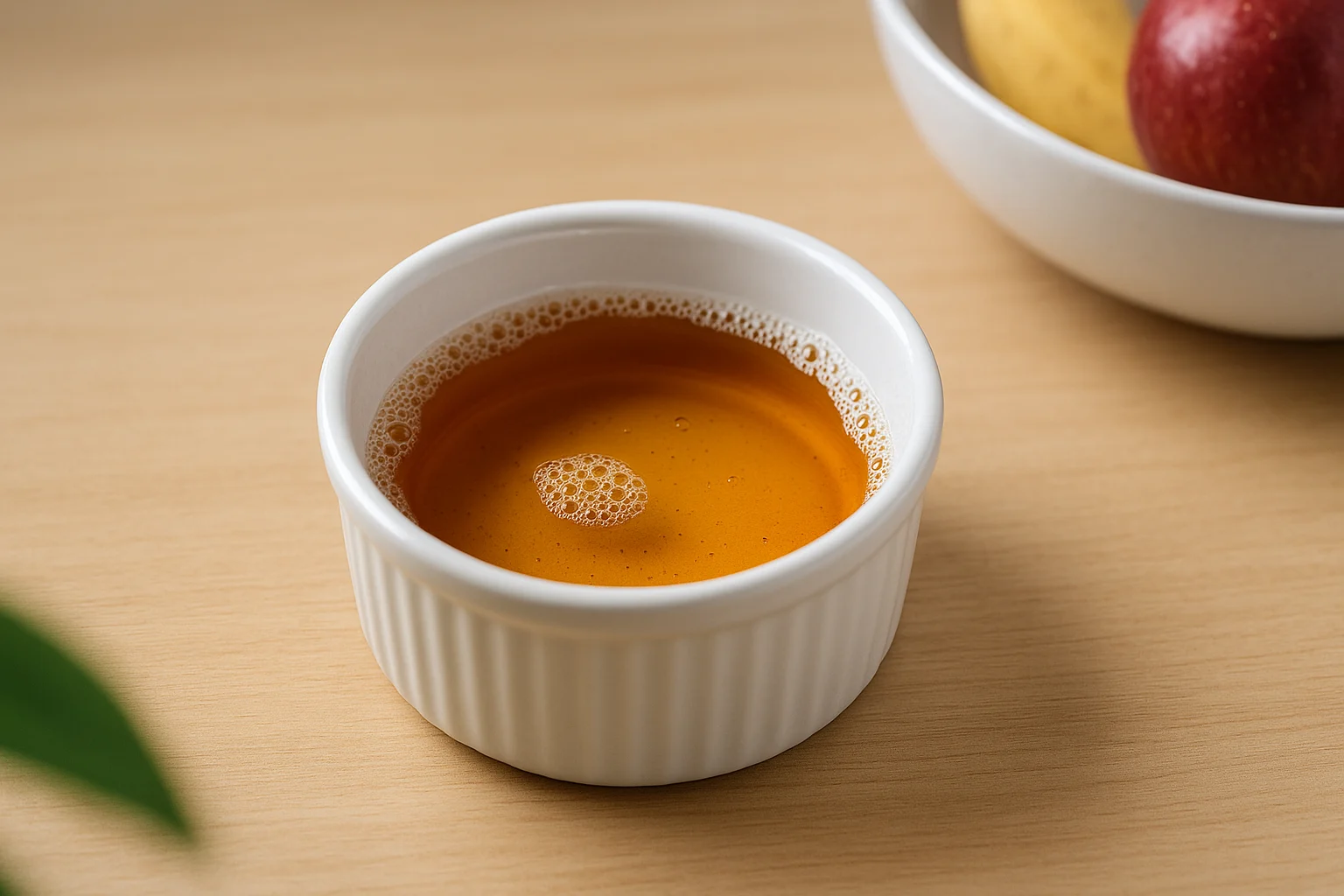
Use a shallow bowl or small jar, 1–2 inches of apple cider vinegar, and one drop of unscented dish soap. Plastic wrap and a rubber band are optional.
- Mix the trap: Add the vinegar and dish soap. If you use a jar, stretch plastic wrap over the opening and poke several small holes.
- Place it at the busiest hotspot: Set the trap beside the fruit bowl, recycling, trash, compost container, or spill area where you see the most flies.
- Remove the source the same day: Refrigerate ripe produce, discard damaged fruit, rinse bottles and cans, clean the trash or compost container, and wipe sticky residue. These frugal cleaning hacks can make the kitchen reset faster.
- Refresh and monitor: Replace dirty or diluted bait and keep cleaning the hotspot until new adults stop appearing.
If the trap stays empty: Recheck the identification. Vinegar is not the main remedy for fungus gnats over plant soil or drain flies breeding behind drain film.
Fungus Gnats: Dry the Soil Surface and Treat the Larvae
Wondering how to get rid of fungus gnats naturally? The most useful home remedy for fungus gnats starts with moisture management and monitoring, as explained in UC IPM’s fungus-gnat guidance. Sticky traps help with adults, but the potting mix is where the life cycle must be interrupted.
- Let the surface dry appropriately: Allow the top layer of potting mix to dry between waterings without pushing the plant to wilt.
- Improve drainage: Empty saucers, clear blocked drainage holes, and do not leave pots standing in water.
- Use yellow sticky traps: Place them just above the potting mix to monitor and reduce adults. Sticky traps do not kill larvae.
- Add Bti only when needed: Choose a product labeled for fungus-gnat larvae, apply it according to the label, and repeat only as directed.
- Isolate or repot a severe case: Move the affected plant away from other pots. If the mix remains waterlogged or the infestation is heavy, repot with clean, well-draining mix.
For fungus gnats that continue after moisture control: Microbe Life Hydroponics FGX Fungus Gnat Killer, 8 fl oz.
Use this Bti soil treatment when moisture control and sticky traps are not stopping new adults. It targets larvae in the potting mix, where traps cannot reach. Follow the label, and skip it for a mild case that is already improving.
After treating the larvae, keep monitoring adults while the remaining life cycle winds down. If catches continue, recheck watering, drainage, nearby pots, and stored potting mix before repeating treatment according to the label.
Drain Flies: Confirm the Drain and Scrub the Biofilm
Drain flies breed in the slimy organic film lining a drain. The fix is mechanical: identify the active drain, remove the film, and correct the moisture or plumbing problem that lets it return.
- Confirm the source: Place clear tape sticky-side down over part of the drain overnight without sealing it completely. Flies on the tape point to that drain.
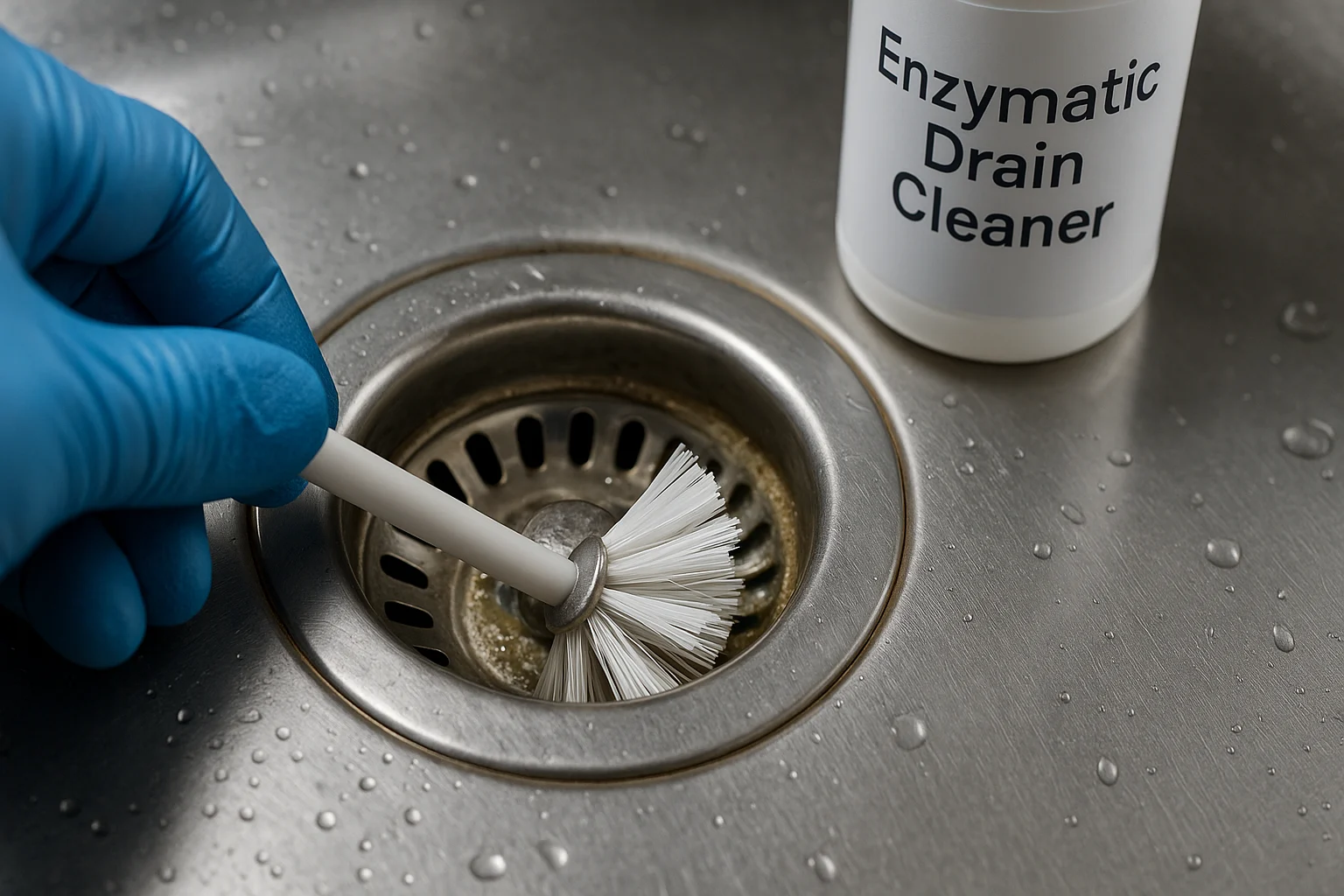
- Remove the habitat: Use a hard-bristle drain brush to scrub the pipe walls and the underside of removable drain parts.
- Maintain the drain: Use an enzyme drain cleaner according to its label, and clean overflows, garbage-disposal splash guards, and rarely used drains.
- Look beyond the opening: If flies continue after thorough cleaning, check for a slow drain, hidden leak, broken pipe, or another damp organic source.
Utah State University’s drain-fly guidance notes that larvae can remain protected behind drain scum, so boiling water, pesticides, and other chemical pours are ineffective on their own.
For drain flies that return after brushing: Rockwell Labs InVade Bio Drain Gel, 1 quart.
This probiotic gel helps maintain drain walls where organic buildup keeps returning. Use it only after mechanically scrubbing the drain, apply it during a low-use period, and follow the label. Skip it when the real problem is a slow drain, leak, or damaged pipe.
For ordinary low-cost cleaning around the sink, browse our homemade cleaning solutions. Never mix bleach with vinegar or other acids. Do not combine this microbial drain treatment with bleach, acid or caustic cleaners, disinfectants, or antimicrobial products.
Skip scent-based shortcuts: Essential oils and room sprays do not remove fermenting food, wet soil, or drain biofilm. Concentrated oils can also create risks around pets; review the ASPCA guidance on essential oils around pets before using a diffuser.
Keep Gnats From Coming Back
Prevention is easier when you maintain the exact source you just treated instead of cleaning the whole house at random.
- Fruit and food: Refrigerate very ripe produce, rinse recycling, empty food waste regularly, and wash the container that held it.
- Kitchen residue: Clean sticky spills, the underside of the garbage-disposal splash guard, and residue under small appliances.
- Houseplant soil: Water for the plant’s needs rather than on a fixed calendar, empty saucers, and inspect new plants before placing them beside established pots.
- Stored potting mix: Keep bags closed and dry, and avoid reusing persistently waterlogged mix.
- Drains and plumbing: Fix leaks and slow drains, clean overflows and rarely used drains, and brush recurring biofilm before it becomes thick.
- Larger moisture problems: If dampness extends beyond a sink or plant, trace the source instead of masking it. For basement-specific problems, see our DIY basement waterproofing guide.
When to Call a Plumber or Pest Professional
Home remedies are reasonable for a small, identifiable source. Get help when the source is hidden, the infestation does not respond to source control, or the problem points to plumbing or structural moisture.
- Call a plumber when several drains are involved, a drain is slow or foul-smelling, or you suspect a leak or damaged pipe.
- Call a pest professional when you cannot identify the insect, activity remains heavy after the breeding site is cleaned, or flies appear to be coming from a wall, crawlspace, or inaccessible void.
- Ask a local extension office or reputable nursery when houseplant damage continues or you are unsure whether the insect is a fungus gnat.
The goal is not a stronger spray. It is a confirmed identification and access to the place where the insects are breeding.
Frequently Asked Questions
Your Next Step: Treat the Strongest Hotspot
Choose the place with the most activity and take one matching action today: remove fermenting food and set a vinegar trap, dry the potting-mix surface and add a sticky card, or tape-test and scrub the active drain. Recheck that same spot over the next few days, then keep monitoring until traps stay clear and no new adults appear.
This guide is for general household education. Keep cleaning and pest-control products out of reach of children and pets, never combine drain treatments unless a product label specifically permits it, and follow every label. For a persistent infestation, a suspected plumbing leak, or questions about use around people, pets, or plants, contact an appropriate licensed professional.