

Frugal living with kids works when the savings have a purpose. Spend less on the things your family barely notices so there is more room for what your family values: time together, a calmer week, a useful purchase, or a shared goal.
I’d start with one repeatable change, not a household-wide crackdown: pack snacks before an outing, put two no-spend activities on the calendar, or plan five dinners before shopping. Choose the one that removes the most stress this week. Small systems are easier to keep than a burst of extreme cutting. For the same approach to bills, shopping, and other household decisions, see my guide to frugal living across the home.
This post contains affiliate links. If you buy through our links, we may earn a commission at no extra cost to you. As an Amazon Associate, I earn from qualifying purchases. Learn more.
Table of Contents
- Start with One Family Rule
- Make Free Fun Feel Planned
- Buy Less Without Making Kids Feel Deprived
- Plan Food Around What Your Family Eats
- Set a Birthday Budget Before Picking a Theme
- Audit the Costs That Repeat
- Family Budget Check-In
- Teach Money Skills Through Small Choices
- Frequently Asked Questions
- Choose One Change for This Week
Start with One Family Rule
A useful family rule is simple enough to apply in the moment. Mine would be: use what we have, borrow when it makes sense, and buy only after we know the item will be used. That rule works for toys, party supplies, clothes, craft materials, and even weeknight food.
Children do not need every budget detail, but they can understand a clear trade-off. “We’re bringing lunch so we can save for the zoo” is easier to grasp than “we can’t afford it.” It connects the smaller choice to something positive and gives the family a reason to cooperate.
Keep the goal visible on the fridge, in a shared note, or beside a savings jar. These quotes for frugal habits can help when the family needs a quick reminder, but the rule itself should stay practical: one sentence, one reason, one next action.
Make Free Fun Feel Planned
“Free” is not the activity. It is only the price. Give the day a small idea—nature detective walk, library challenge, backyard cinema, photo scavenger hunt—so it feels chosen rather than improvised. Local parks, libraries, school calendars, and community centers are the first places I would check. You can also browse these freebies and no-cost resources for frugal living.
- Turn an ordinary outing into a mission: count birds, find five leaf shapes, photograph something in every color, or map a new walking route.
- Use the library as more than a book stop: look for story hours, craft sessions, games, museum passes, and summer programs.
- Plan one at-home event: a family tournament, blanket-fort movie night, backyard campout, or kitchen challenge gives everyone something to anticipate.
- Volunteer together when the age and setting fit: community cleanups, donation sorting, and neighborhood projects can become meaningful family time.
Put two free options on the calendar before the month fills up. Planned free time is much more likely to happen than a vague promise to “do something cheap later.”

Buy Less Without Making Kids Feel Deprived
Kids outgrow things quickly, but that does not mean the cheapest purchase is always the best one. Before buying, run the item through four questions:
- Do we already own something that solves the same problem?
- Can we borrow, swap, or buy it secondhand in suitable condition?
- Will it be used often enough to justify the space and cost?
- Is there a safety, hygiene, or fit reason to buy new?
Rotate and Swap Toys Before Adding More
Put some toys away and bring them back later, or arrange a small swap with families you trust. A smaller visible selection often gets more attention than an overflowing toy box. Skip swaps for damaged items, recalled products, or anything that cannot be cleaned appropriately.
Build a Small Working Wardrobe
A practical kids’ wardrobe needs enough combinations for the week, not a perfect neutral color palette. Start with the laundry rhythm, climate, school requirements, and the messiest activities. Mend small tears, keep the next size in one labeled bin, and replace only the gaps. For shared rooms and storage, this frugal home-furnishing guide can help you avoid buying organizers before measuring the space.

Give Experiences with a Real Plan
An experience is not automatically frugal. Tickets, transport, food, and add-ons can turn a “simple outing” into an expensive day. Price the whole plan first, then consider low-cost versions: a special one-on-one afternoon, a cooking lesson at home, a park membership the family will genuinely use, or a coupon-funded local event.
Plan Food Around What Your Family Actually Eats
Meal planning saves the most work when it begins with the pantry and the family’s real week. Start with your frugal meal-planning routine, then adjust for school nights, sports, late workdays, and the meals children reliably eat. The USDA’s Healthy Eating on a Budget guidance also recommends making a plan before shopping.
Plan the Week in Four Steps
- Check the refrigerator, freezer, and pantry for food that should be used first.
- Choose five dinners, including at least two familiar low-effort meals.
- Decide which dinner will create tomorrow’s lunch or a freezer portion.
- Write the grocery list by store section and remove anything already at home.
When a blank page is what keeps derailing the routine, a meal-planning app can provide a useful first draft. Check any generated plan against your budget, allergies, schedule, and pantry before buying anything.
Get a simple family meal plan built around your needs
Choose ages, preferences, allergies, and meal types, then use the generated plan and grocery list as a starting point.
Use the app as a planning aid, not another rule to obey. Keep the meals that fit, swap the ones that do not, and hold on to the simple repeat dinners that make busy weeks manageable.
Reduce Waste Without Adding More Work
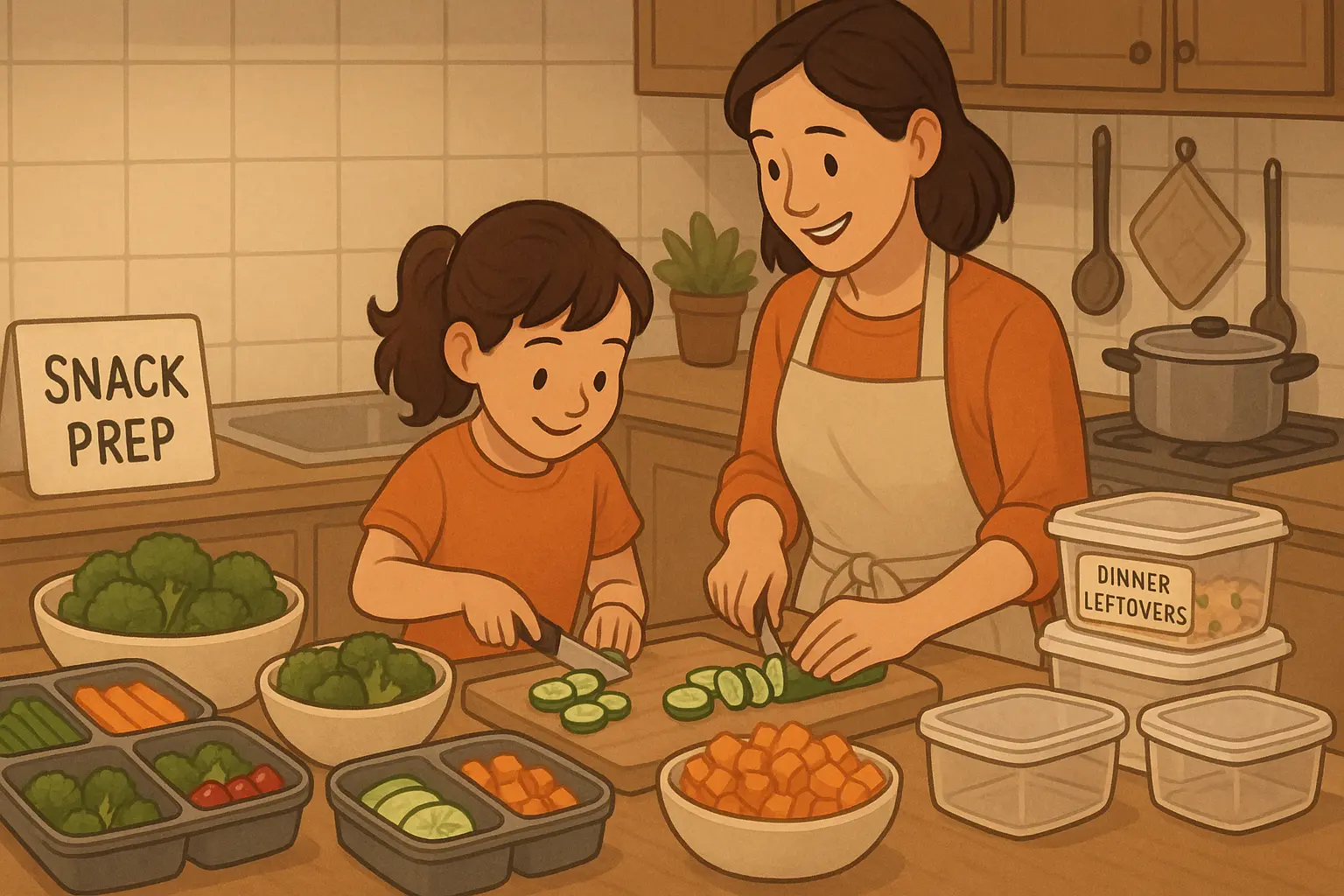
- Keep an “eat first” shelf or basket where leftovers and short-dated food stay visible.
- Store lunch portions in clear containers so they are easy to find and pack.
- Freeze one useful portion before everyone is tired of the meal.
- Write one leftover night into the plan instead of hoping leftovers disappear.
If opaque containers are why leftovers get forgotten, the Rubbermaid Brilliance 3.2-cup food-storage set is a practical lunch-size option; skip it if your current containers already keep food visible.
Set a Birthday Budget Before Picking a Theme
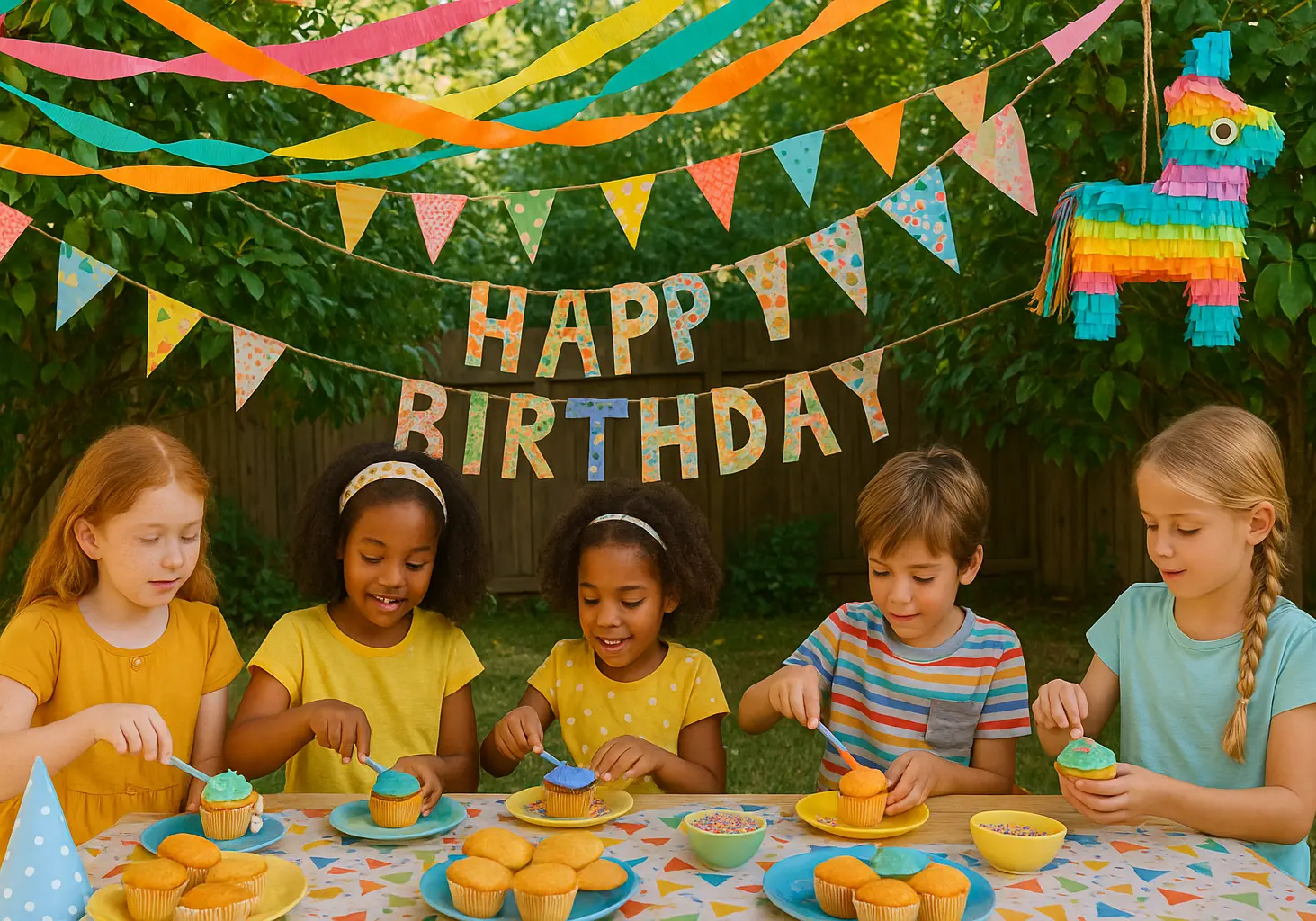
Choose the total first, then divide it among the three things guests actually experience: place, food, and one main activity. A theme should work inside that budget, not become a reason to replace everything you already own.
- Use a home, park, or community space before comparing paid venues.
- Choose one activity with a clear beginning and end: treasure hunt, craft table, relay games, or decorate-your-own cupcakes.
- Serve a short menu at the right time of day rather than a full spread by default.
- Use digital invitations and reusable decorations where they genuinely save work.
- Ask relatives about experience gifts, contributions to a larger goal, or one requested item instead of a pile of small toys.
The memorable part is usually the shared activity, not whether every cup and napkin matched the theme.
Audit the Costs That Repeat
One-off purchases get attention; small repeat expenses often do not. Review a normal month and mark anything that happens weekly, automatically, or because the family was unprepared.
| Category | Look for | First change to try |
|---|---|---|
| Snacks and convenience food | Small purchases during errands, school pickup, or activities | Pack a refillable drink and one reliable snack before leaving |
| Subscriptions | Trials, duplicate services, and apps nobody opens | Cancel one today; add renewal dates to the calendar |
| School and activity supplies | Rush purchases and items already owned | Keep one labeled supply box and check it before shopping |
| Paid entertainment | Memberships or outings used less than expected | Keep the favorite; replace one weak option with a planned free activity |
| Transport | Extra trips, parking, delivery fees, and recurring vehicle costs | Group errands and review the full monthly cost before changing vehicles |
Pick one line from the table and test the change for a month. A single fix that survives busy weeks is more valuable than a long list that disappears by Friday.
Family Budget Check-In
Add your take-home income to begin.
Then adjust any expense category. The result will update here without a button.
Use the snapshot to choose one category to review. Involve children only at an age-appropriate level: let them help compare two grocery options, choose a free outing, or track progress toward a shared goal.
Teach Money Skills Through Small Choices
Children learn more from repeated, age-appropriate choices than from one big money talk. The CFPB’s Money as You Grow resources organize activities and conversation starters by developmental stage.
- Young children: practice waiting, choosing between two options, and saving toward something visible.
- School-age children: compare prices, make a small spending plan, and track progress toward a goal.
- Teens: add real trade-offs such as transport, subscriptions, work income, bank fees, and longer-term goals.
- At any age: explain one ordinary decision aloud—why you checked the pantry, compared two prices, or decided not to renew a service.
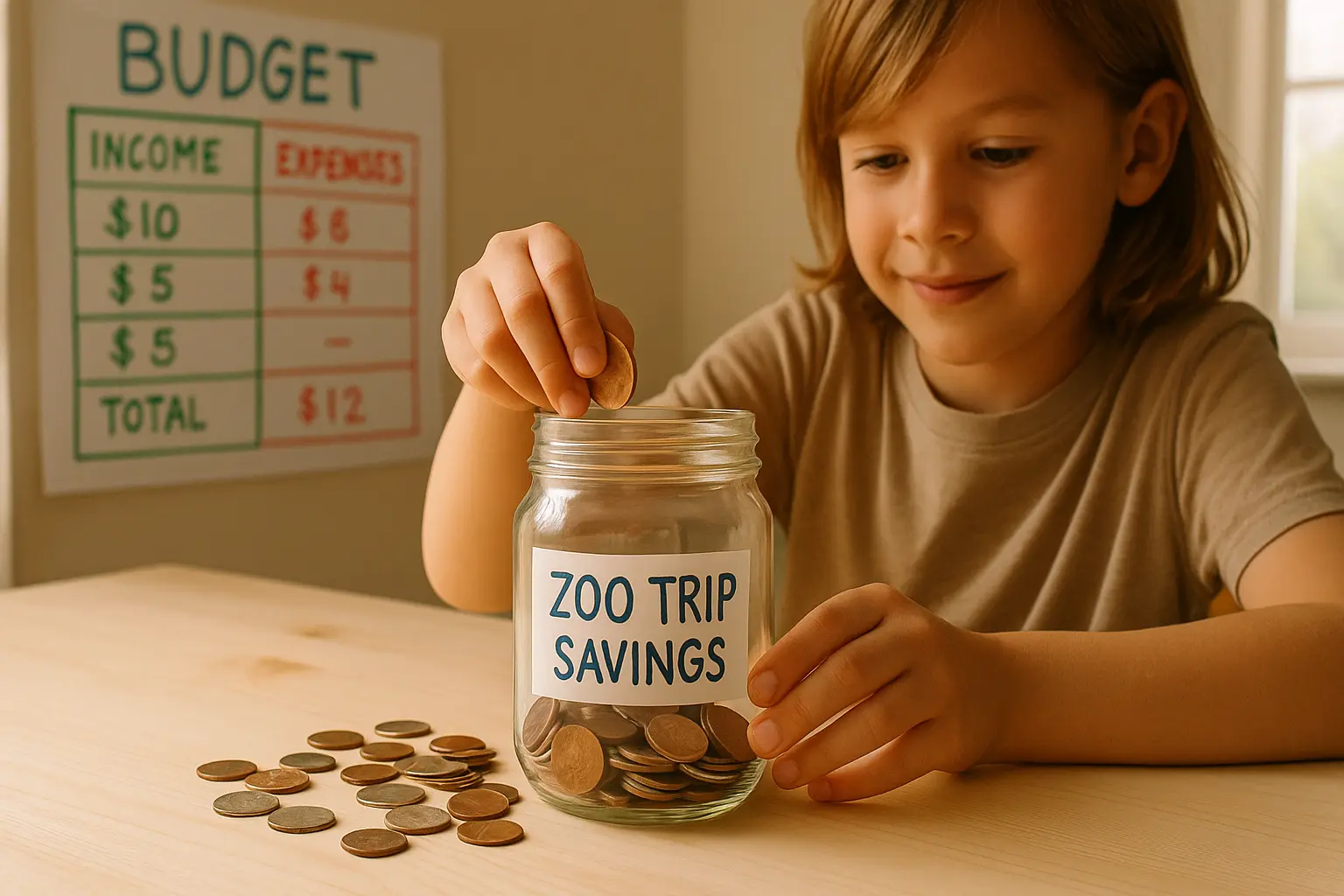
A clear jar, chart, or simple account can make progress visible. Keep the goal realistic enough that the child experiences both saving and eventually using the money as planned.
Frequently Asked Questions
Choose One Change for This Week
Frugal living with kids does not mean becoming a perfectly frugal family by Monday. Pick the point where money and stress meet most often: rushed meals, unplanned outings, toy clutter, subscriptions, or birthday expectations. Choose one small rule, write down what “done” looks like, and test it for a month.
A good first move: plan one free family activity and five dinners before the next grocery trip. That is enough to create a calmer week, show what your family actually uses, and make the next budget decision easier—without making family life feel smaller.