
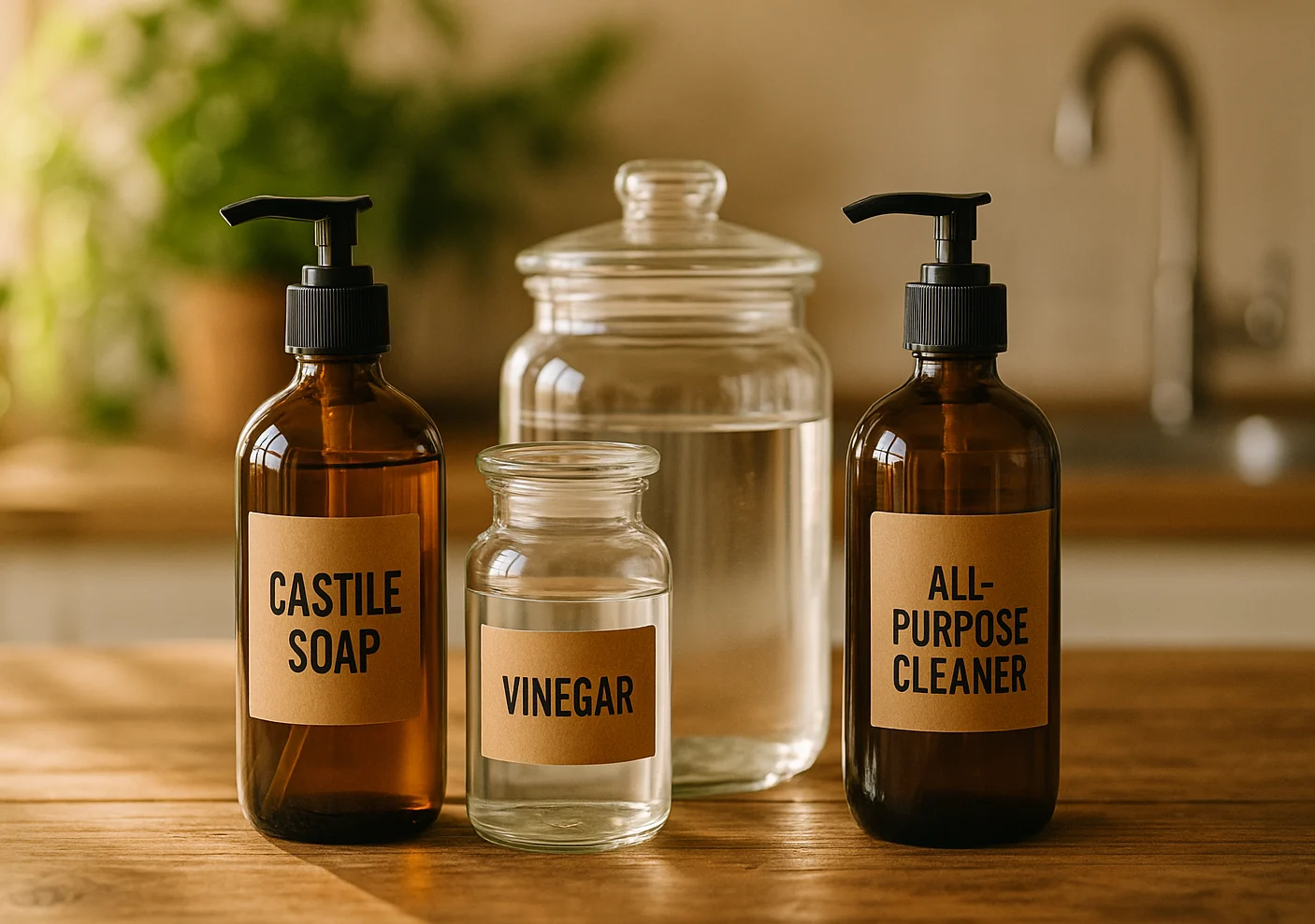
This natural cleaning products bulk buying guide starts with one rule: the biggest package is not automatically the cheapest—or the lowest-waste choice. A bulk cleaner only pays off when the finished cost is lower and you can use, store, and label the whole amount safely.
When you shop for natural cleaning products in bulk, compare the cost per load, bottle, tablet, or usable ounce—not the shelf price or container size alone. Concentrates, refill pouches, powders, and tablets are usually easier to judge than giant ready-to-use jugs because their labels show a clearer yield.
This guide helps you shortlist the formats worth considering, find places to shop, compare two real packages in the calculator, and run five final checks before you commit. For homemade formulas and surface-specific recipes, use the broader Homemade Cleaning Solutions guide.
Compare Regular vs. BulkThis post contains affiliate links. As an Amazon Associate, I earn from qualifying purchases. If you buy through these links, I may earn a commission at no extra cost to you.
Table of Contents
- Best Natural Cleaning Products to Buy in Bulk
- Where to Buy Natural Cleaning Products in Bulk
- Is the Bulk Option Actually Cheaper?
- How to Judge Natural and Eco-Friendly Claims
- Two Optional Tools for a Practical Refill Setup
- Five Checks Before You Buy
- Questions About Buying Natural Cleaners in Bulk
- Start With One Cleaner You Already Finish
Best Natural Cleaning Products to Buy in Bulk
The strongest bulk candidates are products with a clear labeled yield, a long enough useful life for your household, and a format that is easy to store. Use this as a shortlist—not a command to buy the largest size.
| Format | Best fit | Main check before buying |
|---|---|---|
| Concentrates and refill pouches | Frequently used dish, laundry, and all-purpose products | Compare the finished amount, required bottle, dose, and shipping |
| Powders and tablets | Laundry or dishwasher use when the labeled count is clear | Check machine compatibility, moisture protection, and cost per use |
| Castile soap | Households already using the same product for approved tasks | Follow the exact brand-and-task dilution; do not copy one ratio everywhere |
| Baking or washing soda | Regular cleaning or laundry tasks that call for the ingredient | Keep it dry, labeled, and separate from food-use stock |
| White vinegar | Routine use on compatible surfaces or approved appliance descaling | It is not a disinfectant and can damage stone or some finishes |
| Hydrogen peroxide products | Only when you know the exact labeled use and storage requirements | A smaller container may be more practical because formulation and storage matter |

Best overall: labeled concentrates and refills
Concentrates and refill pouches make the cleanest comparison because the label usually gives a dose, load count, or finished volume. They also avoid paying to ship as much water. Check whether a reusable bottle or dispenser is included, required, or already in your home.
Best for compact storage: powders and tablets
Powders and tablets can be easier to store than large liquid jugs, especially for laundry and dishwashing. Compare the labeled number of uses, the dose you actually need, and compatibility with your machine and water conditions.
Conditional bulk buys: castile soap, vinegar, baking soda, and washing soda
These can be frugal when they already have a regular job in your routine. They are poor “just in case” purchases because each has surface, dose, or storage limits.
- Castile soap: formulas vary. The current Dr. Bronner’s dilution guide, for example, gives different amounts for sprays, dishes, laundry, and floors.
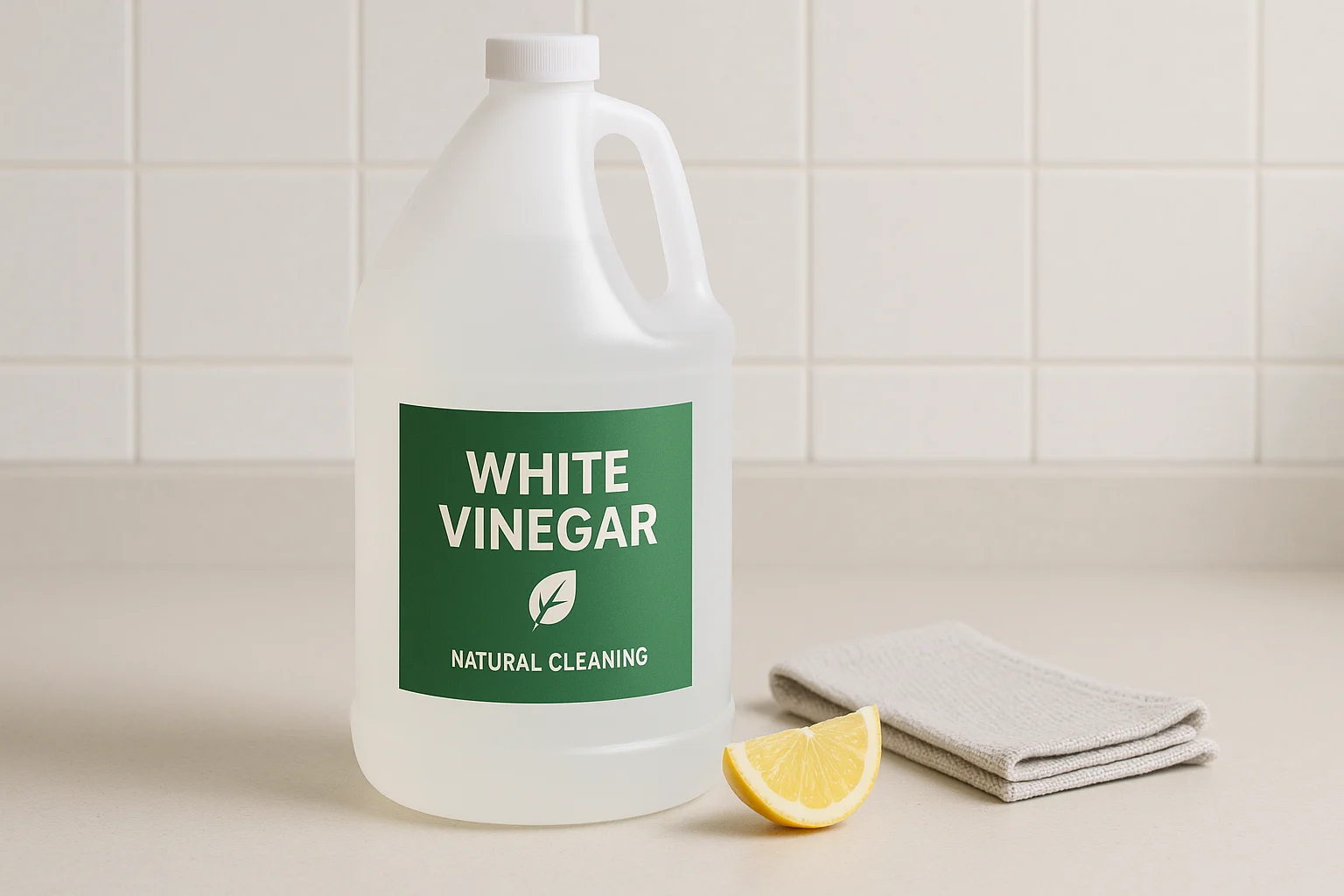
- White vinegar: use it only on compatible surfaces and appliances. It is not an EPA-registered disinfectant, and mixing it with castile soap reduces the soap’s cleaning ability.
- Baking soda: treat it as a mild abrasive and odor-control ingredient; test delicate or glossy finishes first.
- Washing soda: follow the exact product or recipe dose and the package’s skin, eye, fabric, and storage precautions.
Usually better in smaller amounts: peroxide and fragrance add-ins
Hydrogen peroxide products have formulation, contact-time, container, and storage requirements, so the largest package is not automatically the best value. Essential oils are optional fragrance ingredients—not proof that a cleaner disinfects or is suitable for every person, pet, or surface.
Where to Buy Natural Cleaning Products in Bulk
Choose the seller after you choose the format. Manufacturer-direct is useful for exact refills and dilution guidance; local refill shops let you buy a flexible amount; co-ops and warehouse suppliers are often strongest for dry ingredients and sealed multipacks. Compare the exact package and total landed cost—not a generic “best price” list.
Manufacturer-direct and online refill options
Retailer examples checked August 2026; stock, prices, and delivery areas can change.
- Dr. Bronner’s: large Pure-Castile liquid-soap sizes plus product-specific dilution guidance.
- Grove Collaborative: cleaning concentrates and refill-oriented household products.
- Fillaree: home refill boxes and an in-person refill shop.
- Common Good: refill pouches and larger refill boxes across several cleaning categories.
- Azure Standard: delivery and drop-point ordering for everyday and bulk-size goods.
Local refill stores
Refill shops can be the most flexible eco-friendly bulk-cleaning option because you may be able to buy only the amount you need. Ask about container rules, product labels, and price units before you visit. Search a map service for “refill store near me” or use the current Refill Directory for participating stores in the U.S. and Canada.
Co-ops, warehouse stores, and buying clubs
These are often useful for powders, tablets, baking soda, washing soda, and sealed multipacks. Compare the membership or delivery cost, and split only factory-sealed packages—not chemical products poured into unlabeled containers. Once you have one regular package and one larger alternative open, compare the real totals before choosing the seller.
Is the Bulk Option Actually Cheaper?
Compare one regular-size package with one bulk or refill option for the same cleaning job. Enter each price and its labeled yield, using the same finished unit for both — loads, bottles, ounces or uses.
Enter both labels, then select Compare costs. You will see cost per use, the upfront difference, and the break-even amount.
Use the result as a price gate, not an automatic yes. If the break-even amount looks realistic, continue to the label and product-claim checks below; if it does not, keep the smaller package.
How to Judge Natural and Eco-Friendly Claims
“Natural,” “green,” and “eco-friendly” are broad marketing terms, not one safety or performance standard. Compare the product’s task, label, yield, packaging, and credible certifications before you compare the size.
Read the task and directions before the front label
- Intended task and surfaces: bathroom cleaner, laundry detergent, dish soap, and disinfectant are not interchangeable.
- Dilution, dose, and contact time: use the exact manufacturer directions rather than a ratio copied from another brand.
- Ingredient and fragrance information: focus on the details that matter to your household rather than assuming plant-based means risk-free.
- Packaging system: confirm that the refill works with a compatible bottle and that local recycling or return claims apply where you live.
Know what common certifications actually cover
- EPA Safer Choice: evaluates every ingredient against program criteria and maintains a searchable product list.
- UL ECOLOGO: a multi-attribute certification for eligible cleaning and cleaning-related products under UL 2700.
- Green Seal: certifies eligible household, laundry, and professional cleaning categories under product-specific standards.
- Leaping Bunny: addresses animal-testing practices; it is not a cleaning-performance or ingredient-safety rating.
- USDA Organic: applies to qualifying agricultural ingredients and certified products; it does not prove that a cleaner is suitable for every surface.
DIY or a labeled concentrate?
Choose a labeled concentrate when you need repeatable dosing, machine compatibility, or a disinfecting claim. Choose DIY only for a simple, low-risk task when you have one reliable recipe, understand the surface limits, and can make and label a small batch.
For fabric, test an inconspicuous area first and use this upholstery cleaning guide instead of applying a generic formula.
Two Optional Tools for a Practical Refill Setup
A bulk cleaner can save money and still be awkward to use. Before buying another item, check whether something you already own can handle the job. The two options below earn a place only when they solve a repeated problem: keeping enough clean cloths in rotation or applying an approved cleaner lightly and consistently on compatible floors.
Do you keep running out of clean wiping cloths?
If one or two cloths are constantly in the wash—or you keep reaching for disposable paper towels—a larger washable set can make a concentrate routine easier. If your current cloths already cover each cleaning job, skip the extra purchase.
Practical first add-on:
Amazon Basics Microfiber Cleaning Cloths, 24-Pack
Enough cloths to keep kitchen, bathroom and glass separate with clean ones spare between wash loads. Worth it only if you will rotate and wash the full pack.
Do you need lighter, more controlled floor application?
If your chosen cleaner is approved for the floor but a bucket puts down more liquid than the surface needs, a refillable spray mop can provide a lighter, repeatable application. Skip it when the floor maker or cleaner label requires a different method.
For compatible hard floors:
Rubbermaid Reveal Spray Mop Floor Cleaning Kit
A refillable bottle and washable pads for lighter, repeatable application. Confirm your floor and cleaner directions allow the method first.
Before using a refillable mop on wood or laminate, review the low-moisture method and surface limits in the hardwood-floor cleaning guide.
Neither tool can make a poor bulk purchase worthwhile. Check the complete cleaner-and-tool setup against the five tests below before you buy anything.
Five Checks Before You Buy
Use this bulk-buying checklist as a final filter. A lower unit price is not enough: the bulk option should pass all five checks below, or a smaller refill or regular package is often the more frugal choice.
- You use it often: start with the cleaner your household finishes most consistently, not a product you hope to use more.
- The full order is cheaper: include shipping, membership fees, a required bottle or pump, and the amount you may not finish.
- It fits the job: confirm the surface, machine, scent, dose, and household compatibility before increasing the quantity.
- You can store and label it safely: keep original labels and containers when required, protect dry products from moisture, and keep cleaners away from children and pets.
- The package really reduces waste: prefer a refill or compact format you will finish over a larger container that creates leftovers or needs extra accessories.
Do not mix cleaning or disinfecting products unless the manufacturer explicitly directs it. For other ways to spend less without stockpiling, use these frugal cleaning tips.
Questions About Buying Natural Cleaners in Bulk
Start With One Cleaner You Already Finish
I’d start with the cleaner your household replaces most often. Compare its regular package with one refill or concentrate, include every extra cost, and make sure the larger size fits the task, your storage, and your routine. If it passes, buy it. If it does not, the smaller package is the frugal choice.
You do not need a shelf full of bulk products to save money. One well-labeled refill system you actually use is a better result than several oversized containers you are trying to finish.
This article shares general cleaning tips for households and is not medical, chemical safety, or regulatory advice. Product suitability varies by surface and brand—always follow manufacturer labels and local regulations.