
Most cleaning budgets leak in the same place: too many products doing overlapping jobs. Start with a small reusable kit and one clear rule—clean first, disinfect only when the situation calls for it. The CDC says routine cleaning with soap or detergent and water is enough in most home situations; disinfection is mainly needed when someone is sick or at higher risk.
This guide separates useful frugal cleaning hacks—including sensible DIY cleaning solutions—from risky shortcuts. You’ll see where vinegar, baking soda, and lemon can help, which surfaces need extra care, and how to spend less without pretending one homemade mixture can replace every label-approved product.
This post contains affiliate links. If you buy something or complete a qualifying action through one, we may earn compensation at no extra cost to you. As an Amazon Associate, I earn from qualifying purchases. Learn more.
Table of Contents
- Clean, Sanitize, or Disinfect?
- Choose a Cleaning Method by Surface and Job
- Build a Small Reusable Cleaning Kit
- Where Vinegar Helps—and Where It Does Not
- Baking Soda for Scrubbing and Odor
- Frugal Cleaning Hacks for Every Room
- Spend Less on Cleaning Supplies
- Prevent the Expensive Messes
- Make the Routine Easier to Keep
- Frequently Asked Questions
- Start With One Room and One Job
Clean, Sanitize, or Disinfect?
The cheapest product is the one that matches the job. Routine dirt usually needs cleaning, not the strongest chemical in the cupboard. The CDC distinguishes the three jobs this way: cleaning removes dirt and many germs with soap or detergent, sanitizing reduces germs to a regulated safe level, and disinfecting kills remaining germs with an appropriate chemical product.
| Job | Use it for | Frugal starting point |
|---|---|---|
| Clean | Everyday dust, grease, crumbs, fingerprints, and visible soil | Water plus soap or detergent, a washable cloth, and mechanical scrubbing |
| Sanitize | Food-contact or other situations where a recognized sanitizing standard applies | Use a suitable product or method for the item and follow its directions |
| Disinfect | Illness, body-fluid contamination, or higher-risk household situations | Clean first, then use an EPA-registered disinfectant exactly as its label directs |
For the current public-health distinction, see the CDC guide to cleaning and disinfecting and the EPA explanation of registered disinfectants.
Never mix bleach or disinfectants with other cleaners. The CDC warns that household bleach can release chlorine gas when mixed with certain products. If cleaners are accidentally mixed and fumes appear, leave the area, get fresh air, and follow emergency guidance.
For the broader home-budget system, see the frugal living guide. Here, the goal is narrower: use fewer cleaning products, give each one a clear job, and avoid false savings that damage a surface.
Choose a Cleaning Method by Surface and Job
Start with the surface and the type of mess. The picker below shows where inexpensive household ingredients fit—and when detergent, a surface-approved cleaner, or a registered disinfectant is the better choice.
Answer two quick questions. The result gives you a low-cost starting method, the main reason to skip it, and the section that explains the choice.
Choose a surface and a job
The safest frugal method depends on both. One answer alone is not enough to recommend vinegar, baking soda, or a disinfectant.
Build a Small Reusable Cleaning Kit
A frugal kit does not need a different bottle for every room. Build it around six repeat-use items:
- Mild dish soap or detergent for routine grease and soil.
- Baking soda for compatible surfaces that benefit from a gentle scrub.
- Plain white vinegar for selected glass, mineral-residue, and fixture jobs where acid is allowed.
- Washable microfiber cloths in separate colors for kitchen, bathroom, and general dusting.
- A refillable bottle for one clearly labeled mixture at a time.
- A washable mop or spray-mop pad so you control moisture instead of flooding the floor.
Label every mixture. Write the ingredients and the date on the bottle, make modest batches, and never store a cleaner in a drink or food container.
When washable cloths are the gap:
Amazon Basics Microfiber Cleaning Cloths, 24-Pack
Use separate cloths for kitchen, bathroom, and general cleaning, then wash and reuse them. Skip this purchase if you already have enough washable cloths in good condition.
The frugal choice is not always homemade. Keep a surface-specific cleaner when a warranty, finish, health risk, or manufacturer’s directions make it the safer option.
Where Vinegar Helps—and Where It Does Not
White vinegar is useful because its acidity can loosen mineral film and some everyday residue. It is not a universal cleaner, and it is not a substitute for an EPA-registered disinfectant when disinfection is the job.
Glass and Mirrors
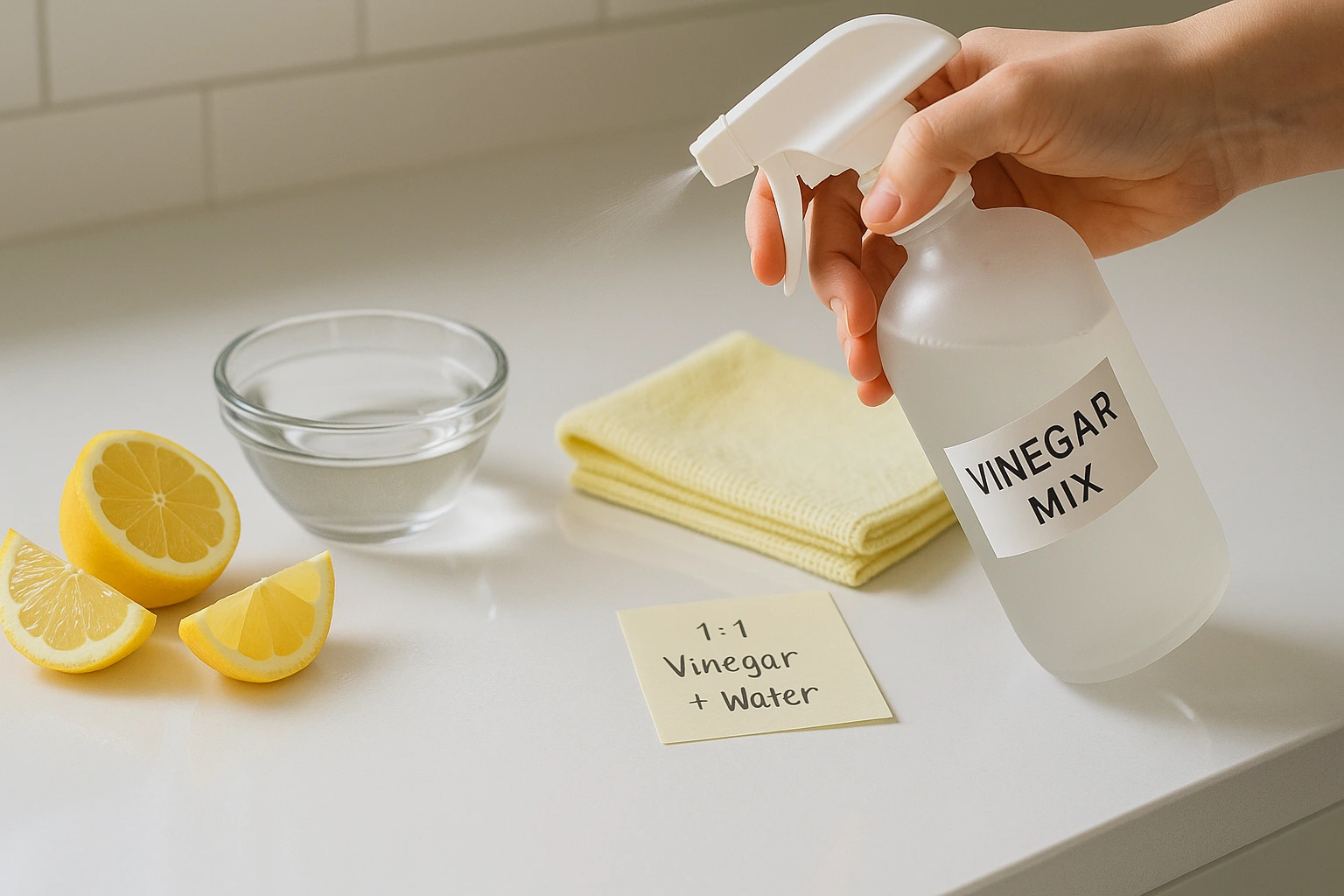
A University of Georgia Cooperative Extension recipe combines 1/4 cup white vinegar, 1 tablespoon cornstarch, and 1 quart warm water. Apply it lightly and wipe dry with a clean lint-free cloth. The cornstarch helps reduce streaking, while the cloth does most of the physical cleaning.
Compatible Fixtures and Mineral Film
For compatible stainless steel, chrome, ceramic, porcelain, or enamel fixtures, a vinegar-dampened cloth can help soften hard-water film. Rinse afterward and stop if the finish changes. The University of Georgia green-cleaning recipes include surface-specific examples and dilution guidance.
Surfaces to Skip
Do not use vinegar or lemon on marble, limestone, travertine, or another acid-sensitive stone. The Natural Stone Institute warns that acidic products can dull or etch calcareous stone. Also check the care instructions for sealed wood, specialty floors, appliance seals, screens, and coated finishes before using an acidic cleaner.
Where Lemon Fits
Lemon can help with odor and light residue, but it has the same acid limits as vinegar. Heating lemon slices in a bowl of water can loosen microwave splatters; let the bowl cool enough to handle, then wipe the interior. Do not treat lemon as a disinfectant, and keep it off acid-sensitive stone.
Do Not Combine It with Bleach
Vinegar is an acid. Mixing it with chlorine bleach can release toxic chlorine gas. Keep vinegar recipes and disinfecting products completely separate, and follow the product label rather than improvising combinations.
Baking Soda for Scrubbing and Odor
Baking soda is most useful as a mild abrasive and deodorizing powder. Mix only enough with water to make a soft paste, use light pressure, and rinse well. Spot-test glossy, coated, acrylic, or otherwise delicate surfaces because even a mild abrasive can leave marks.
Sinks, Tubs, and Compatible Fixtures
Apply a small amount of paste with a damp cloth or non-scratch sponge. Work in a small area, rinse clean, and dry the surface so residue does not remain.
Oven Residue
For a cool oven with no self-cleaning cycle running, a baking-soda paste can soften cooked-on residue. Leave the paste on the affected area, wipe it away, and repeat rather than forcing the scrub. Keep the mixture away from heating elements, openings, and any part the appliance manual excludes.
Slow Drains
Skip the dramatic “volcano” as the main repair. Remove visible debris, clean the stopper or strainer, and use a plunger or drain snake when appropriate. A persistent or recurring clog is a plumbing problem, not a cleaning-recipe problem.
Frugal Cleaning Hacks for Every Room
The surface changes, but the order stays simple: remove loose soil, use the mildest compatible cleaner, then rinse or dry as the material requires.
Kitchen
- Use soap or detergent and water for routine counters, handles, and appliance exteriors when the manufacturer allows it.
- Wash cutting boards in hot, soapy water after use. When sanitizing is needed, follow current food-safety guidance rather than relying on lemon or vinegar.
- Keep raw-food cleanup tools separate from general-purpose cloths.
The USDA cutting-board guidance explains cleaning, sanitizing, rinsing, and drying.
Bathroom
- Start with detergent and scrubbing for soap film and visible soil.
- Use vinegar only on compatible fixtures and rinse it away.
- Ventilate the room and keep bleach or disinfectants separate from every other cleaner.
Floors
- Follow the flooring manufacturer’s cleaner and moisture limits.
- Vacuum or sweep grit first so it does not scratch the finish.
- Use a refillable spray mop or well-wrung washable pad when the floor calls for minimal moisture.
When a bucket puts down more water than the floor allows:
Rubbermaid Reveal Spray Mop Floor Cleaning Kit
A refillable bottle and washable pads in one tool, so you control how much moisture reaches the floor instead of wringing a string mop. Skip it if your current bottle and pad already keep the floor barely damp.
Pet Messes
Blot first and follow the surface-care instructions. For urine and other organic stains, an enzyme cleaner is usually a more direct tool than trying to cover the odor with fragrance. Keep pets away until the area is rinsed or dry as the product directs, and use the frugal pet care guide for the wider household-cost plan.
Spend Less on Cleaning Supplies
Exact prices move, so do not build a frugal system around a one-time bottle price. Use four durable checks instead:
- Count active products. Finish or remove duplicates before buying another specialty cleaner.
- Compare cost per use. A concentrate may be cheaper only if you dilute it correctly and actually finish it.
- Buy bulk after the habit is proven. A large container is not a saving if it clumps, expires, leaks, or sits unused.
- Prefer washable tools. Cloths and mop pads can replace a long stream of disposable wipes and refills.
The same unit-price discipline applies at the grocery store; the grocery shopping guide shows how to compare package sizes without letting a “bulk” label make the decision for you.
A chance-based trial is a separate route from the core cleaning plan: it may lower your out-of-pocket cost, but only if you qualify, are selected, and would actually use the products.
How the Optional Cleaning-Bundle Trial Works
- Check eligibility: the current offer is listed for US residents age 21 or older and uses a three-page form.
- Review the terms: entry is chance-based, and submitting the form does not guarantee selection.
- Keep it separate from the cleaning plan: treat the offer as an optional freebie route, not as a reason to buy or use products you do not need.
Optional: Check the Cleaning-Bundle Trial
See the current eligibility rules and terms for a chance to test and keep a household cleaning bundle. Availability can change.
For more chance-based offers and no-cost resources, the freebies guide keeps those options in one place.
Prevent the Expensive Messes
The best frugal cleaning hack is preventing damage that cleaning cannot reverse.
- Dry wet materials quickly. EPA guidance says damp areas should generally be dried within 24–48 hours after a leak or spill to reduce the chance of mold growth.
- Fix the moisture source. Cleaning visible mold without correcting the leak, condensation, or humidity problem does not solve the cause.
- Use ventilation where moisture is produced. Run bathroom and kitchen exhaust fans or open windows when practical.
- Act on spills early. Blot, identify the material, and use the compatible method before a small spot spreads.
- Keep grit outside. Doormats and a quick sweep protect floors from abrasion.
See the EPA’s mold and moisture guide for the full prevention and cleanup boundaries.
Make the Routine Easier to Keep
A complicated schedule usually fails before an inexpensive one does. Try a short closing routine:
- Return loose items to their homes.
- Wipe the sink and the most-used counter.
- Sweep or vacuum the highest-traffic strip.
- Rinse and hang reusable cloths so they dry between uses.
- Restock only the item that is actually running low.
For households with children, assign tasks by age, reach, and the products involved—put away toys, match socks, dust low surfaces, or carry dry laundry before handing over chemical cleaners. The frugal living with kids guide has more ways to divide household jobs without turning every task into a purchase.
Frequently Asked Questions
Start With One Room and One Job
Before buying anything else, check the products you already have in one room and assign each one a clear job. Use soap or detergent for routine dirt, reserve vinegar and baking soda for compatible tasks, and keep one label-approved disinfectant for the situations that require it. If two products do the same job, finish one and stop replacing the duplicate. The best frugal cleaning hacks make each product earn its place: fewer products, clearer decisions, and less avoidable damage.
Cleaning safety: always follow product and surface-manufacturer directions, ventilate as instructed, spot-test uncertain materials, and keep cleaners away from children and pets. Never mix bleach or disinfectants with other cleaners. Homemade cleaning mixtures are for routine cleaning only unless a competent authority or product label specifically supports sanitizing or disinfecting use.