
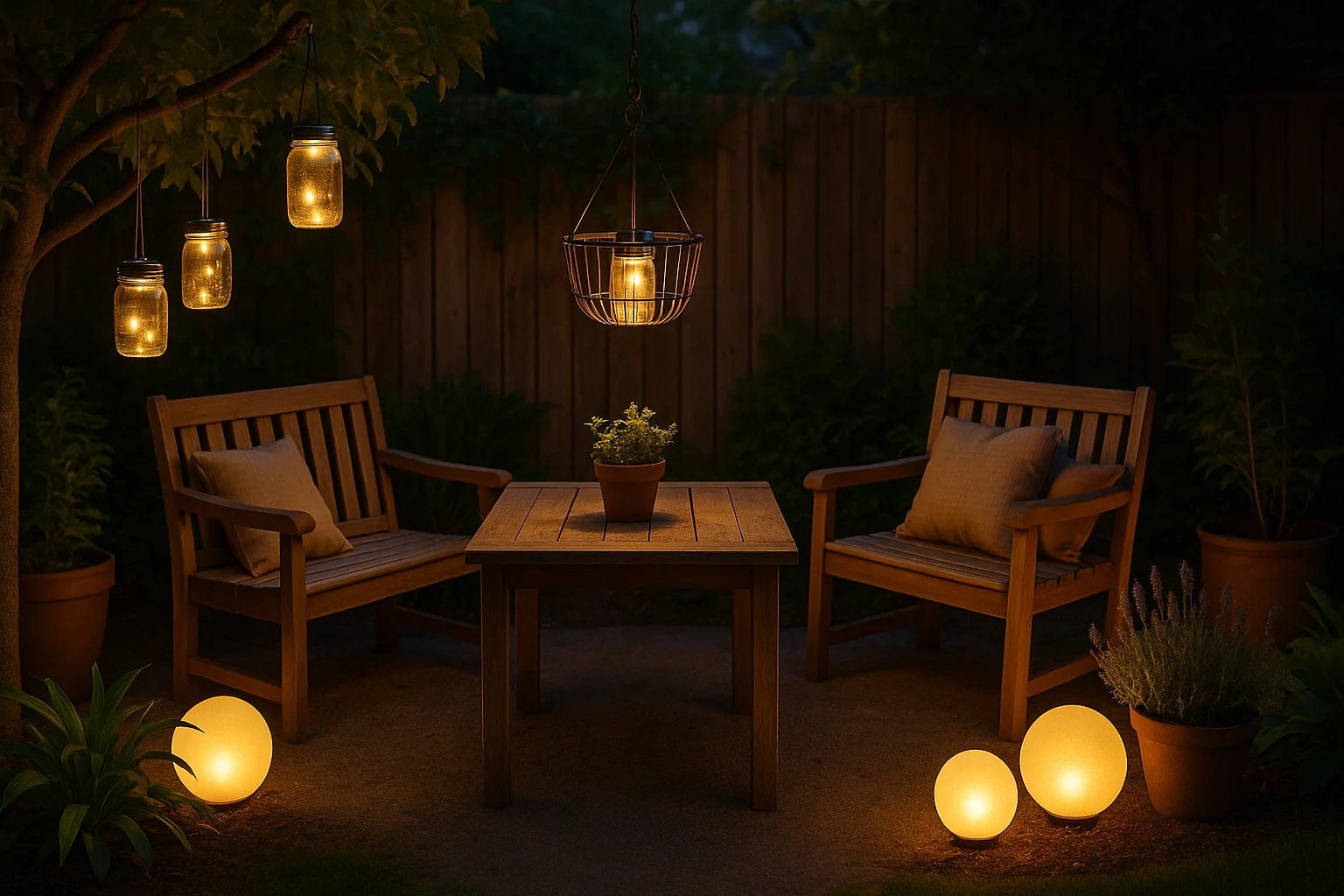
Looking for a budget solar light DIY project that looks intentional—not improvised? These Dollar Tree DIY solar light projects turn basic stake lights into five backyard accents: a mason jar lantern, a hanging basket light, glass-gem path markers, a planter pedestal, and a frosted globe. Start with the comparison table to choose the look you want, then use the climate checker to see where that build is most likely to hold up.
Most projects take 15–45 minutes of hands-on work, plus drying or cure time. Your total depends on local prices and which tools, adhesive, paint, or containers you already own. When you want more low-cost weekend ideas, browse our budget DIY home projects.
Compare the projectsThis post contains an Amazon affiliate link. If you buy through it, we may earn a commission at no extra cost to you. As an Amazon Associate, I earn from qualifying purchases. Learn more.
Table of Contents
- Compare the Solar-Light Projects
- Which Solar-Light Project Fits Your Climate?
- Before You Start: Keep the Solar Head Working
- 1. Mason Jar Solar Lanterns
- 2. Wire Basket Solar Chandelier
- 3. Glass-Gem Solar Path Lights
- 4. Planter-Pedestal Solar Lights
- 5. Frosted Globe Solar Lights
- Keep the Lights Charging and the Joints Intact
- Dollar Tree Solar Light Project FAQs
- Build One Test Light Before You Make a Set
Compare the Solar-Light Projects
Use this table to compare each project by its best use, typical item count, active time, and difficulty.
| Project | Best for | Typical new items* | Active time | Difficulty |
|---|---|---|---|---|
| Mason Jar Lanterns | First-time build | 3–4 | 15–20 min | Easy |
| Wire Basket Chandelier | Covered patio centerpiece | 5–7 | 25–35 min | Medium |
| Glass-Gem Path Lights | Decorative path edges | 3–4 | 30–45 min | Medium |
| Planter-Pedestal Lights | Raised garden accents | 4–5 | 20–30 min | Easy |
| Frosted Globe Lights | Soft, diffused glow | 3–4 | 30–40 min | Easy |
*Item counts exclude tools, adhesive, paint, replacement batteries, tax, and supplies you already own. Dollar Tree carries multiple price points, and prices and availability vary by store and online. Active-time estimates are planning estimates; drying and cure time are additional. See Dollar Tree’s current pricing overview.
Which Solar-Light Project Fits Your Climate?
Choose your project and weather
Pick the project you like from the table, then choose the weather it will face. The checker flags moisture, freezing, wind, drainage, and modification risks. It gives a placement plan—not a waterproof rating.
Choose a project and climate to see where it is most practical to use and what to protect.
Use the result to choose a location, then review the three build rules below before you drill, glue, paint, or seal anything.
Before You Start: Keep the Solar Head Working
Every build depends on the same four parts: the solar panel, rechargeable battery, switch, and LED. Daylight charges the battery through the panel; the LED turns on after dark. A modification only works if the panel still sees daylight and the switch, battery door, drainage openings, and wiring remain usable. Assume that drilling, gluing, painting, or opening the housing reduces its original weather resistance.
Three rules for every build
- Keep the solar panel exposed and aimed toward open daylight.
- Keep the switch, battery door, drainage openings, and service points accessible.
- Match every adhesive, coating, or sealant to the exact material, let it cure fully, and keep it off electronics.
Tools to have ready
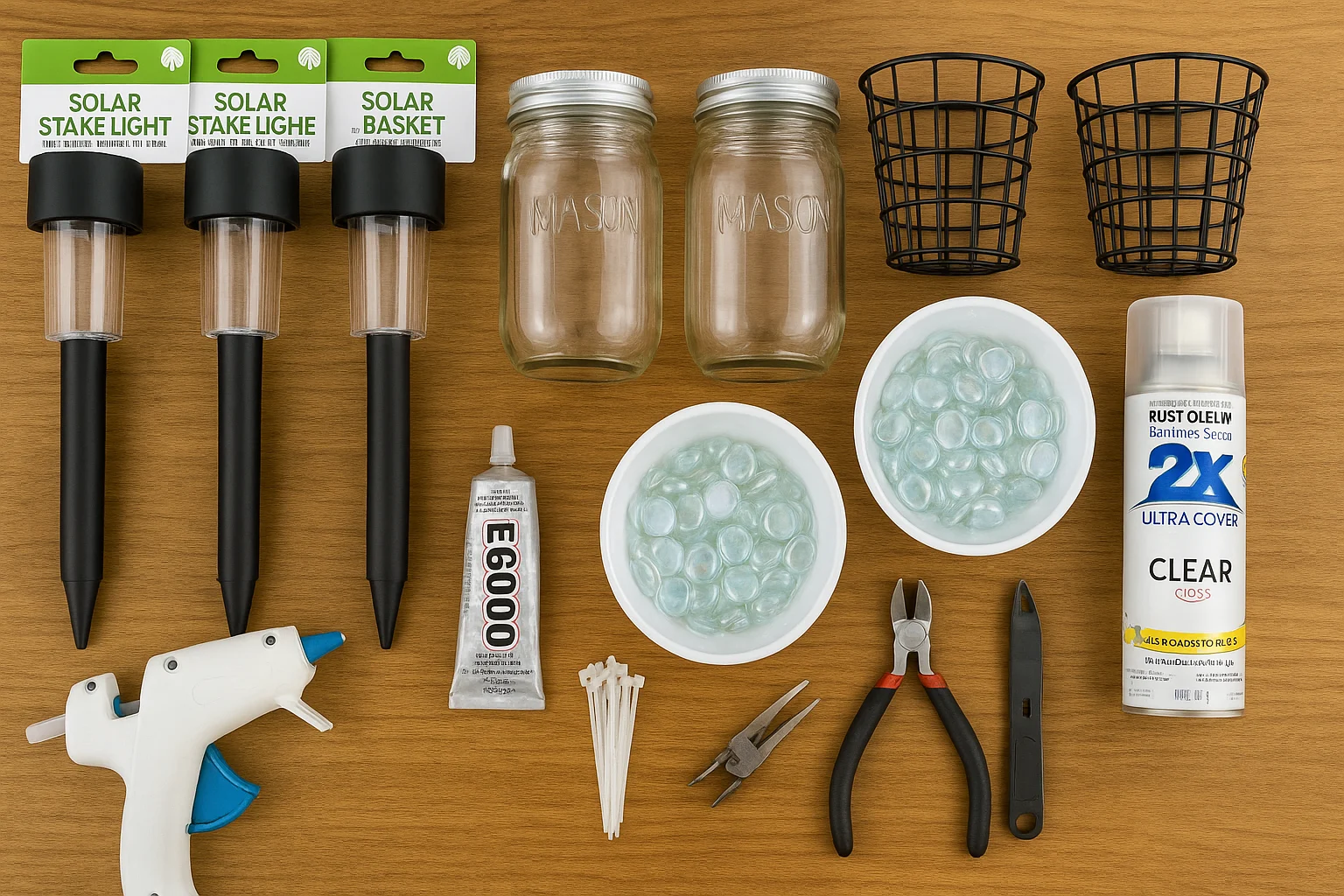
Depending on the project, you may need a glue gun, strong clear adhesive, zip ties, wire cutters, a drill, and an outdoor-rated coating or sealant. Use a drill only when the design truly needs a hole, and test the layout before committing to glue or paint.
Safety: Wear eye protection when drilling plastic, keep hot glue away from skin, and ventilate the workspace when an adhesive label requires it. Follow the exact product instructions before outdoor use; for example, E6000 Premium says to allow 24 hours for curing and up to 48–72 hours for maximum strength, depending on materials and temperature.
1. Mason Jar Solar Lanterns
This is the easiest project to start with because the jar becomes the shade and the solar head can stay serviceable above the lid. It works well on a table, fence post, or path edge where you can move it under cover. The key is keeping the panel outside while only the LED shines into the jar.
What you need
- 1 Dollar Tree solar stake light
- 1 large mason jar with a fitted lid
- Optional: corrosion-resistant wire, twine, or jute rope
- Adhesive compatible with the lid and solar-light housing
How to build it
- Disassemble: Gently remove the solar head from the stake without pulling on the LED or wires.
- Prep the jar: Clean and dry the jar and lid, then test how the solar head will sit before applying adhesive.
- Plan the light path: Keep the panel, switch, and battery door above the lid. If the LED hangs below the head, center it over the jar opening; drill only when the design allows the LED to pass without pinching wires.
- Attach the solar head: Fix it to the exterior of the lid with a compatible adhesive while keeping service points accessible.
- Let it cure: Follow the adhesive label before moving, closing, or placing the lantern outdoors.
- Add a handle (optional): Test the handle at ground level and do not hang the lantern over seating or a walkway.
- Place and test: Give the panel open daylight, then check the jar for trapped moisture after the first damp night.
The adhesive is the part worth getting right. Hot glue holds a lid joint indoors and lets go outdoors, and this same bond is what every project below depends on.
One tube of E6000 Craft covers all five builds.
It bonds the awkward pairings these projects create — glass to plastic, plastic to metal — and dries clear, which matters when the joint sits on a lantern at eye level. The rule above still applies: check the label against your exact materials and expected weather, and keep it off the panel and electronics.
For a cleaner set, use matching jars and one handle material. A single finished lantern can also anchor a cheap homemade gift basket for someone with a patio or balcony.
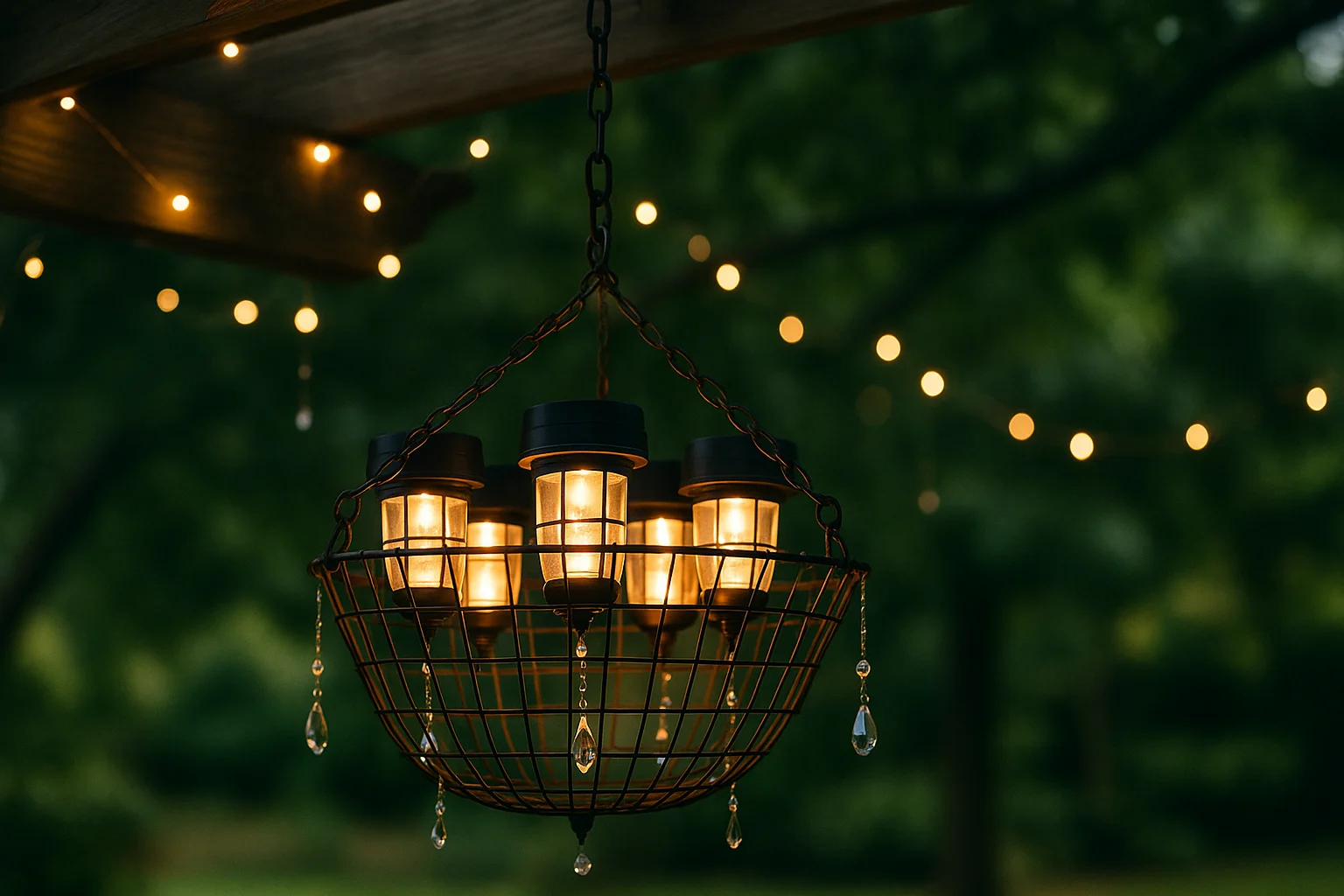
2. Wire Basket Solar Chandelier
The basket build works best on a covered patio or above an outdoor table where the hanging hardware can be inspected. It creates a wider decorative glow than one stake light, but it is the least forgiving option in wind because several light heads and the basket must stay secure.
What you need
- 1 Dollar Tree wire basket
- 3–5 Dollar Tree solar stake lights
- Weather-appropriate ties or wire
- Wire cutters and optional compatible adhesive
How to build it
- Disassemble: Remove the solar heads from their stakes without pulling on the LEDs or wires.
- Plan the spacing: Arrange the heads evenly around the basket with the panels facing up or outward toward daylight.
- Secure the lights: Fasten each head independently, trim sharp ends, and keep the switch and battery door reachable.
- Test the basket: Lift and gently shake it at ground level. Nothing should slide, swing into another light, or loosen.
- Protect the joints: Follow the light and sealant labels; never coat the panel, switch, battery door, drainage openings, or electronics.
- Hang or place: Use secure hardware in a covered location, keep the panels able to charge, and avoid hanging the basket over seating or a walkway.
Keep the basket visually light: use one gem color or a small number of accents, and leave clear space around every solar panel.
3. Glass-Gem Solar Path Lights
Glass-gem lights add low path-edge sparkle, not dependable hazard lighting. The extra weight and adhesive seams make this build best for a spot you can inspect and move under cover during freezing weather.
What you need
- 1 Dollar Tree solar stake light
- 1–2 bags of Dollar Tree glass gems
- Clear adhesive compatible with the plastic cover and glass
How to build it
- Disassemble: Remove the solar head from the stake.
- Prep the surface: Clean and dry the plastic light cover and the gems.
- Plan the pattern: Dry-fit one light layer around the lower cover so you know how much weight and space it will add.
- Glue the gems: Attach a small section at a time without covering the panel, switch, battery door, or drainage openings.
- Let it cure: Follow the adhesive’s full cure time before reattaching or moving the light outdoors.
- Reattach: Return the head to its stake or a stable flat base.
- Place and inspect: Use it along a path edge for decoration, then check the gem joints after the first rain or freeze.
A single ring or partial collar of gems usually gives enough sparkle without turning the cover into a heavy dome that blocks light.
4. Planter-Pedestal Solar Lights
Planter pedestals add height without hanging anything. The decoration is simple; the real work is keeping the base level, the ballast contained, and the drainage path open so the pedestal does not tip or trap water.
What you need
- 1 Dollar Tree plastic planter
- 1 Dollar Tree solar stake light
- Gravel or sand in a sealed bag, or a weighted saucer
- Compatible adhesive and optional ties
- Optional: paint labeled for the planter plastic and outdoor use
How to build it
- Test the base: Turn the planter upside down on the actual surface and confirm that it sits flat.
- Paint (optional): Use a coating labeled for the planter plastic and expected outdoor conditions; let it dry as directed.
- Add ballast: Place a sealed bag of gravel or sand under the inverted planter, or fasten the planter to a weighted saucer so the weight cannot spill or shift.
- Attach the solar head: Center it on the planter’s former bottom while keeping the panel, switch, and battery door accessible.
- Add mechanical support: Use existing drainage holes for ties only when doing so does not block drainage or distort the planter.
- Let it cure and test: Follow product directions, then push gently from several sides to confirm the pedestal remains stable.
- Place: Use it beside a garden bed or driveway edge, not as the only light for a step or trip hazard.
Build and test one pedestal on the real surface before making a matching row. A design that is stable on concrete may wobble on soil or mulch.
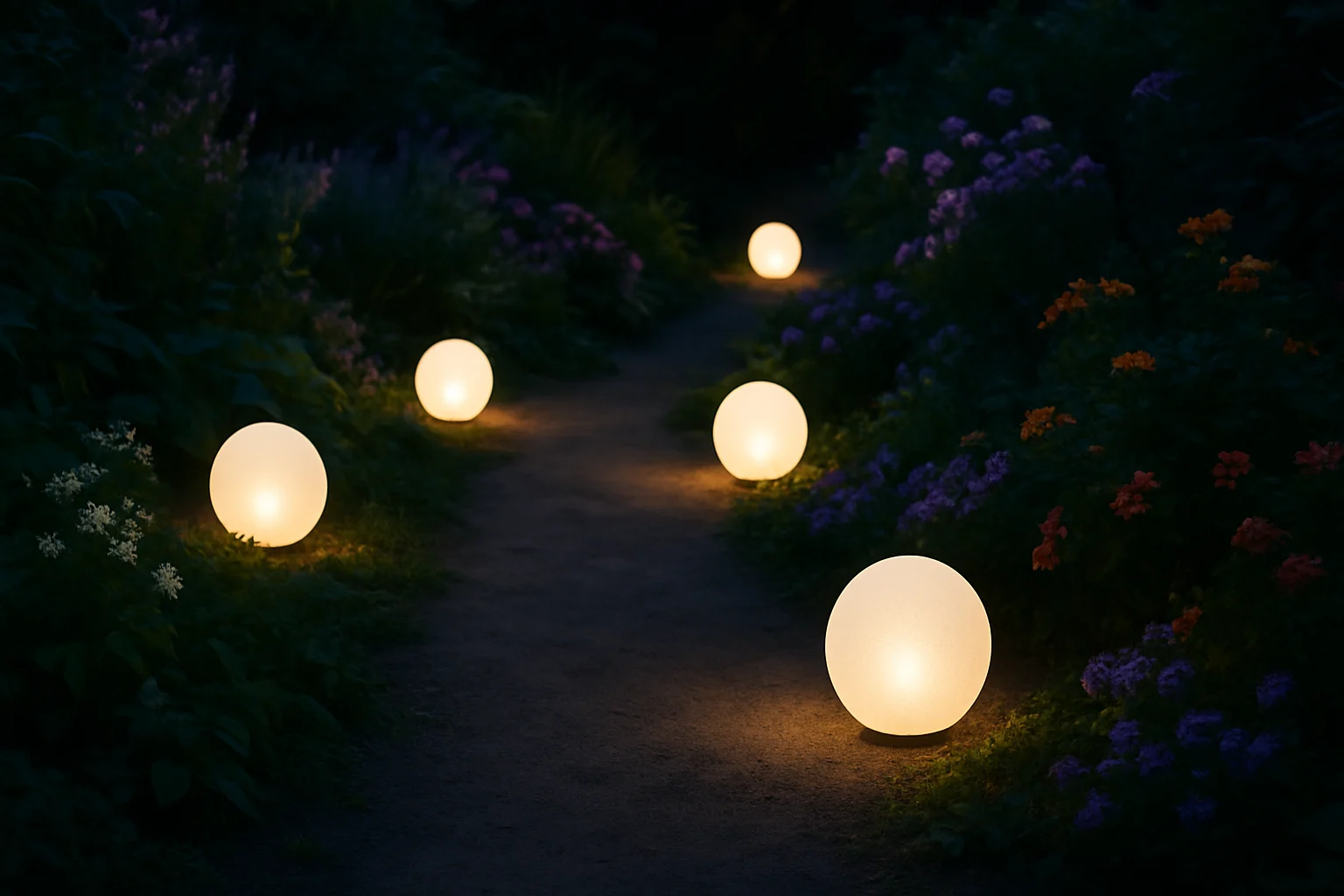
5. Frosted Globe Solar Lights
Frosted globes soften the LED into a diffused glow near planting beds or a patio edge. A pre-frosted globe is the simplest route; coating a clear bowl adds compatibility and durability questions that can erase the project’s simplicity.
What you need
- 1 pre-frosted plastic globe or shade, or a compatible clear plastic bowl
- 1 Dollar Tree solar stake or puck light
- Optional: translucent coating labeled for the exact plastic and outdoor use
- Compatible clear adhesive
- Optional: small drill bit
How to build it
- Prep the globe: Clean and dry the plastic, then test the solar-head position before cutting or gluing.
- Create the frosted look: Use a pre-frosted globe when possible. Otherwise, test a plastic-compatible translucent coating on scrap and follow its label. Standard frosted-glass spray is intended for glass or mirrors and indoor use, so do not assume it will bond to or weather well on plastic. See the manufacturer’s use directions.
- Plan the light path: Route only the LED through a small opening when needed, or attach the light externally without covering the panel, switch, battery door, or drainage path.
- Attach the light: Position the panel toward open daylight and keep the joint visible enough to inspect or service later.
- Let it cure: Follow the adhesive label before moving the globe outdoors.
- Protect the connection: Keep coatings off the panel and electronics, and use the globe under cover when the modified housing is not rated for exposed weather.
- Place: Set it in a garden bed or beside a patio, away from steps and walking hazards.
If the globe looks dim, remove it briefly and compare the bare light. A thick or dark diffuser may be blocking more light than expected.
Keep the Lights Charging and the Joints Intact
When a light dims or stops working, check shade, battery match, trapped moisture, and stressed attachments in this order:
- Panel and switch: Clear dust, pollen, leaves, and shade, then confirm the switch is on and the panel receives open daylight.
- Battery: Match the original rechargeable battery’s chemistry, voltage, size, and capacity. Do not install a non-rechargeable alkaline cell in a circuit designed to recharge its battery.
- Modified joint: Inspect drilled, opened, painted, or glued areas for gaps, movement, corrosion, or trapped water.
- Drainage: Keep designed openings clear and avoid creating a sealed pocket around electronics.
- Cold-weather storage: Follow the product instructions and bring modified pieces inside when the light or added materials are not rated for freezing conditions.
- Second test: After a repair, give the light a full charge according to its instructions before deciding the solar head has failed.
For the basics on charging, batteries, and placement, see the U.S. Energy Saver overview of outdoor solar lighting.
When the Dollar Tree item is out of stock
Use the project’s function—not the exact product name—as your substitute rule. Thrifted jars can replace new jars, and a pre-frosted plastic globe can replace a coated clear bowl. For adhesives and coatings, use only products whose labels list the material and outdoor conditions you expect.
Use these projects for movable accent lighting. For steps, trip hazards, or a permanent exposed fixture, choose a purpose-built outdoor light rated for that job.
Dollar Tree Solar Light Project FAQs
Build One Test Light Before You Make a Set
Choose one project from the table, gather only the materials it needs, and build a single test version before making a matching set. After three nights of normal use, and again after the first damp night, check brightness, stability, drainage, and the modified joint. Move it under cover or change the attachment before copying the design. For another low-cost weekend project, browse these easy DIY backyard projects.
Safety note: These are decorative low-voltage crafts, not dependable lighting for steps and hazards. Follow each product’s instructions, use only compatible rechargeable batteries, and keep modified housings away from severe weather unless the original light and every added material are rated for those conditions.