
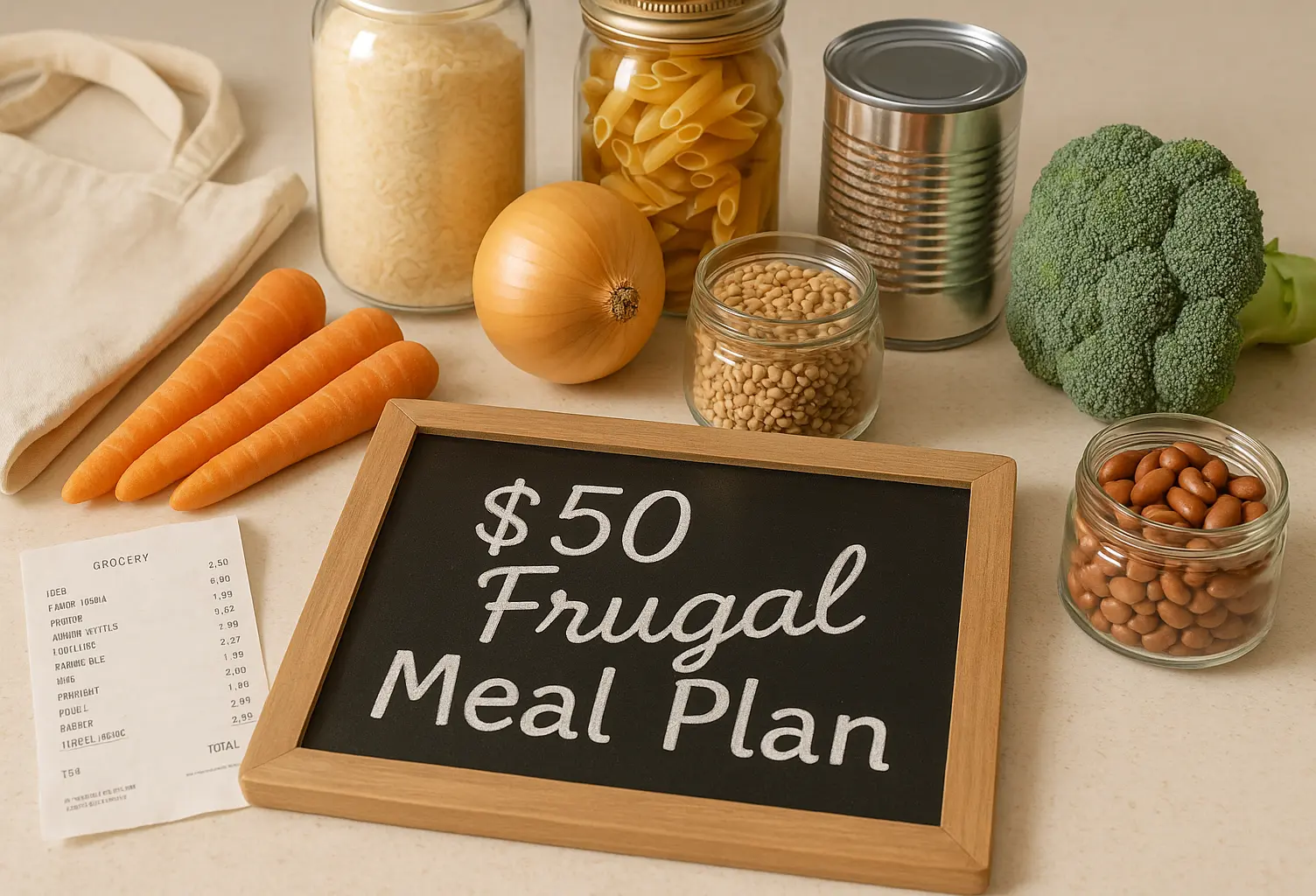
A $50 grocery week usually breaks down before checkout: one meal needs a special ingredient, leftovers have no next job, and a few “small” extras erase the budget. The fix is not seven ultra-cheap recipes—it is a plan where every ingredient earns more than one place in the week.
This frugal meal planning guide starts with what you already own, builds dinners around shared staples, and prices only the gaps. The $50 template is a strict, pantry-assisted example for one adult, so use it for structure and run the calculator with your own prices. For the same practical approach across bills, cleaning, and home projects, see our frugal living guide.
This post contains affiliate links. If you purchase through them, we may earn a commission at no extra cost to you. Learn more.
Rather not plan the whole week yourself?
Little Lunches can create a personalized family meal plan and smart grocery list for households with kids, giving you a ready-made place to start.
Table of Contents
- Step 1: Check What You Already Have
- Step 2: Craft Your $50 Budget Meal Plan
- Check Your $50 Weekly Meal Budget
- Step 3: Grocery Shopping on a Budget
- Step 4: Batch Cook Without Creating More Waste
- Step 5: Make Flexible Pantry Swaps
- FAQ: Budget Meal Planning
- The Goal Is a Repeatable Week, Not a Perfect $50
Step 1: Check What You Already Have
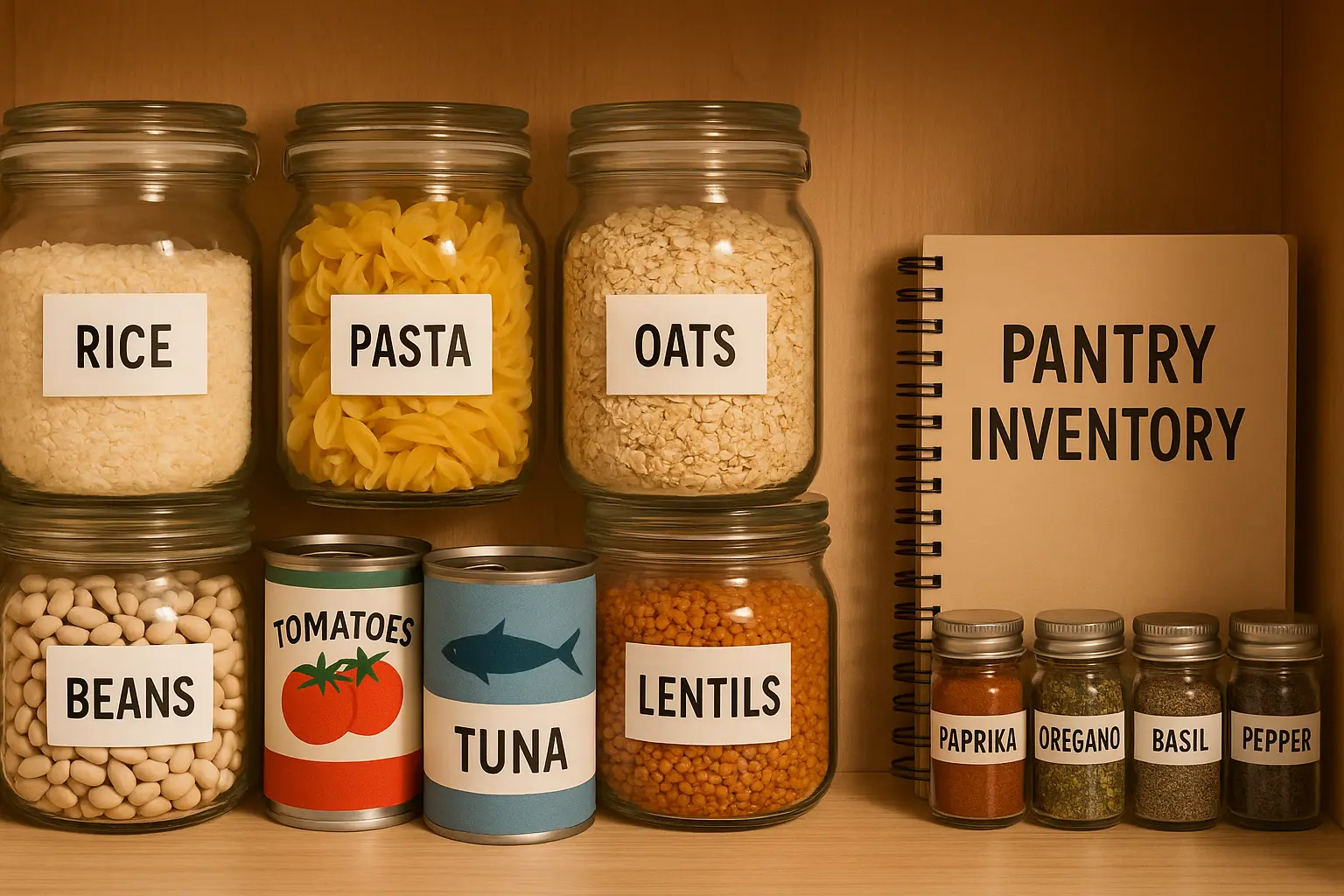
Before you shop, check what is already in the kitchen. This prevents duplicate buys and gives the week’s oldest ingredients a job before they spoil.
- Pantry: Note grains, pasta, canned beans, tomatoes, spices, and oils.
- Fridge: Put produce, leftovers, and open condiments that need using soon on an “eat first” list.
- Freezer: Count frozen meat, vegetables, fruit, bread, and prepared portions before adding them to the shopping list.
Step 2: Craft Your $50 Budget Meal Plan
Choose the dinners first, then use inexpensive repeats for breakfast and lunch. Reuse ingredients across the week—a pot of rice can support stir-fry, bean bowls, and a side dish—and keep one flexible meal for leftovers or a pantry backup. The simplest frugal meal planning rule is to buy ingredients with more than one job.
Five rules that keep the plan affordable
- Start with shared staples: Rice, beans, pasta, eggs, potatoes, and flexible vegetables can appear in several meals.
- Plan intentional leftovers: Decide which dinner becomes tomorrow’s lunch before you shop.
- Batch-cook only the bases: Prepare grains, beans, sauces, or roasted vegetables that can change roles during the week.
- Compare proteins by cost and fit: Use beans, lentils, eggs, smaller meat portions, or the best-priced option that suits the dish.
- Budget for every meal: Breakfast, lunch, snacks, and drinks still count even when dinner gets most of the attention.
A $50 weekly template for one adult
Here’s a one-adult, pantry-assisted example that allocates a $50 weekly target. The dollar amounts are planning caps—not verified current basket prices—so use your local unit prices and the calculator below.
| Day | Breakfast | Lunch | Dinner | Daily planning cap |
|---|---|---|---|---|
| Monday | Oatmeal with banana | Bean and rice bowl | Chili with cornbread | $7.00 |
| Tuesday | Eggs with toast | Leftover chili | Chicken and vegetable stir-fry with rice | $8.00 |
| Wednesday | Oatmeal with banana | Leftover stir-fry | Lentil soup with toast | $6.00 |
| Thursday | Eggs with toast | Leftover lentil soup | Tomato pasta with vegetables | $7.00 |
| Friday | Oatmeal with banana | Leftover pasta | Bean quesadillas with slaw | $7.00 |
| Saturday | Pancakes | Grilled cheese with tomato soup | Loaded baked potatoes | $7.00 |
| Sunday | Eggs with toast | Leftover baked potato bowls | Chicken thighs with vegetables and rice | $8.00 |
Weekly planning target: $50.00
Use your local prices, scale the budget for larger households, and swap ingredients rather than shrinking portions below what your household needs.
Reality check: USDA’s May 2026 Thrifty Food Plan estimated $58.20 per week for a woman age 20–50 and $73.20 for a man in that age range, with a reference family of four at $235. Treat $50 as a stretch target, not a national benchmark. See the USDA monthly food-plan report.
Seven low-cost dinner formulas
Use these as mix-and-match formulas rather than fixed recipes. Start with what is already open, then buy only the missing parts.
- Chili: Combine beans, canned tomatoes, onion, and seasoning; add meat only when it fits the budget.
- Chicken and vegetable rice bowls: Cook the chicken once and stretch it with rice and frozen vegetables.
- Lentil soup: Build it from lentils, onion, carrots, and broth or seasoned water; serve with toast.
- Tomato pasta: Use pasta, tomato sauce, and any vegetables that need using; add beans, lentils, or meat when available.
- Bean quesadillas: Fill tortillas with beans, a little cheese, and leftover vegetables.
- Loaded baked potatoes: Top potatoes with beans, vegetables, cheese, yogurt, or leftover chili.
- Chicken thighs with vegetables: Choose thighs or another discounted cut, then plan the leftovers into lunch.

Check Your $50 Weekly Meal Budget
Add the prices you expect to pay for dinners, staples, and extras. Subtract only pantry ingredients you already own and will use; the result shows how much room the plan has.
Need the menu as well as the numbers? For households with kids, Little Lunches offers personalized meal plans and a smart grocery list: Android / iOS.
Step 3: Grocery Shopping on a Budget
Take the priced list to the store and protect it from three common leaks: buying a sale item with no planned meal, choosing a larger pack the household will not finish, and treating a coupon as permission to add something new. For current government resources, explore USDA SNAP-Ed’s meal-planning, shopping, and budgeting materials.
- Shop the plan, not the discount: A sale ingredient earns a place when it replaces something on the list or appears in more than one planned meal.
- Compare unit prices: Discount chains can be cheaper on some staples, but the shelf label reveals which size and store offer the better value.
- Buy bulk with an exit plan: Stock up only when you know how the ingredient will be used or frozen before it spoils.
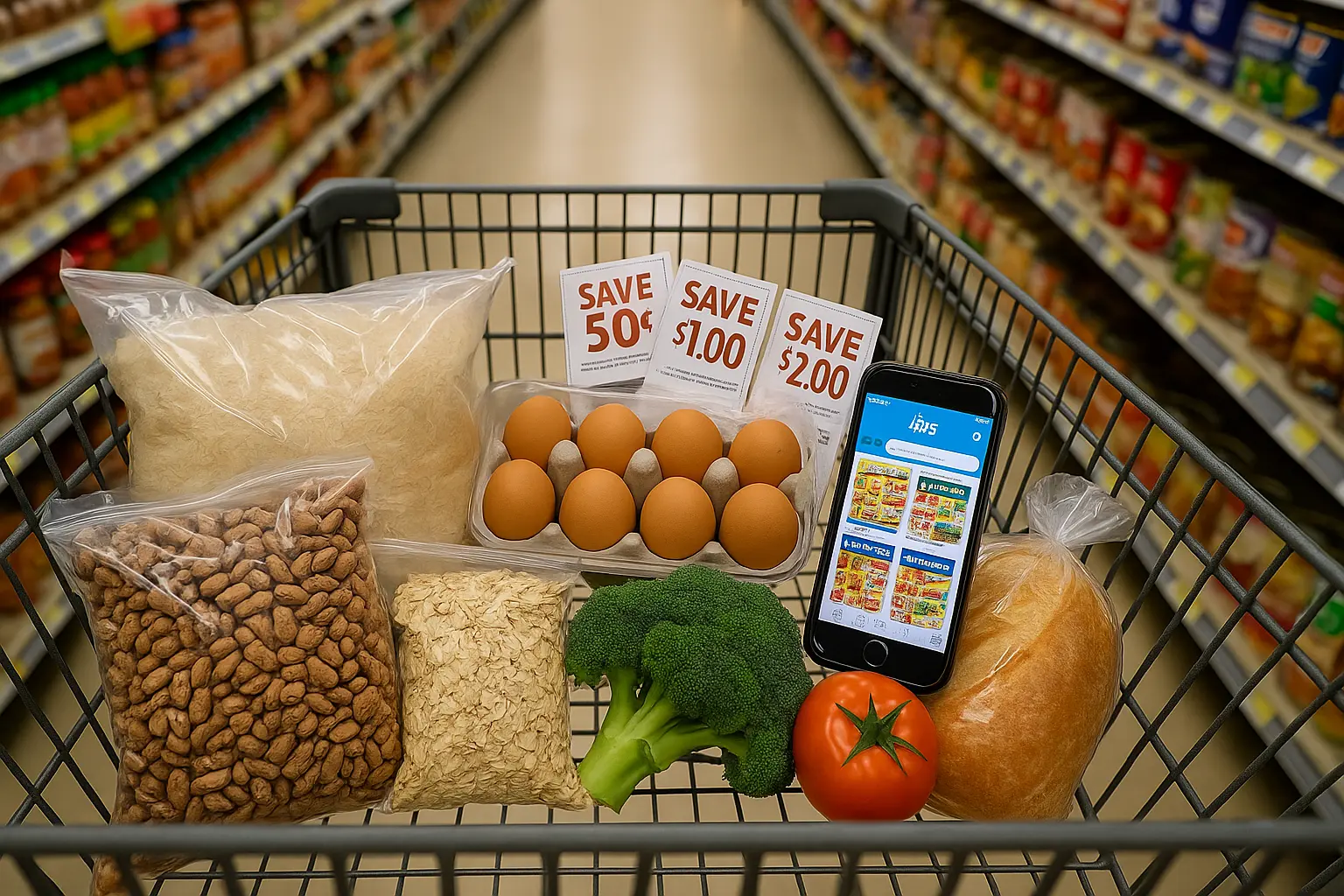
Use store coupons or rebate apps only for food already on the list. Frozen or canned produce may cost less than fresh while still fitting the plan, and shopping after a meal can make impulse buys easier to resist. For a fuller store-by-store checklist, see our guide to smart grocery shopping.
Step 4: Batch Cook Without Creating More Waste
Batch cooking saves money only when the extra food gets used. Choose two base ingredients that can cross into several meals, such as a pot of rice and a tray of roasted vegetables, rather than making seven unrelated dishes at once.
- Cook the shared bases first. Prepare the grain, beans, sauce, or roasted vegetables used by more than one meal.
- Portion tomorrow’s lunch immediately. Set it aside before serving dinner so it does not disappear as an accidental second helping.
- Label an “eat first” area. Keep the oldest prepared food visible and freeze portions that will not be eaten within the next few days.
Use the pots, pans, knife, and containers you already own unless a missing tool is genuinely stopping the routine.
Step 5: Make Flexible Pantry Swaps
Keep the meal’s job the same while changing the expensive or missing ingredient. The best swap is one the household will still eat.
- Protein: Replace part of the meat with beans or lentils, or use eggs when they fit the dish.
- Grain: Swap rice, pasta, tortillas, potatoes, or bread according to what is already open.
- Produce: Use frozen or canned vegetables when the fresh option is expensive or likely to spoil.
- Flavor: Change the seasoning or sauce before buying a special ingredient for one recipe.
For example, if taco fillings are planned but tortillas are expensive, serve the same filling over rice or potatoes instead of abandoning the meal.
FAQ: Budget Meal Planning
You can use the steps above to build next week yourself. For a faster family-focused route, the option below gives you a ready-made starting point.
A Faster Way to Plan Next Week
Little Lunches creates personalized family meal plans and a smart grocery list for households with kids, giving you an organized starting point for the week.
The Goal Is a Repeatable Week, Not a Perfect $50
Run the calculator with local prices, shop the pantry first, and raise the number when the household needs more food. The goal is not to win a one-week challenge; it is to build a plan you can repeat without wasted ingredients, emergency takeout, or a grocery total that surprises you at checkout. That repeatability—not the headline number—is what makes frugal meal planning sustainable.
Information in this post is for general budgeting and cooking guidance only. Costs, availability, and nutrition needs vary by region and household. Always check local prices and food-safety guidance, and consult a registered dietitian or healthcare professional for personalized dietary advice.