
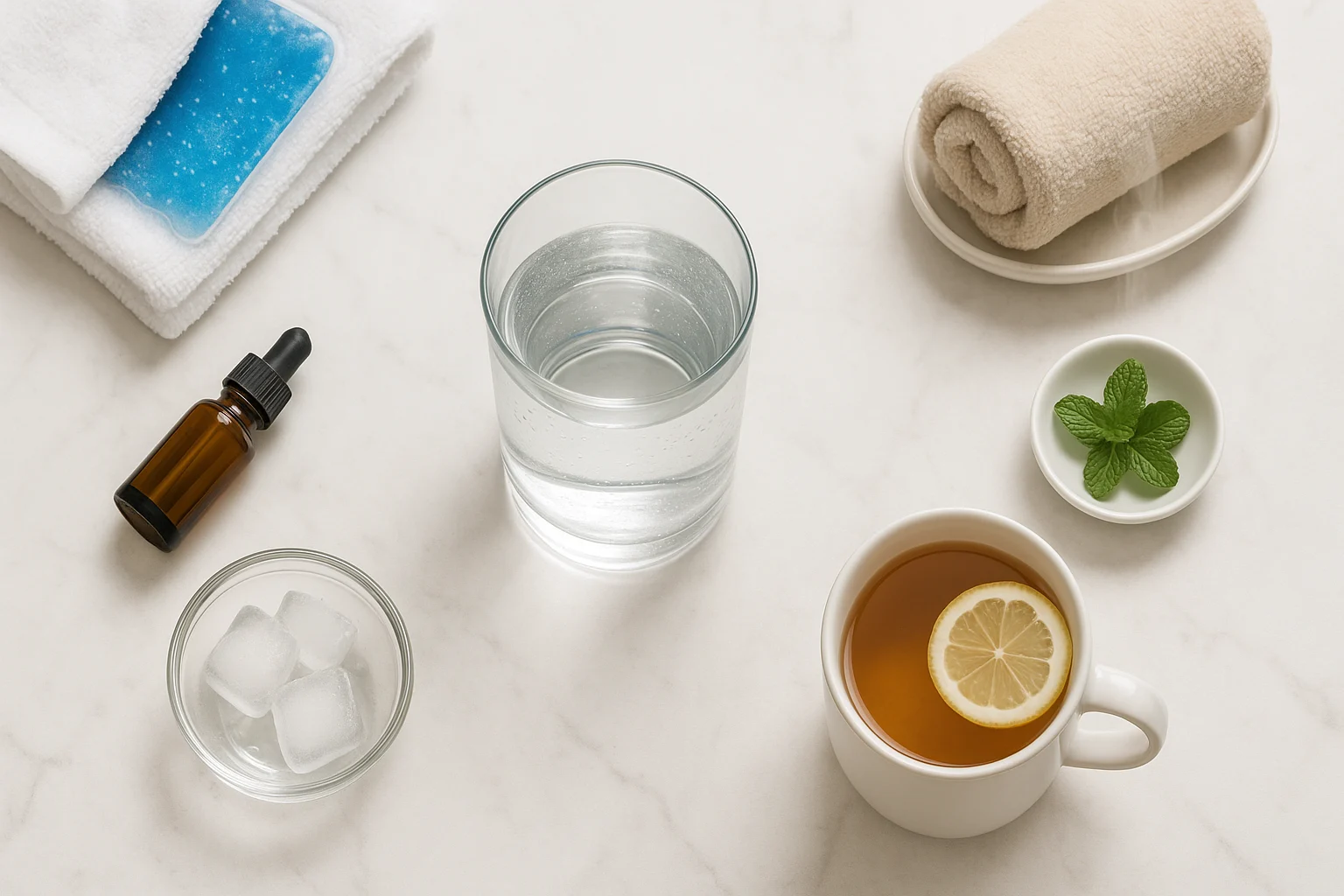
A headache can make every remedy sound worth trying, but the first decision is simpler: does this feel like a familiar mild or moderate pattern, or is it sudden, severe, new, or clearly different? If anything feels concerning, skip home care and check the warning signs now.
For a familiar pattern with no warning signs, choose one low-risk step instead of stacking remedies. This guide to home remedies for headache helps you match fluids, a quiet dark room and a cool cloth, or gentle heat or cold to the situation, then decide what to use carefully and what to track if headaches return. Use the 2-step check below for a quick route. For broader natural remedies for everyday ailments, visit our home remedies guide.
Health note: This guide is for familiar, non-emergency headaches and general education—not diagnosis. New, severe, rapidly worsening, or unusual symptoms need medical assessment. See our health and safety disclaimer.
Table of Contents
- 2-Step Headache Next-Step Check
- Home Remedies for Headache: What to Try First
- What to Use Carefully—and What to Skip
- Headache Diary: What to Track
- When to Seek Medical Attention
- Frequently Asked Questions
- Choose, Track, or Get Help
2-Step Headache Next-Step Check
Use this check to decide whether home care is a reasonable next step and, when it is, which single comfort measure to try first. It cannot diagnose the cause.
Before trying home care, does any warning sign or change in pattern apply?
Examples include sudden extreme pain; a new, different, severe, or rapidly worsening headache; weakness or numbness; trouble speaking or walking; confusion; seizure; vision loss; fever with a stiff neck; or a recent head injury.
Which familiar pattern is closest right now?
Choose the closest match, not a diagnosis. If none fits, use the final option.
Your next step
Home Remedies for Headache: What to Try First
If the check points you toward home care, choose the simplest option that matches the familiar pattern. Migraine-like pain, neck-related tension, dehydration, illness, and medication overuse can call for different responses. The MedlinePlus headache guide lists water, a quiet dark room, a cool cloth, and a headache diary among basic home-care steps; the sections below explain when each one makes sense.
Use one simple step at a time: Trying several remedies at once makes it harder to tell what helped and can add side effects or irritation. Stop self-care if the pain becomes severe, changes pattern, or comes with a warning sign.
1. Drink Fluids When Dehydration Is Plausible
Not drinking enough can contribute to headache, especially after heat, exercise, vomiting, alcohol, or a long gap without fluids. Sip water rather than forcing a large amount at once. Fluid needs vary by activity, weather, diet, health, and medical restrictions, so a universal “eight glasses” rule is not useful for everyone.
2. Choose Cool or Warm Based on the Pattern
For migraine-like symptoms, a cool cloth or wrapped cold pack on the forehead may feel soothing. When neck or shoulder tension is part of the pain, either gentle warmth or a wrapped cold pack may help; use the one that feels better.
| Familiar pattern | Comfort option | How to use it |
|---|---|---|
| Throbbing pain with light or sound sensitivity | Cool cloth or wrapped cold pack | Place it on the forehead while resting in a quiet, dark room |
| Pressure with neck or shoulder tension | Warm or cool pack | Apply it to the neck or shoulders and keep whichever feels more comfortable |
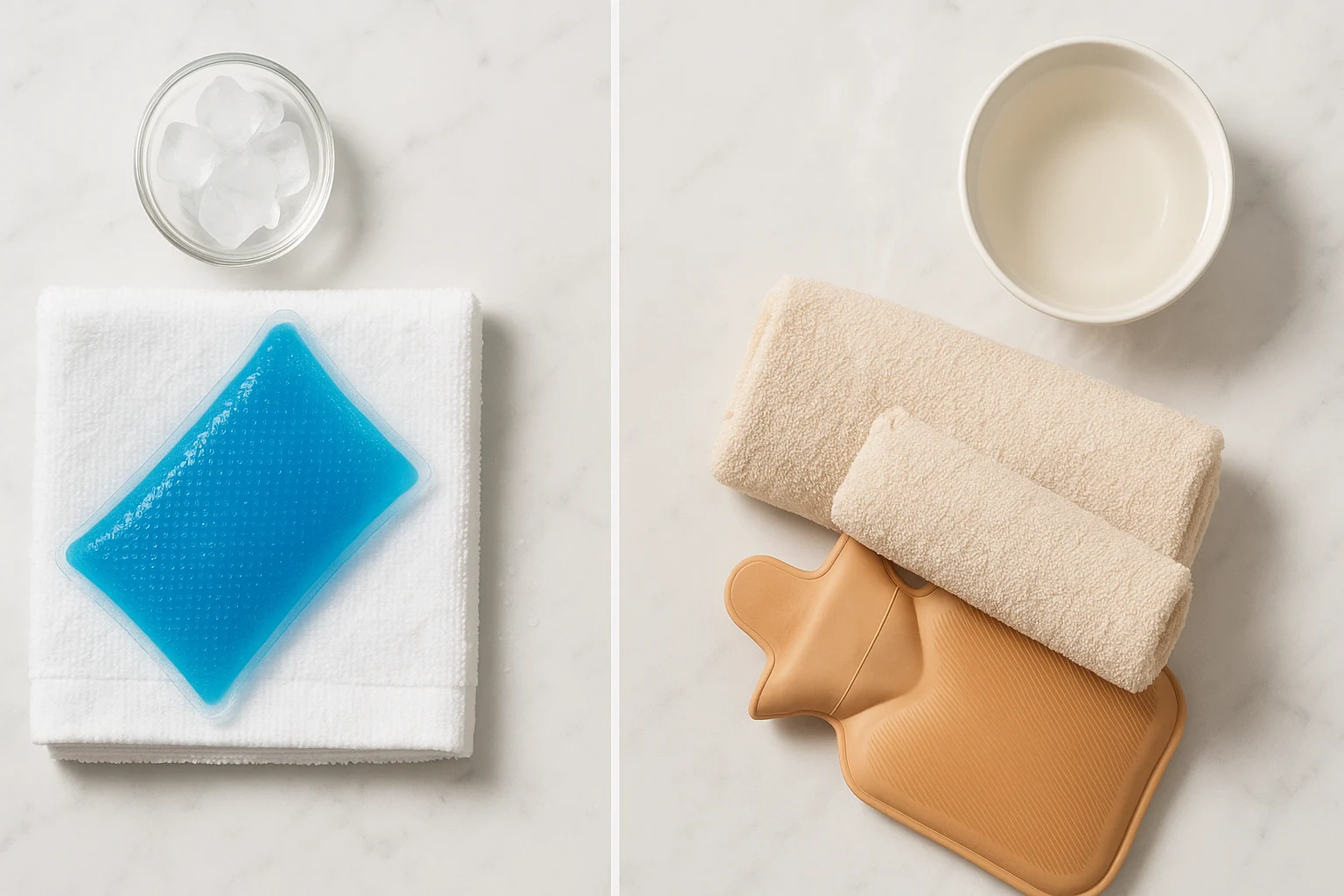
Keep hot or frozen items wrapped, use short comfortable intervals, and stop if the skin becomes painful or numb.
3. Reduce Light, Noise, and Activity
For migraine-like symptoms, close your eyes and rest in a quiet, darkened room. A short rest or sleep may help some people. Dim screens, lower sound, and avoid strong smells if they make symptoms worse.
4. Use Gentle Movement Only When Tension Is Part of the Problem
If the headache comes with tight neck or shoulder muscles, try slow neck turns, shoulder rolls, relaxed jaw breathing, or a short easy walk. Do not push through pain. During an active migraine, exercise can worsen symptoms for some people, so stop if movement increases throbbing, nausea, or light sensitivity.
What to Use Carefully—and What to Skip
Popular “natural” options are not all equal. Some may provide comfort, some are studied mainly for prevention rather than immediate relief, and some carry interaction or irritation risks that are easy to overlook.
Keep Caffeine Steady Instead of Treating It as a Cure
Caffeine can help some headache patterns and worsen others. Too much can trigger headaches, while sudden withdrawal after regular use can also cause them. Track your normal intake and avoid a large, abrupt change when a headache starts.
Tea and Essential Oils: Comfort, Not a Cure
A familiar non-caffeinated tea can make fluids easier to take and may feel calming, but ginger, peppermint, and chamomile tea are not reliable headache treatments. Herbs can cause side effects or interact with medicines, and chamomile may trigger an allergic reaction in people sensitive to ragweed-related plants.
A product marketed as a natural healing oil is still an essential-oil product, not a proven headache treatment. Evidence for topical peppermint oil in tension-type headache is limited, and homemade mixtures vary.
Peppermint or lavender can irritate skin or worsen symptoms for some people. Keep oils away from eyes and broken skin, stop if burning or irritation develops, and never use an oil to delay medical care.
Supplements Are a Prevention Discussion, Not a Quick Fix
Magnesium and feverfew have been studied mainly for migraine prevention, not as a quick fix during an attack. Evidence is limited or mixed, doses used in studies may cause side effects, and supplements can interact with medicines. The NCCIH headache evidence review summarizes the current limits.
Herbal remedies for nerve pain are not interchangeable with headache remedies. Persistent burning, tingling, weakness, or nerve-like pain needs its own medical assessment rather than a trial of headache supplements.
Frequent Painkiller Use Can Backfire
Using acute headache medicines too often can contribute to medication-overuse headache. If you need medicine repeatedly, ask a clinician or pharmacist how often it is appropriate and whether a preventive plan is needed. The National Institute of Neurological Disorders and Stroke explains the main headache types and the risks of medication overuse.
Skip Miracle-Cure Claims
A label such as “all natural pain medicine” is marketing, not a safety or effectiveness standard. Be skeptical of products that promise instant relief, claim to work for every type of pain, or use the word “natural” as a substitute for evidence.
Headache Diary: What to Track When Pain Keeps Returning
A short headache diary can turn a vague pattern into something you and a clinician can use. The NHS headache guidance recommends tracking possible triggers rather than assuming one cause.
- when the headache started, how long it lasted, and how strong it felt;
- where the pain was and whether it was throbbing, pressure-like, or accompanied by nausea, light sensitivity, or sound sensitivity;
- sleep, meals, fluids, caffeine, alcohol, stress, strong smells, screen time, and neck or shoulder tension;
- medicines or supplements taken, including how often they are used;
- what comfort step you tried and whether it helped, did nothing, or made symptoms worse.
Look for repeated patterns rather than blaming one event. If skipped meals keep showing up, a simple meal-planning routine may help reduce long gaps. If the headache is part of a cold or flu, our cold and flu home remedies guide covers comfort measures for the illness itself.
When to Seek Medical Attention
Home remedies are for familiar, mild or moderate patterns without warning signs. Do not keep testing remedies when the headache is sudden, severe, new, rapidly changing, or accompanied by neurological or systemic symptoms.
Seek emergency care for a headache that:
- starts suddenly and is extremely painful;
- follows a recent head injury;
- comes with a seizure, confusion, unusual drowsiness, fainting, weakness, numbness, trouble speaking, trouble walking, or loss of vision;
- comes with a very high temperature, stiff neck, marked light sensitivity, or a non-fading rash.
Arrange prompt medical advice when:
- headaches are new after age 50, keep returning, occur several times a week, or are becoming more severe;
- the pattern changes, home care no longer helps, or pain interferes with normal activities;
- you have new eye pain, blurred or double vision, jaw pain while eating, or a sore scalp;
- you are pregnant or recently gave birth and develop a new or severe headache.
Use your local emergency number and services where you live. The linked NHS page above provides a current public-health reference, but local instructions take priority.
Frequently Asked Questions
Choose, Track, or Get Help
For a familiar mild or moderate headache with no warning signs, choose one low-risk option and notice what happens. Do not stack several remedies at once; that makes it harder to tell what helped and whether the pattern is changing.
If headaches keep returning, use the diary and bring it to a clinician or pharmacist. If a headache is sudden, severe, new, different, or accompanied by a warning sign, skip home care and get medical help. The goal is not to collect more remedies; it is to know what to try, what to track, and when to get help.
This guide is for general education and cannot diagnose a headache. Use local emergency services for sudden severe pain or neurological warning signs. Seek medical advice for persistent, recurring, changing, pregnancy-related, or otherwise concerning headaches.