
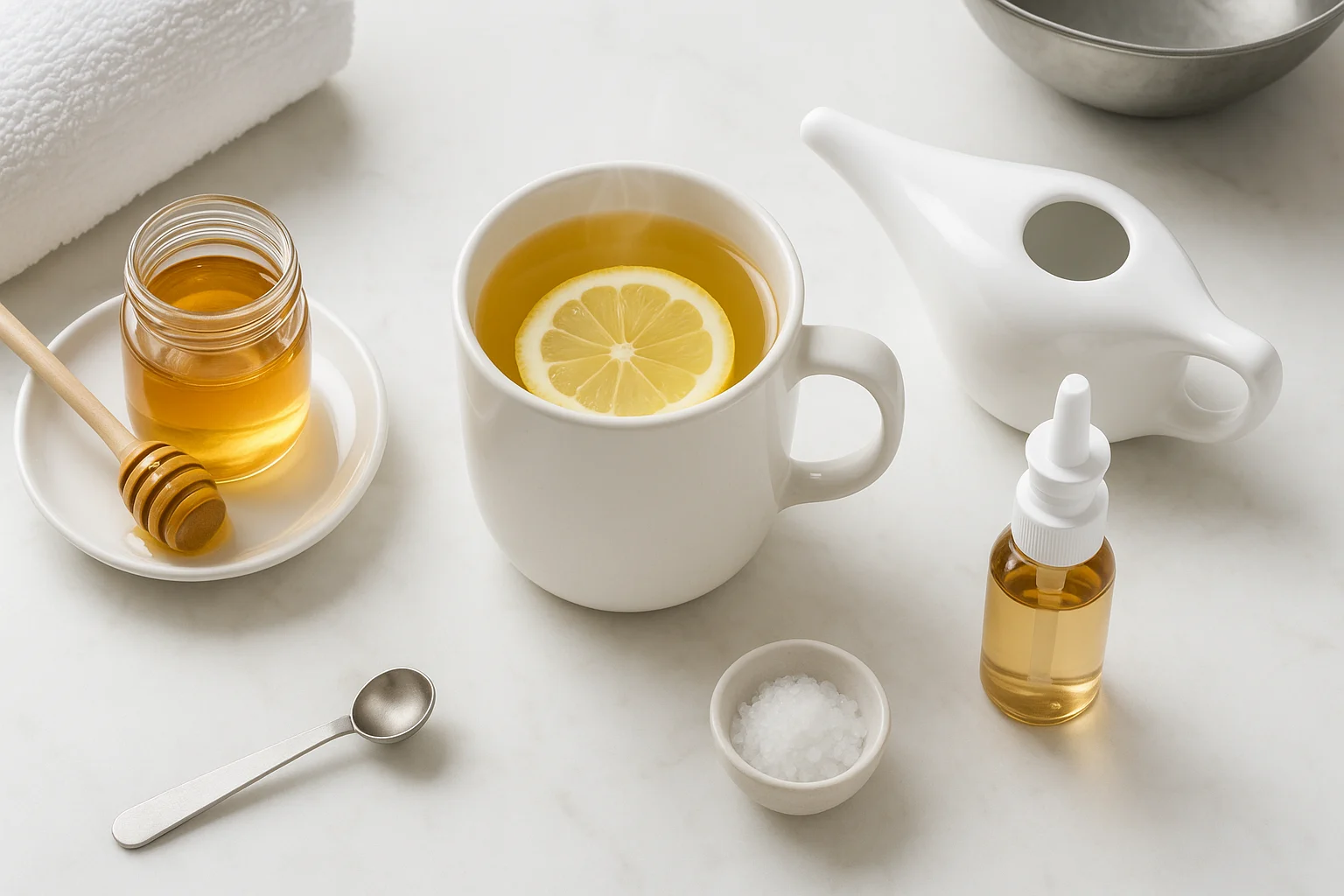
You do not need a cabinet full of cold remedies. Start with rest and regular fluids. Then match one simple comfort measure to the symptom bothering you most: honey for cough for anyone age 1 or older, a warm salt-water gargle for a sore throat, saline spray or a safely prepared rinse for congestion, or a clean cool-mist humidifier when dry air makes sleep harder. This guide helps you choose what to try first, what to avoid, and when home care is no longer enough.
These measures may ease symptoms, but they do not eliminate the virus, and this guide is general information—not a substitute for medical advice. Cold, flu, and COVID-19 symptoms can overlap. If symptoms begin suddenly, feel severe, or affect someone at higher risk, seek prompt medical advice because testing and early treatment may matter. Ask a healthcare professional before using a remedy for a young child, during pregnancy, or alongside medicines or a medical condition. For broader low-cost self-care ideas, see our home remedies guide.
This page contains an affiliate link. As an Amazon Associate, I earn from qualifying purchases at no extra cost to you. Learn more.
Table of Contents
- Find Your First Cold-Relief Step
- The Basics: Rest, Fluids, and Easy Food
- Cold Remedies by Symptom
- When to Seek Medical Care
- Cold-Remedy Mistakes to Avoid
- Do Zinc, Vitamin C, and Herbal Remedies Help?
- When a Humidifier May Help
- Common Questions About Cold Remedies
- Your Cold-Care Plan for the Next 24 Hours
Not sure where to start? Choose the symptom bothering you most to get one safe first step.
Find Your First Cold-Relief Step
You will also see the main safety point to remember and a direct link to the full guidance. This tool offers general comfort guidance, not a diagnosis.
Your first step
The tool will suggest a focused starting point instead of a long list of remedies.
The Basics: Rest, Fluids, and Easy Food
A cold usually needs time more than a complicated routine. Sleep when you are tired, reduce nonessential plans, and sip water, tea, broth, or another drink you can tolerate. If drinking is difficult or you are urinating much less than usual, contact a healthcare professional because dehydration needs attention.
When your appetite is low, warm soup, toast, fruit, vegetables, or other simple foods can make it easier to take in fluids and energy. Our frugal meal planning guide can help you keep broth and easy pantry foods on hand.
Ginger tea can be a warm, pleasant drink, but it is not a cure. Simmer 3–4 thin slices in 8–10 oz of water for about 10 minutes, then add lemon or, for anyone age 1 or older, a little honey.

Cold Remedies by Symptom
Start with the symptom that is interfering most with sleep, drinking, or normal activity. One or two targeted measures are usually easier to use safely than a shelf of multi-symptom products.
Cough and sore throat
Among natural home remedies for cough, honey may help nighttime coughing in adults and children age 1 or older. Try a small spoonful before bed or stir it into a warm drink. For a scratchy throat, gargle ½ teaspoon of salt dissolved in 8 oz of warm water, then spit it out. Warm drinks can soothe, but neither honey nor gargling shortens the infection.
Nasal congestion
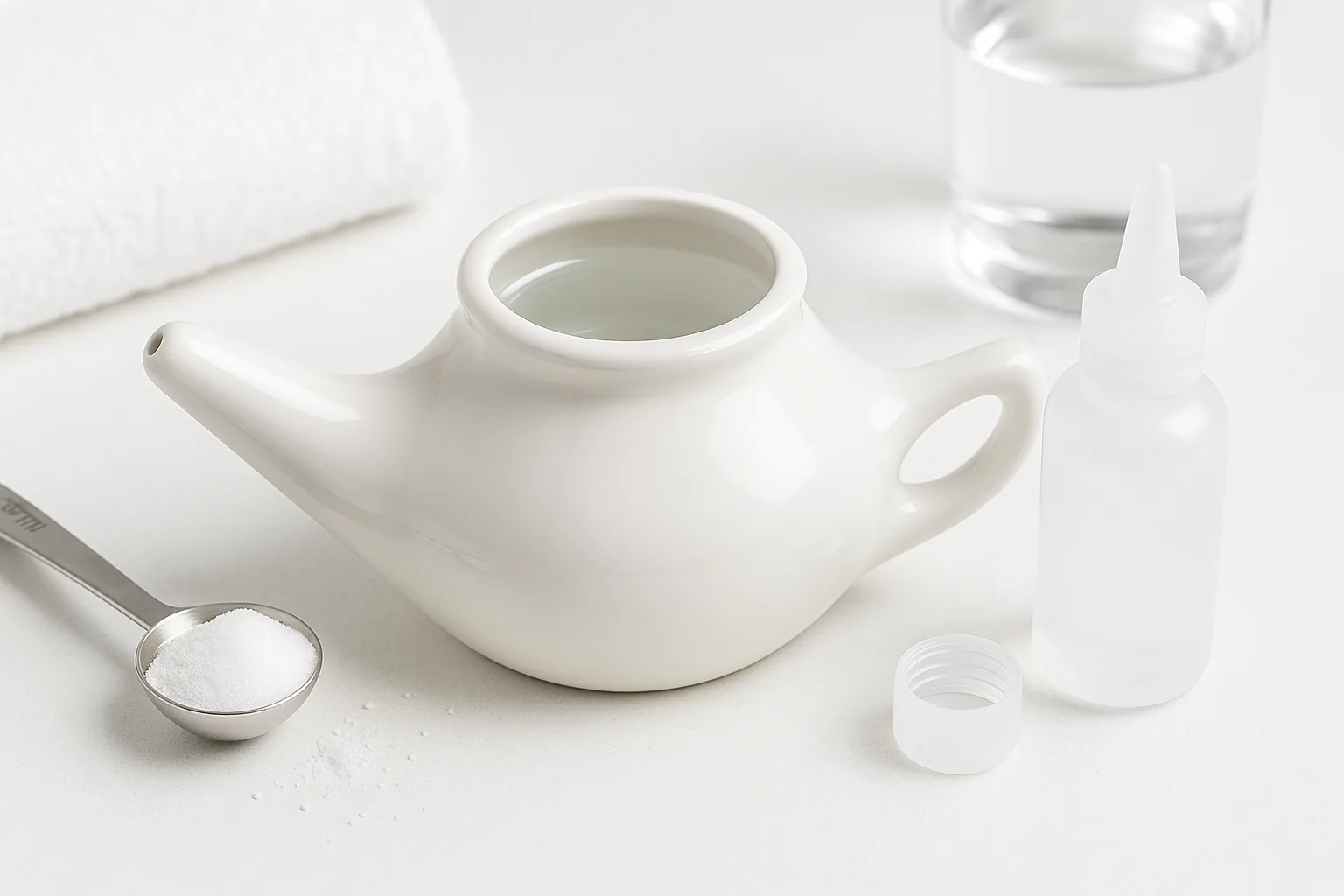
Start with saline spray. For a nasal rinse, use only distilled, sterile, or previously boiled and cooled water, and clean and dry the device according to its instructions. A warm shower or steamy bathroom may also ease stuffiness without the burn risk of leaning over a bowl of hot water. See the FDA’s nasal-rinse safety guidance.
Body aches or fever
Rest and fluids come first. If you want an over-the-counter pain or fever reducer, ask a pharmacist or healthcare professional which option is appropriate for you, follow the label, and check combination cold products so you do not take the same active ingredient twice.
Fatigue and poor sleep
Scale back your schedule and make sleep easier rather than trying to push through. Keep a drink nearby and elevate your head if post-nasal drip is aggravating a cough. Consider a clean cool-mist humidifier if dry indoor air is part of the problem. Seek care for severe weakness, dehydration, or symptoms that are getting worse instead of better.
When to Seek Medical Care
If you are at higher risk for severe flu or COVID-19, contact a healthcare professional promptly even when symptoms seem mild; antiviral treatment works best when started early. Seek medical care for any symptom that feels severe or concerning, including:
- Trouble breathing or fast breathing
- Signs of dehydration, including much less urination
- Fever lasting longer than four days
- Symptoms lasting more than 10 days without getting better
- Fever or cough that improves and then returns or worsens
- A chronic medical condition that is getting worse
Infant and child care: Use saline drops or spray, gentle suction for infants, a clean cool-mist humidifier, usual feeds or other age-appropriate fluids, and rest. Never give honey to a child younger than 1 year. Call a pediatric healthcare professional for fever in a young infant, breathing trouble, dehydration, unusual sleepiness, or worsening symptoms.
For a current overview of common-cold care, see the CDC’s common cold treatment page.
Cold-Remedy Mistakes to Avoid
- Do not use tap water for a nasal rinse. Use distilled, sterile, or previously boiled and cooled water.
- Do not give honey to a child younger than 1 year.
- Do not combine medicines without checking the active ingredients. Multi-symptom products can duplicate a pain or fever medicine.
- Do not use intranasal zinc. It has been linked to loss of smell.
- Do not expect antibiotics to treat a routine viral cold. A healthcare professional can determine whether a bacterial complication is present.
- Do not treat “natural” as automatically safe. Supplements can cause side effects and interact with medicines.
Do Zinc, Vitamin C, and Herbal Remedies Help?
Searching for a cold and flu natural treatment often turns up long supplement lists, but the evidence is much narrower. For natural flu relief, rest and fluids may improve comfort. No complementary approach has been shown to treat influenza or replace antiviral care when it is indicated.
- Oral zinc: Lozenges started within 24 hours may shorten a cold for some people, but results are inconsistent and zinc can cause side effects or interact with medicines. Do not use zinc in the nose.
- Vitamin C: Regular use may slightly shorten a cold, but starting it after symptoms begin has not shown a clear benefit.
- Echinacea, garlic, and elderberry: Echinacea has not been proven to treat a cold, and evidence for garlic or elderberry remains insufficient or inconclusive.
Discuss supplements with a healthcare professional if you are pregnant, take medicines, or have a medical condition. See the NIH review of complementary cold approaches.
When a Humidifier May Help
A humidifier is optional, not a basic requirement for getting over a cold. Consider one only when indoor air feels dry and that dryness is making coughing, nasal irritation, or sleep less comfortable. Skip it when the room already feels comfortable or you do not want the regular cleaning and drying the unit requires.
Optional pick for a dry room: The LEVOIT 2.5L Top-Fill Cool Mist Humidifier is the single product recommendation in this guide. Check the current listing for its dimensions and care instructions before deciding whether it fits your room and routine.
A humidifier adds moisture only; it does not treat the infection. Empty the tank daily, clean the unit as directed, and let it air-dry so it does not become another source of irritation.
Common Questions About Cold Remedies
Your Cold-Care Plan for the Next 24 Hours
For today: choose the symptom disrupting you most, use one matching comfort measure, drink regularly, and make room for rest. Avoid stacking products just because you want faster relief.
Check again tomorrow: if you are improving, keep the plan simple. If symptoms worsen, become severe, or match any medical-care warning sign, contact a healthcare professional.
Safety first: follow product and medicine instructions carefully. Use distilled, sterile, or previously boiled and cooled water for nasal rinses. Never give honey to children under age 1. This guide is educational and not medical advice. For ongoing, severe, or worsening symptoms, consult a healthcare professional.